You’ve been dreading this day for months. Snow is in the forecast. Winter has arrived, and there’s not much you can do about it.
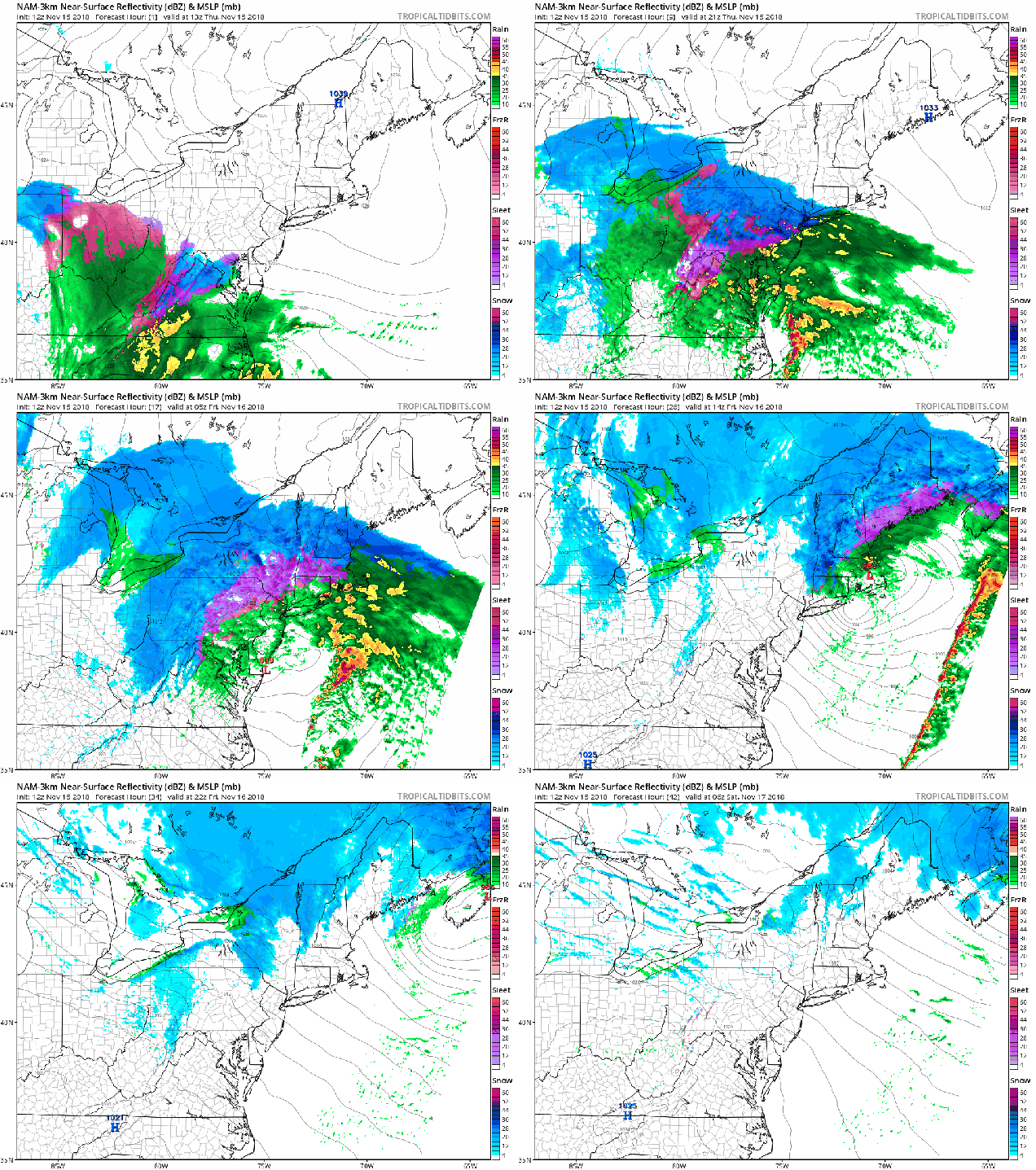
Snow will develop this evening, but change to rain across most of the region by daybreak. Loop provided by Tropical Tidbits.
High pressure is moving out of the region at midday after providing us with a chilly morning. Low pressure is starting to move northward from the Carolinas, and the clouds have already streamed in ahead of it. With that cold air still in place, as the moisture from the storm moves in, we’ll have snow developing late this afternoon and this evening across the area. Right along the coast, the precipitation may start off as rain, as water temperatures are still relatively warm.
As winds become easterly across the region, that warmer air will gradually push farther inland both at the surface and aloft. As a result, we’ll see the snow change to sleet, freezing rain, and eventually rain from south to north overnight. How quickly that warmer air moves in, especially aloft, will determine how much snow falls. More sleet and freezing rain would cut down on snow amounts, but also created some more hazardous driving conditions overnight, especially north and west of Boston.
By morning, we should be all rain for much of the region, though from central New Hampshire northward, it will still be fairly wintry. The rain may be heavy at times through the morning, which will probably wash away most of the snow that falls this evening. So, you probably won’t need the shovels or the snow brushes when you head out to work or school in the morning. Everything winds down around midday, then gusty northwest winds behind the storm help clear things out late in the day.
So, how much can we expect? Here’s our current thinking:
MA/RI coast/Cape Cod: Less than 1″
Interior E Mass/RI: 1-2″
Merrimack Valley/NH Seacoast: 2-4″
Interior Southern NH (Manchester/Concord): 2-5″
Central NH: 4-7″
The NAM model is closest to our thinking for the current storm, perhaps a little too high with snowfall across eastern Massachusetts. Image provided by Pivotal Weather.
Another weak system will come through late Sunday night into Monday morning. This will produce some snow or rain showers, but won’t be a big deal at all. Winter’s here, so you’d better get used to it.
For the third year in a row, the “M” storm in the Atlantic is prepared to wreak havoc on a populated area, but Michael isn’t the only headline maker in the weather at the moment.
Hurricane Michael isn’t the only storm in the news, but it is the biggest threat at the moment. As of early Tuesday afternoon, Michael was centered about 335 miles south of Panama City, Florida, moving toward the north at 12 mph. Maximum sustained winds are near 110 mph, making Michael a Category 2 Hurricane. Additional strengthening is expected over the next 12-18 hours as the storm moves over the warm waters of the eastern Gulf of Mexico. Hurricane and Storm Surge Warnings are in effect for the Florida Panhandle and the Big Bend area of Florida, with Tropical Storm Warnings and Watches surrounding the Hurricane Warnings. Tropical Storm Watches are also in effect for the Atlantic coast from northeastern Florida into South Carolina.
Michael is going to pack quite a wallop when it slams into the Florida Panhandle Wednesday afternoon. Image provided by the National Hurricane Center.
Michael is expected to make landfall in the Florida Panhandle Wednesday afternoon, likely as a Category 3 storm. Strong winds, torrential rainfall, storm surge, and some tornadoes are all possible with this storm. Unlike Florence, which hung around the Carolinas for days and dumped incredible amounts of rainfall on the region, Michael is expected to keep moving at a steady pace, emerging off the Mid-Atlantic coast by Friday morning. Rainfall totals of 5-10 inches are still expected in parts of the region, which will produce flooding in some areas, especially in Carolinas, where many areas are still recovering from Florence. Right along the coast, a storm surge of 6-12 feet is possible, especially in the Big Bend area of Florida. Fortunately, this area is not heavily populated, but for the residents that do live in this area, storm surge flooding is a significant threat.
Once it moves back into the Atlantic early Friday, it should pass well south of our area. The northern edge of the rainfall from the system could reach the South Coast, but the bulk of the heavy rain should remain well to the south.
This is the 3rd year in a row that the “M” storm is expected to result in significant damage to a populated area. In 2014, Category 5 Hurricane Matthew left a path of death and destruction across parts of Haiti, Cuba, the Bahamas, and eventually parts of the southeastern United States. Last year, Category 5 Hurricane Maria devastated the northeastern Caribbean, including Puerto Rico and the US Virgin Islands. While Michael is not expected to become a Category 5 storm, it is still expected to result in significant damage to parts of Florida and the Southeast.
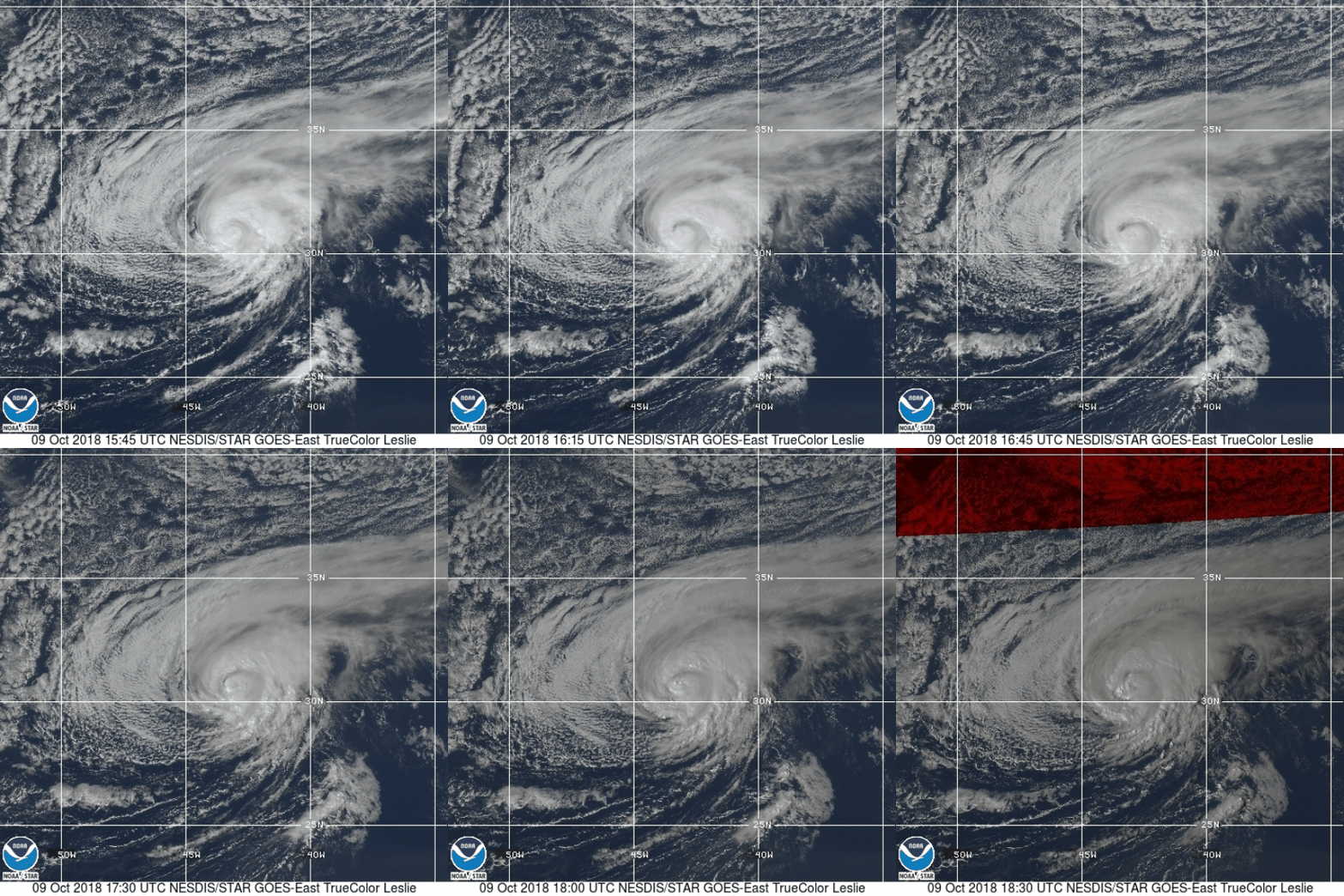
Tropical Storm Leslie has been around for near 2 weeks and still looks rather healthy. Loop provided by NOAA.
Meanwhile, in the eastern Atlantic, Tropical Storm Leslie refuses to go away. As of midday Tuesday, Leslie was centered a little more than 1000 miles west-southwest of the Azores, moving toward the south-southeast at 13 mph. Maximum sustained winds are near 65 mph. The forecast for Leslie calls for a turn more toward the east over the next few days while it strengthens back into a hurricane. Leslie is expected to remain over open waters for the next few days, and could become an extratropical storm this weekend while continuing on a general easterly track.
Nadine is a fish storm. Nothing to worry about here. Image provided by Tropical Tidbits.
To the south, Tropical Storm Nadine as formed nearly 500 miles southwest of the Cabo Verde Islands. Nadine has maximum sustained winds near 40 mph, and is moving toward the west-northwest at 9 mph. Nadine is expected to remain fairly weak over open waters for the next several days while turning more toward the northwest. As it moves over colder water late this week and this weekend, it should weaken and eventually dissipate.
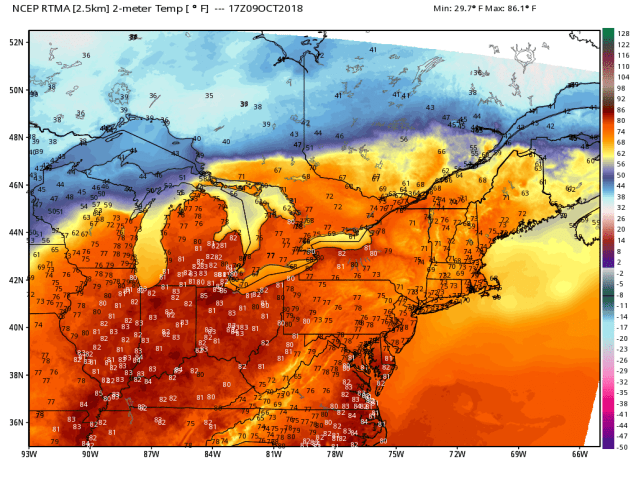
What month is it again? 70s and 80s early in the afternoon on October 9th? Image provided by WeatherBell.
Back in the United States, unseasonably warm conditions remain in place across much of the eastern half of the nation. Temperatures are in the 70s and 80s across much of the region, which is 15 to 25 degrees above normal. A strong frontal system is located in the Plains states this afternoon, separating the warm air in the East, from much cooler weather behind it in the Plains and the Rockies. Right along this front, which hasn’t moved much for the past 24 hours, severe weather and heavy rainfall are common this afternoon.
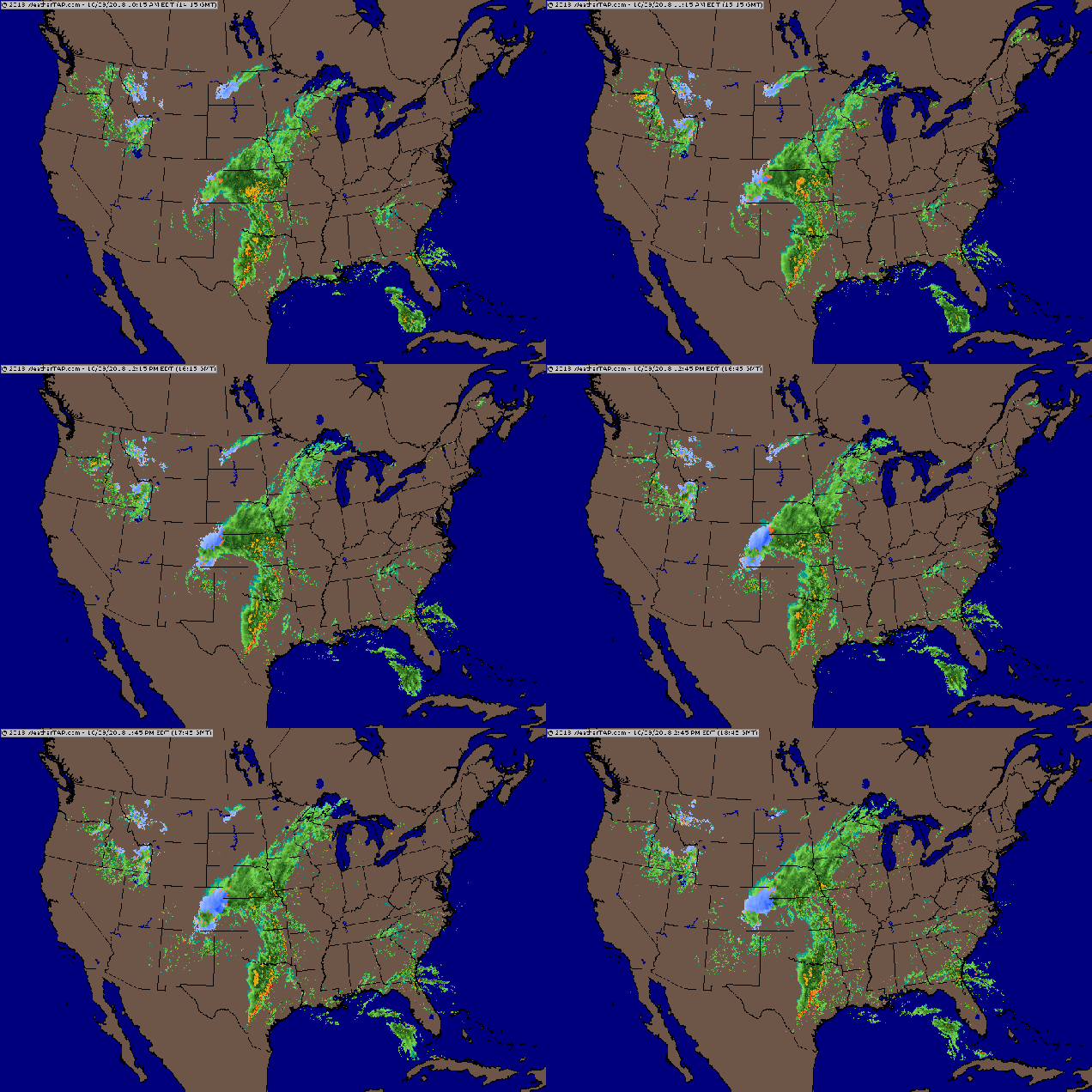
That’s snow in Colorado, and heavy rain along with severe weather from Texas into the Central Plains this afternoon. Loop provided by WeatherTAP.
Several tornadoes have been reported already today, including a few in the Oklahoma City area, and more are expected later today and tonight. Heavy rainfall is also expected from Texas into the Central Plains and parts of the Upper Midwest. Rainfall totals of 1-3 inches and locally heavier may produce flash flooding in some areas. Flash flood watches are in effect for much of the region.
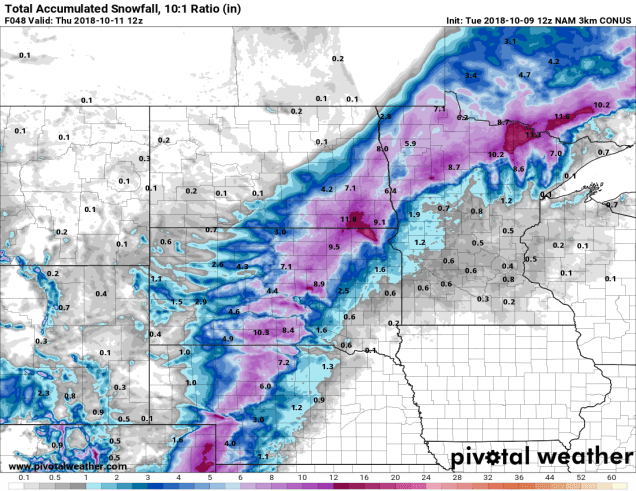
Several inches of snow is expected form the Plains into the Upper Midwest over the next few days. Image provided by Pivotal Weather.
On the other side of the front, where much cooler weather is in place, rain is expected to change over to snow as low pressure rides along the front and into the Midwest. Winter weather advisories have already been posted for parts of the region. Snow is already falling in parts of Colorado this afternoon, and several inches may fall over the next 36-48 hours from western portions of Kansas and Nebraska into the Dakotas and northern Minnesota.
Some heavy rain is possible across our area on Thursday as a strong cold front approaches the region. Image provided by WeatherBell.
As the system moves eastward, it will spread some heavy rain and thunderstorms into our area on Thursday. We’re not expecting any severe weather, but some heavy downpours are possible, especially from western Massachusetts into southern New Hampshire. Some localized flooding may result. Once this front pushes offshore, much cooler weather will settle in for the Friday and the weekend.
We’ve reached Patriots Day weekend, which is usually one of the truest signs that winter is over and Spring has finally started in New England. This year that will not be the case. In fact, this year, Patriots Day weekend is going to be absolutely miserable.
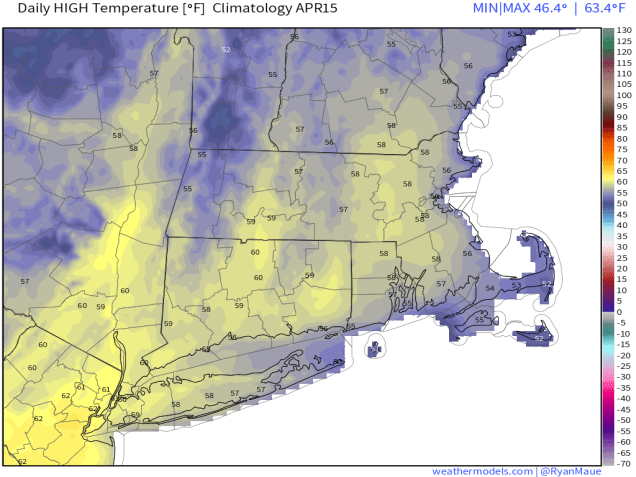
In mid-April, high temperatures should normally be in the middle to upper 50s around here. Image provided by Weathermodels.com
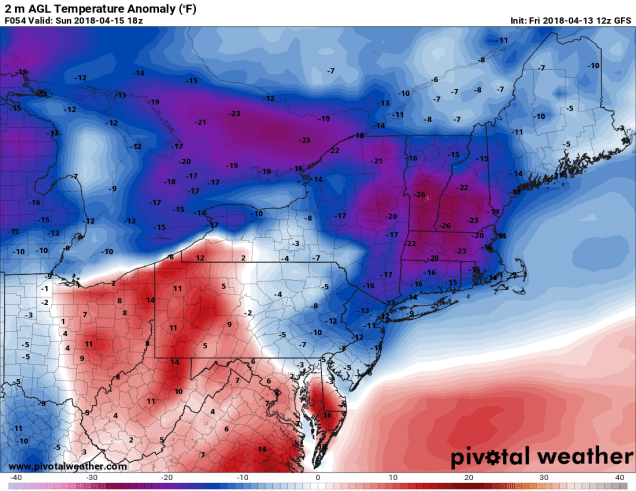
Don’t let today’s warmth fool you. Even though temperatures are in the 60s and even lower 70s away from the South Coast, big changes are coming, and not for the better. A backdoor cold front will drop down across the region late tonight and early Saturday, bringing much colder air back into the region. Temperatures are going to go slowly down through the 40s all day on Saturday and gusty northeast to east winds are going to make it feel even colder. By Saturday evening, temperatures will drop into the 30s, and they’ll likely stay there through most of Sunday. They may start to drift back up Sunday night and Monday, but it will still be on the chilly side. That’s the least of our problems.
Temperatures on Sunday will be 15 to 25 degrees (or more) below normal. Image provided by Pivotal Weather.
A large storm system is going to bring severe weather to the Mississippi Valley and Gulf Coast today and tomorrow, while producing blizzard conditions in the Plains and Upper Midwest, with a significant ice storm expected in parts of the Great Lakes. That storm is going to slowly make progress eastward over the next few days, with the moisture from it likely arriving late Saturday. As we mentioned earlier, temperatures are going to be dropping into the 30s late on Saturday. If you combine that with incoming moisture, you get a giant mess.
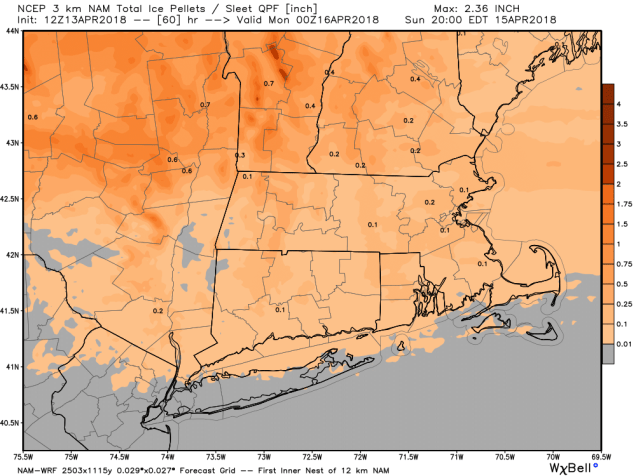
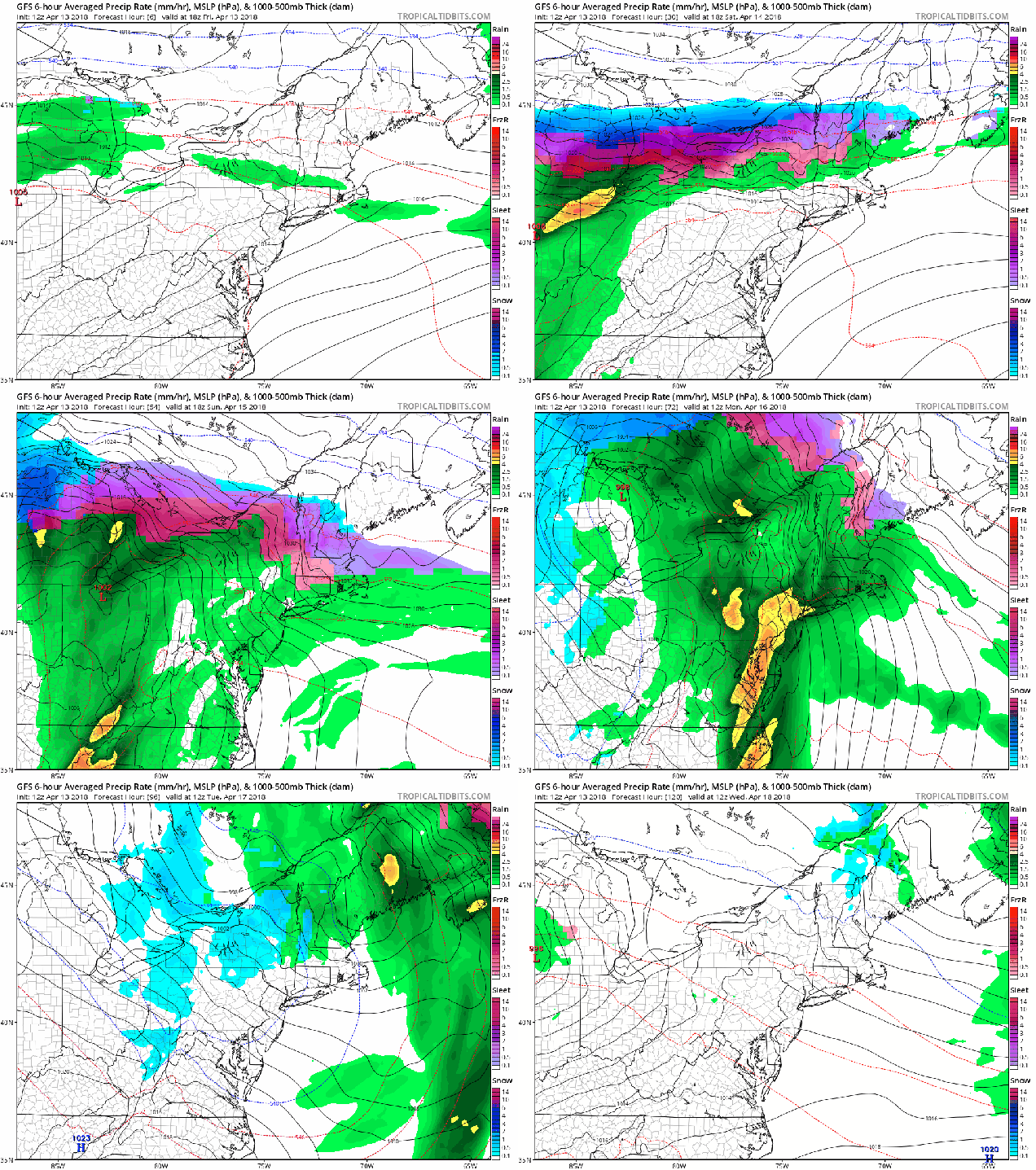
Rain will develop late Saturday afternoon or evening across the region, but as temperatures continue to drop, some sleet will likely mix in, with freezing rain also a possibility, especially north and west of Boston where temperatures could even fall into the upper 20s Saturday night. Sleet and freezing rain will continue across much of the region for a good chunk of the day on Sunday, as temperatures will only rebound into the middle 30s at best for most of the area. The reason we’re expecting sleet (and freezing rain) and not snow, is that the colder air will all be at the lower levels of the atmosphere. It will actually be warmer aloft. We wouldn’t be surprised if the summit of Mount Washington is one of the warmest places in New England Sunday afternoon.
This storm may drop quite a bit of sleet on the region Saturday night into Sunday. Image provided by WeatherBell.
Somewhat milder air will start to filter in Sunday night as low pressure moves into the eastern Great Lakes. This will change everything back over to a cold rain. For once, a cold rain is actually good news, because it means we don’t have to worry about the sleet any more. However, this is bad news as we head into Marathon Monday. As that low heads off to the north and west of the region, it will bring a cold front towards the Northeast. As warmer air surges northward ahead of the front, it will help bring some heavy rain into the area. That warmer air will mainly be aloft, but some of it could reach the surface during the afternoon. In the morning though, when the race starts, and the Red Sox are scheduled to play, we’ll likely have periods of heavy rain, with temperatures only in the upper 30s to middle 40s. Not exactly baseball or running weather. Temperatures could get into the 50s or even low 60s in the afternoon, especially south of Boston, but we’ll still have the heavy rain to deal with. The cold front moves through late in the day, and drier air starts to filter in on Tuesday. Even then, a few showers are still possible as an upper-level low pressure system moves across the Northeast.
The GFS forecast is not pretty for the next few days. Stay inside, watch some playoff hockey, and remember that warmer weather is coming eventually. Loop provided by Tropical Tidbits.
So, is this it for winter? We’d like to say yes, but at this point, we can’t make that statement definitively. Longer-range models show below normal temperatures continuing into much of May. While it’s awfully tough to get wintry weather around here at this time of year, it’s not impossible. We have had heavy snow events in late April (1987), and early May (1977). As some of you may remember, in 2013, up to 3 feet of snow fell in parts of Northern New England and Upstate New York during Memorial Day weekend. So, we’d wait until at least mid-May before taking the flip-flops and shorts out of where ever you stored them for the winter.
Unlike the last storm, which we admittedly underestimated, this storm is likely not going to live up to expectations for parts of the region, mainly north and west of Boston.
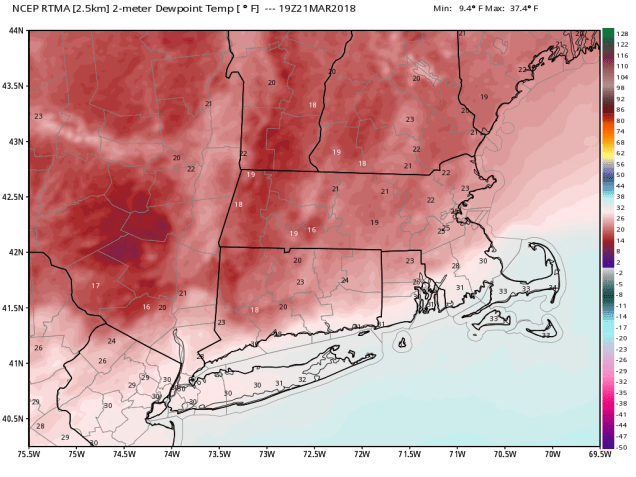
As the storm starts to move in this afternoon and evening, there is a lot of dry air in place. Dewpoints are only in the upper teens and 20s across much of the region. So, as the moisture from the storm moves in, it’s moistening up the atmosphere slowly, but anything that falls from the clouds is evaporating before hitting the ground.
Very dry air remains in place across the region this afternoon. Image provided by WeatherBell.
Eventually, the moisture will overcome this drier air, but the storm is also tracking a little farther to the south than we were thinking yesterday. As a result, snowfall totals will be considerably lower north and west of Boston than our previous forecast. Of course, this also means that there could be a bit more snow than we were thinking south of Boston, especially across Cape Cod, though some rain could still mix in there, which would limit amounts a bit.. This scenario was first hinted at by the ECMWF model 2 days ago, and most meteorologists thought of it as an outlier, since most of the other model guidance was painting a snowier scenario. We tended to discount it as well, but in the back of our minds, we kept hearing a phrase that a noted meteorologist has repeated over and over to us “Ignore the Euro at your own peril.”
Hour-by-hour forecast for the storm based on the HRRR model from 2pm Wednesday through 8am Thursday. Image provided by Weathermodels.com
So, with that in mind, we are revising our forecast to be closer to what the European model is showing (but not exactly):
Southeastern Massachusetts/Cape Cod: 5-9″ (possibly less on the Outer Cape if rain mixes in)
I-95 Corridor (Boston/Providence): 4-7″
MetroWest: 3-5″
Merrimack Valley/NH Seacoast: 2-4″
Southern NH (Nashua/Manchester): 1-3″
This will still be a fairly wet snow south of Boston, so keep that in mind when you go out to shovel it tonight or Thursday. Once the sun comes up, thanks to the higher sun angle, any additional accumulations are not expected on paved or treated surfaces. Everything should wind down and end completely by early Thursday afternoon.
Snowfall forecast from the ECMWF model through Thursday evening. Image provided by Weathermodels.com
As this storm moves into Atlantic Canada, and upper-level low will settle into the Northeast for Friday and Saturday, keeping us cloudy and cool. An impulse riding around the system may bring some light snow and snow showers in on Saturday, but accumulations will likely be on the light side, if we get much at all.
“Once more unto the breach, dear friends, once more.”
At 12:15 EDT this afternoon, the sun was directly over the Equator, marking the Vernal Equinox, or as it is more commonly known, the start of Astronomical Spring. Here in New England, astronomical seasons don’t have really have much influence on the weather, at least the start and end of those seasons. Take this week for example. Tomorrow is the first full day of spring, but we’re expecting another snowstorm. Yup, that’d be the fourth one this month.
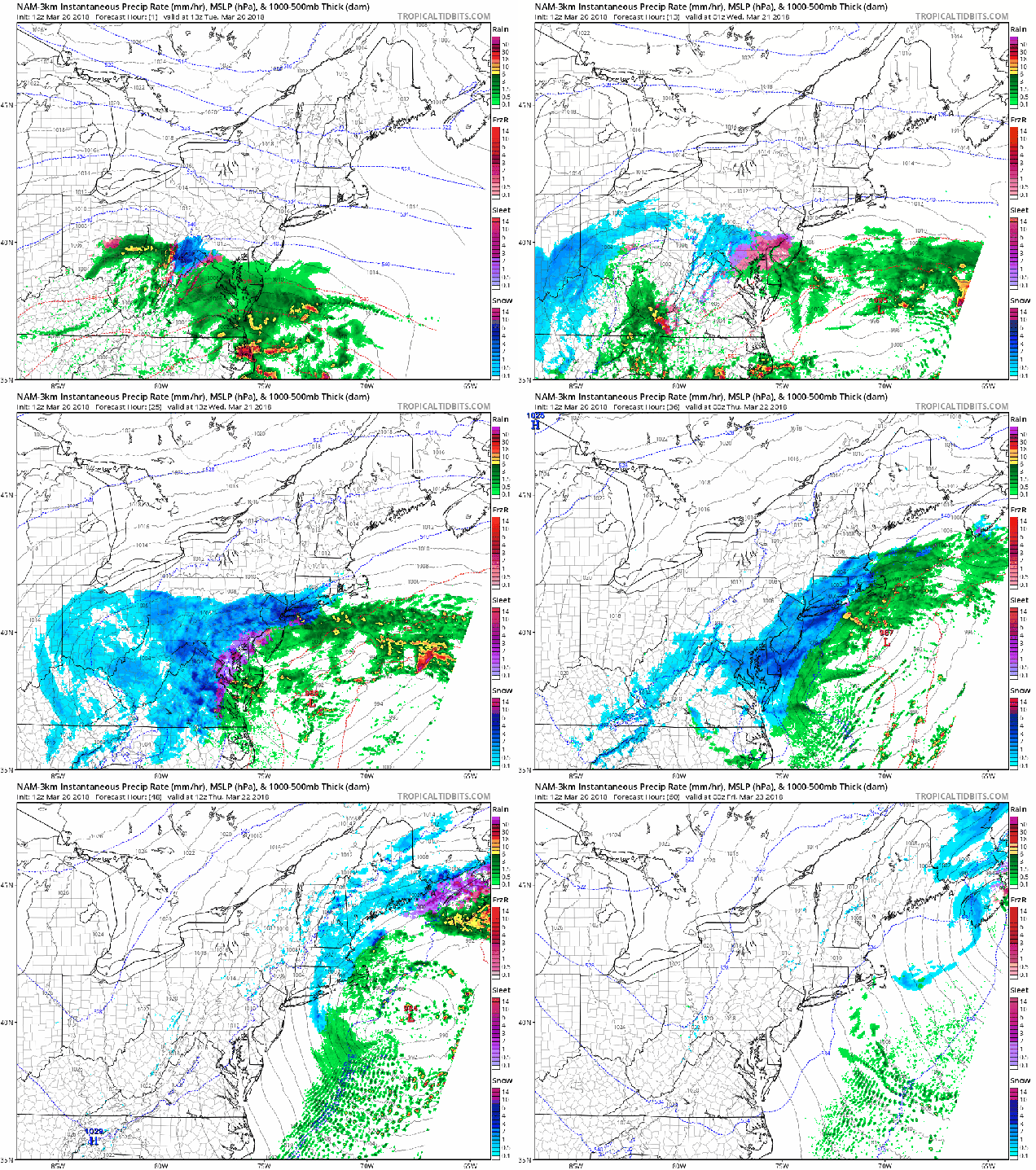
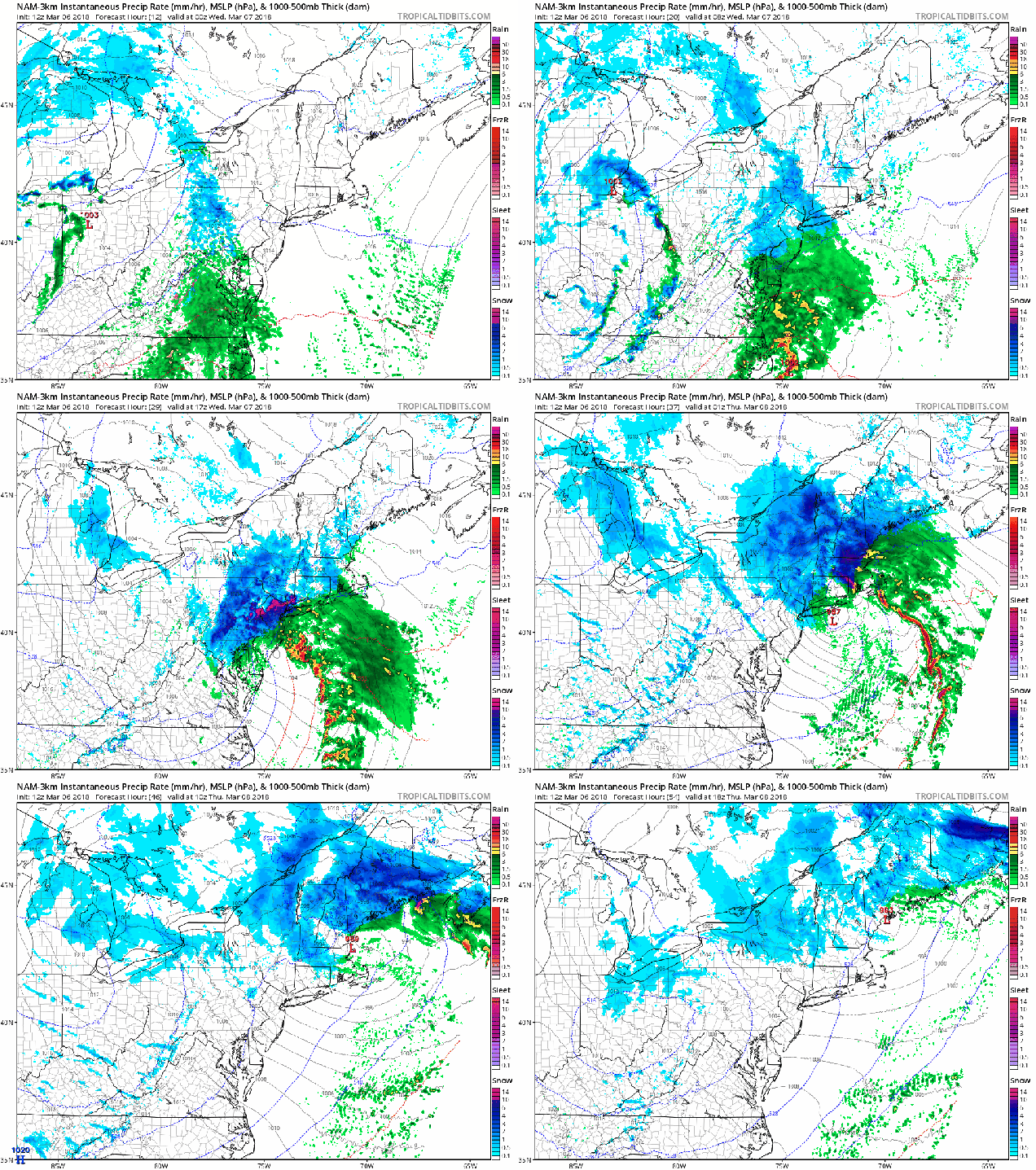
There’s actually a storm passing well south of New England today, so in a sense, we were spared a bit. It’s producing some rain and snow across the Mid-Atlantic states and sending a veil of high clouds across New England, dimming the sunshine this afternoon. Another storm will quickly follow on Wednesday, thickening up the cloud cover. Let’s start out by saying that this storm will not be as bad as the ones we’ve had earlier this month. We’re not expecting blizzard conditions. Oh, we’ll still have a decent amount of snow, strong winds, and some coastal flooding issues, but not at the magnitude of the earlier storms.
Forecast for the storm’s progression based on the High-Resolution version of the NAM model. Loop provided by Tropical Tidbits.
We’ll start with the winds and coastal flooding. Tides are astronomically high again this week, so the biggest concern will be at high tide at northeast and north facing beaches, especially the high tides early Wednesday and Thursday morning, as well as Wednesday afternoon. A coastal flood watch is in effect for the early Thursday morning high tide across Plymouth County as well as the Cape and Islands. As for the winds, sustained winds of 20-30 mph are expected, especially along the coast, with gusts of 40-50 mph, perhaps as high as 60 mph across the Cape and Islands, Southeastern Massachusetts, and parts of Rhode Island. Combine that with heavy, wet snow (more on that in a moment), and yes, power outages become a concern once again.
Wind gusts for 11pm Wednesday predicted by the High-Resolution NAM model Image provided by WeatherBell.
Now, for the part that most of you care about – snowfall. The snow should develop during the afternoon hours on Wednesday. While it’ll be snowing during the afternoon rush hour, it shouldn’t cause too many problems (the people on the roads, however, probably will). With the higher sun angle at this time of year (equivalent to mid-September), and only light snow expected during the daylight hours on Wednesday, accumulations will be fairly light, especially on paved surfaces. Once the sun sets, steadier snow will move in, with the bulk of the accumulating snow expected Wednesday evening into Thursday morning. While the accumulating snow will be all done Thursday morning, light snow and snow showers may linger into the afternoon. We also will likely be dealing with a rain/snow line. A change to rain seems likely across Cape Cod for a while Wednesday evening, with that changeover likely penetrating into parts of southeastern Massachusetts. The question is – how far? Right now, we don’t expect it to get past Route 44, if it even gets that far.
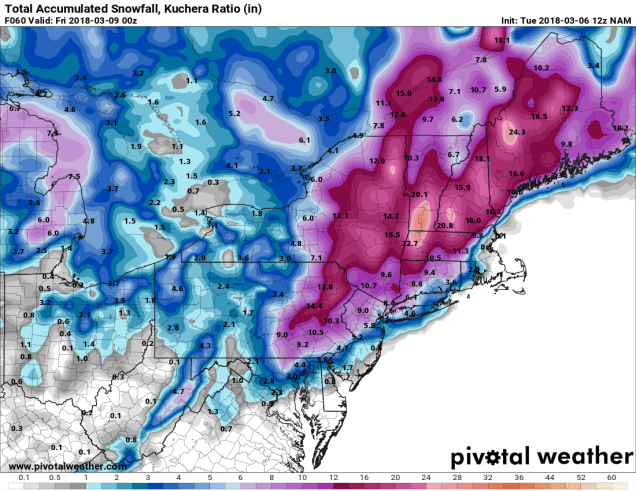
That brings us to the amounts. With temperatures close to freezing, this is going to be a heavy, wet snow, so keep that in mind when you go out to shovel or fire up the snowblower. Here’s what we’re thinking:
Cape Cod: 1-3″, highest totals on the Upper Cape
South Coast: 3-5″
South and East of I-95: 4-7″
Metro Boston/MetroWest/Merrimack Valley/North Shore: 5-9″
Southern NH (Nashua/Manchester)/NH Seacoast: 4-7″
The snowfall forecast from the High-Resolution NAM model is closest to our thinking right now. Image provided by Pivotal Weather.
Once this system pulls away, an upper-level low pressure area will slowly move across the Northeast, which may give us some additional snow showers on Friday and Saturday, but we’re not expecting much accumulation (if any), with those. Beyond that – right now, the models aren’t showing any big storms over the next 2 weeks, but that is always subject to change. Remember, just a couple of days ago, most of the TV talking heads told you that this storm was going to stay offshore and we didn’t have to worry about it. As for when we can expect some actual “Spring” weather – well, the pattern looks to remain chilly right into at least early April.
So, remember just 24 hours ago when we said that we weren’t buying all of the ridiculous numbers being floated out there because we expected the models to shift the storm a bit eastward? Yeah, the opposite happened.
Hey, we’re the first ones to admit when we are wr….wro…..wro….when our forecast starts going off the track. We wait until we’re fairly sure we’ve got a good forecast before we publish, because we want you to have the best info available. Well, in this case, that didn’t work out. Luckily, we still haven’t gotten into the storm, so we have time to fix things.
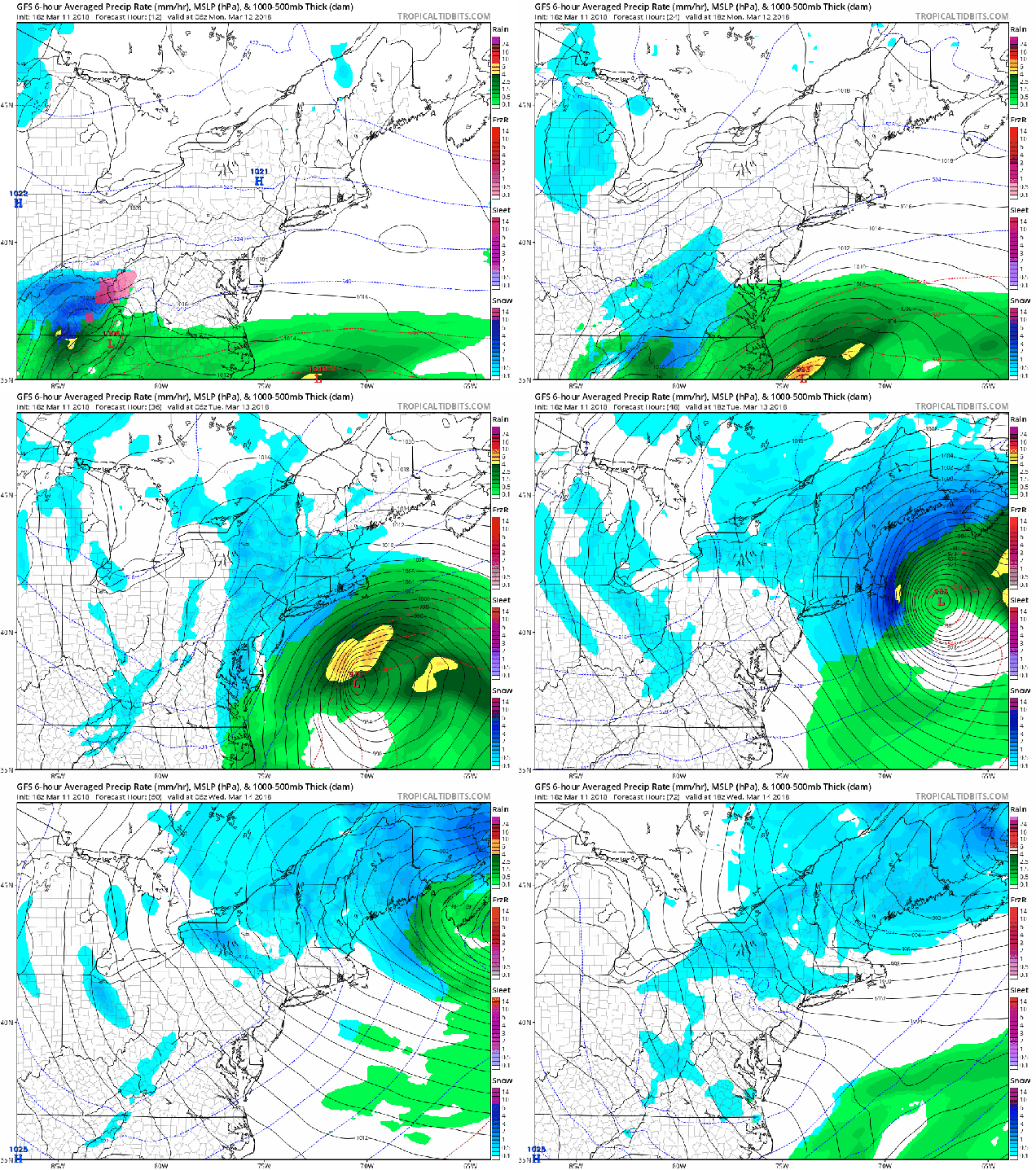
Forecast for the storm based on the GFS model. Loop provided by the College of DuPage.
The basics that we outlined last night still hold true. Low pressure will move up the East Coast and rapidly intensify, passing south and east of Cape Cod later Tuesday. Strong winds are likely, especially along the coast. Sustained winds of 20-30 mph with gusts to 50 mph inland and possibly 70 mph along the coast. We may have understated the coastal flood threat a bit, but still, any coastal flooding will be minor in nature and confined to right around high tide.
Even the timing is still close to what we were thinking last night. Precipitation should develop near or just after midnight, and quickly get heavy. Blizzard conditions are likely, mainly along the coastline, from daybreak through early afternoon. Snowfall should start to lighten up after midday, but likely doesn’t completely end until late evening or even close to midnight Tuesday night.
That brings us to the snowfall amounts. There are still some models that are showing amounts that border on ridiculous. As you should know by know, our forecasts, while filled with sarcasm and satire, try to be level-headed, not ridiculous. How much can you expect?
Outside of I-495: 6-12″
Merrimack Valley/Southern NH/NH Seacoast: 8-14″
Most of the remainder of Eastern Massachusetts and Rhode Island: 12-18″
The “jackpot” is likely to be across portions of Plymouth County and onto Cape Cod, where some totals of 18 to perhaps 24″ are possible. The big question here is whether any rain mixes in. This is especially possibly across the Outer Cape and Nantucket. If there is any rain, that will knock accumulations down.
The GFS model is still the closest to our current thinking for snowfall amounts. Image provided by Pivotal Weather.
Once the storm moves out, an upper-level low pressure area may trigger additional snow showers on Wednesday and again Thursday (and possibly Friday too). Oh, and since you’re all sick of snowstorms by now, depending on which model you believe, we could have as many as 3 more between now and the end of March. We’ll worry about each of those as they become a threat (or don’t).
Another week, another nor’easter. Once again, the hype train has left the station and is heading down the track at top speed. Without further delay, let’s get right to it.
Low pressure moving across the Tennessee Valley Sunday night will redevelop off the South Carolina coastline early Monday, then head up the East Coast. The storm will pass south and east of Cape Cod while rapidly intensifying. As is usually the case, this will bring strong winds and snow to the region. Obviously, the strength of the winds and the amount of snow will be dependent on how close the storm passes to New England, among other things. As you probably heard on Sunday, the vast majority of media outlets, as well as all of the Facebook Forecasters, and even the National Weather Service, are calling for very heavy snowfall from this storm. The reason for this is that many of the models are forecasting these amounts. Well, as a noted colleague has said in the past – “If the models were as good as everyone thinks, there would be no need for meteorologists”. Oh, we still think there will be some heavy snow, and we’re expecting plowable amounts, but let’s pump the brakes on the talk of “1-2 feet” or “12-18 inches”, or our personal favorite cop-out “10-14 inches+” (adding the plus so that if anything higher than that falls you can claim that your forecast was accurate).
GFS forecast for the progression of the storm on Tuesday. Loop provided by Tropical Tidbits.
Before the storm arrives, Monday will be a generally cloudy day, with temperatures right around where they should be in mid-March. Winds will start to pick up in the evening, and for most of the day on Tuesday, we’re looking at northeast winds of 20-30 mph, with gusts to 40-50 mph inland, and 60-70 mph at the coast. Yes, this may take down some additional trees, but coastal flooding will not be a problem this time, as tides are significantly lower than they were a week ago.
As for the snow, it should develop around midnight, give or take an hour or two, and quickly become steady and heavy. Heavy snow will continue into the morning, then lighten up a bit in the afternoon, winding down in the evening. If you can work from home on Tuesday, we’d recommend it. Travel will be extremely difficult in the morning, as snow could be falling at the rate of an inch an hour or more, and it will be accompanied by strong winds, creating blizzard conditions at times.
Official definition of a blizzard. Note, snowfall accumulations do not factor into this. Image provided by WCVB-Boston.
As for how much, well, as we mentioned above, we’re not going with the big amounts that many others are. Why? Well, for one, a portion of that snow is going to fall during the daytime. At this time of year, the sun angle is strong enough (equivalent to the end of September), then unless it’s falling heavily, it will have trouble accumulating. Now, it will be falling heavily in the morning, but probably not as heavily in the afternoon. So, you can slice a little off of those model snow maps right there. Another reason is that we expect the models to shift a little more with the track slightly farther offshore. That has been the trend during the day today, and if that continues, it will result in lighter amounts. Yes, unlike the Facebook Forecasters who just take the what the models say exactly and call it a forecast, we use experience and education to figure out where the models are likely in error, and adjust accordingly. As for amounts, that likely means a general 8-12 inches across most of the region, with isolated heavier totals, especially across southeastern Massachusetts and the Cape. Across the Outer Cape and Nantucket, there is the possibility of some rain mixing in, which would keep accumulations lower.
The snowfall forecast from the Sunday late-afternoon run of the GFS is closest to our thinking for the next storm. Image provided by Pivotal Weather.
Once the system pulls away, an upper-level low will move into the region on Wednesday, keeping plenty of clouds in place, with some additional snow showers possible. The upper-level low may linger into Thursday, with only a little more sunshine, and a slightly lower chance for snow showers. High pressure finally starts to build in for Friday and Saturday. By Sunday, the next system approaches the region. Right now, this system looks warmer, with rain, but given the way this month has gone, does anyone wanna bet that it stays that way? Anyone? Anyone? Bueller? Bueller?
Monday: Any early sunshine disappears behind increasing clouds. High 37-44.
Monday night: Becoming windy with snow developing, becoming heavy at times. Low 26-33.
Tuesday: Windy with snow, heavy at times in the morning, tapering off late in the day. High 29-36.
Tuesday night: Snow ending in the evening, remaining mostly cloudy with winds gradually diminishing. Low 24-31.
Wednesday: Partly to mostly cloudy and breezy with more snow showers developing. High 32-39.
Thursday: More clouds than sunshine, breezy, chance for a few snow showers. High 34-41.
Friday: A mix of sun and clouds, still breezy, slight chance for another snow shower. High 33-40.
Saturday: Partly to mostly sunny. High 37-44.
Sunday: Becoming cloudy with a chance of rain or snow showers. High 41-48.
You’re heard the phrase a million times: “March comes in like a lion and goes out like a lamb.” Well, the first half of that statement certainly was accurate this year, as much of the Northeast took a beating from last Friday’s storm. While many places are still trying to recover, we’ve got another one on our doorstep, and this one is promising to be more white than wet for much of the region.
Forecast for the storm based on the High-Resolution NAM model. While not exactly what we’re thinking, this model is probably closest to our thoughts on how the system will play out. Loop provided by Tropical Tidbits.
The low pressure system that brought blizzard conditions to the Northern Plains and Upper Midwest over the past 36-48 hours will cross the Ohio Valley this afternoon and evening. By tonight, a secondary area of low pressure will develop off the North Carolina coast, and rapidly strengthen as it heads up the East Coast. It will likely pass very close to, possibly right over Cape Cod late Wednesday night, then move into the Gulf of Maine on Thursday. The exact track of the system will play a gigantic role in determining how far inland the rain/snow line penetrates. Some models keep the storm south and east of Nantucket, which could keep the rain/snow line confined to southeastern Massachusetts. Some models bring the storm across southeastern Massachusetts, with the rain/snow line getting as far inland as Springfield, MA and Manchester, NH. These are the two extremes, and much like Goldilocks and the Three Bears, we’re looking for something more in the middle.
There are a few different aspects of this storm that we need to worry about, depending on where you are located – strong winds, heavy rain, and heavy snow. We’ll start with the winds.
Peak wind gusts as predicted by the High Resolution NAM model for 8pm Thursday evening. Wind gusts in excess of 40 mph are possible across most of the region, with gusts of 50-60 mph along the coast. Image provided by Weathermodels.com
Many parts of the region, especially along the coast and in southeastern Massachusetts and Rhode Island are already sensitive to hearing a forecast for strong winds, after last Friday’s system took down so many trees and knocked out power to hundreds of thousands of residents. Thankfully, winds won’t be as strong with this storm, but they’ll still be capable of causing damage, especially to trees already weakened by the last storm. Winds will pick up during the day on Wednesday, likely peaking Wednesday night into early Thursday. Sustained winds of 25-40 mph, with gusts to 60 mph are expected,especially along the coast. Luckily, tides are not as high as they were a few days ago, so coastal flooding isn’t as much of a concern, though some splashover is certainly possible around the time of high tide. As the storm passes by early Thursday, winds will shift into the northwest and start to ease. However, this storm will likely move into Atlantic Canada and not move much for a few days, so we may still be dealing with gusty winds (just not as strong), right through Friday.
Rainfall forecast from the High Resolution NAM model through Thursday afternoon. Image provided by WeatherBell.
Next up is heavy rain. As we mentioned earlier, the rain/snow line is still a big question. However, in areas that stay all rain or mostly rain, such as Cape Cod, parts of southeastern Massachusetts and Rhode Island, rainfall will be heavy. Many places could see more than an inch of rain, possibly even 2 inches in spots. These are areas that saw 2 to as much as 5 inches of rain from the last storm. The ground is still saturated in parts of the region, and most of the rivers and streams remain fairly high. If you add another 1 to perhaps 2 inches of rain in a short period of time, you’re looking at more flooding in some areas.
Now, to the part that most of you want to know about – heavy snow. As the last paragraph and the map above show, this system will contain plenty of moisture. Away from the coast, temperatures will be near or just below freezing. That means that moisture will fall in the form of heavy, wet snow. The general rule of thumb is that 1 inch of rain equals about 10 inches of snow, but that is dependent on temperature. That’s why when temperatures are in the teens you get a fluffier snow where 1 inch of rain could mean 20 inches of snow. In cases like this, where temperatures will be close to freezing, that ratio could be closer to 8-to-1 (or even lower). Still, even at 8-to-1, you only need an inch and a half of rain to get a foot of snow. Complicating things is the rain/snow line. Places that see rain mix in will get significantly less snow than nearby areas that have no rain at all. Our best estimate right now is that the rain/snow line gets as far inland as Interstate 95, possibly a few miles farther. As the system passes by on its way into the Gulf of Maine on Thursday, that rain/snow line will crash southeastward towards the coast, changing everyone back over to snow before everything winds down Thursday afternoon. So, what does that mean for amounts?
Cape Cod/Southeastern Massachusetts: Less than 1″
I-95 corridor: 2-6″ (highly dependent on the rain/snow line)
MetroWest/NH Seacoast: 6-12″ (lightest amounts south & east where some rain could mix in)
Merrimack Valley/Southern NH: 8-14″, isolated heavier totals.
The snowfall forecast from the NAM is probably closest to our thinking right now. Image provided by Pivotal Weather.
Finally, there’s the timing of this system. Snow will develop across the region around midday Wednesday, give or take an hour or two. Due to the higher sun angle at this time of year, it will have trouble accumulating on pavement at first, though grassy areas could see some accumulation. The snow will quickly change to rain across southeastern Mass, southern Rhode Island, and Cape Cod. The rain/snow line will continue moving northwestward, likely reaching the I-95 corridor near the evening rush hour. At the same time, the steadier and heavier precipitation will arrive. During Wednesday evening and night, snowfall may accumulate at the rate of an inch or more per hour. If you don’t have to be out Wednesday night north and west of Boston, then don’t. Driving conditions will likely be rather poor. The rain/snow line will crash to the coast early Thursday morning, with the steadiest precipitation winding down towards daybreak. Occasional snow showers may continue off and on through the afternoon, but most of the accumulating snow should be done in the morning. Expect a lot of school cancellations on Thursday, especially north and west of Boston.
If you’re wondering if this is winter’s last gasp – don’t count on it. Some of the models show the potential for another system early next week, but it’s still several days away, and there’s plenty of disagreement among the models as to the evolution of that system. We’ll worry about that, if we need to, this weekend.
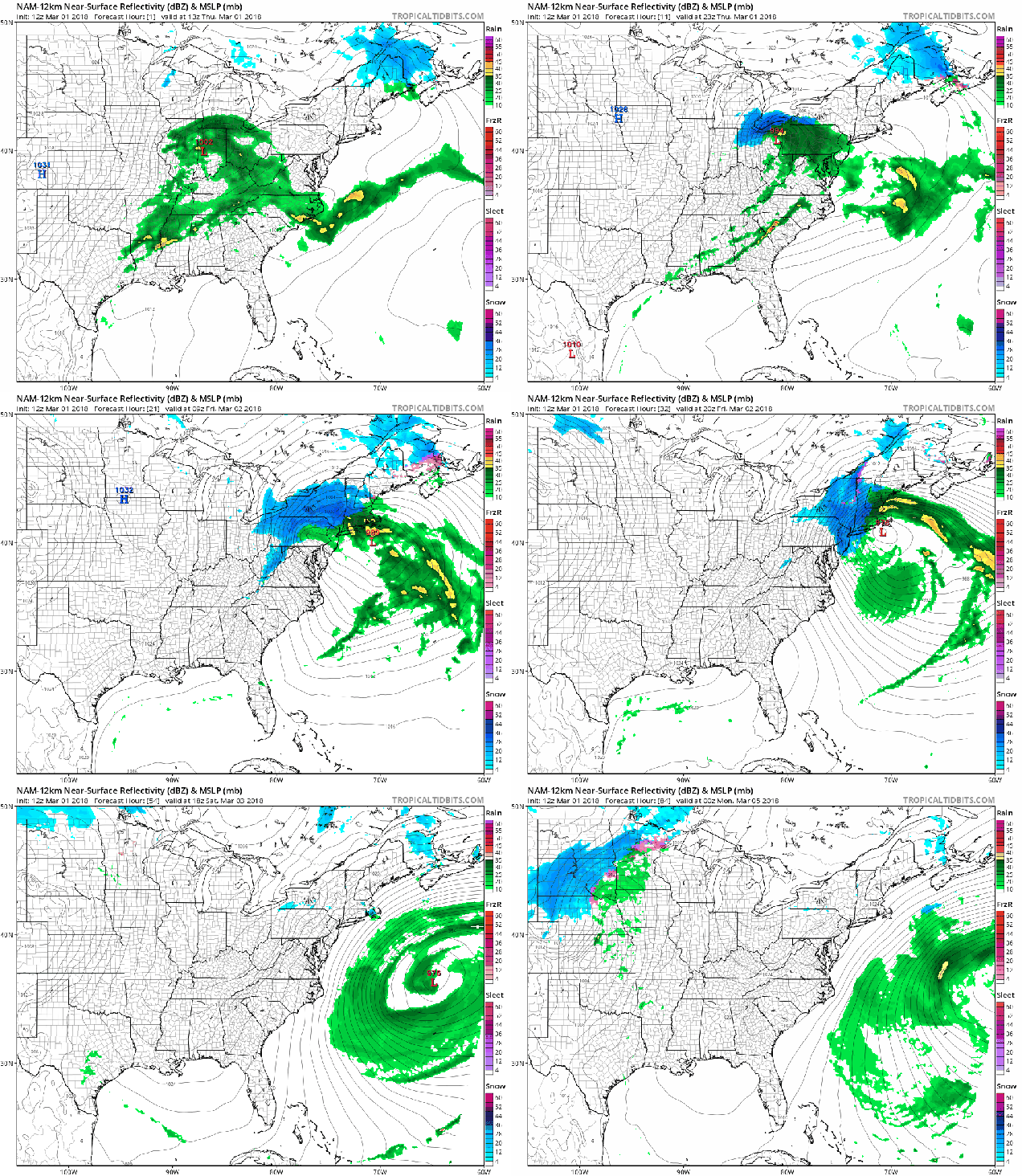
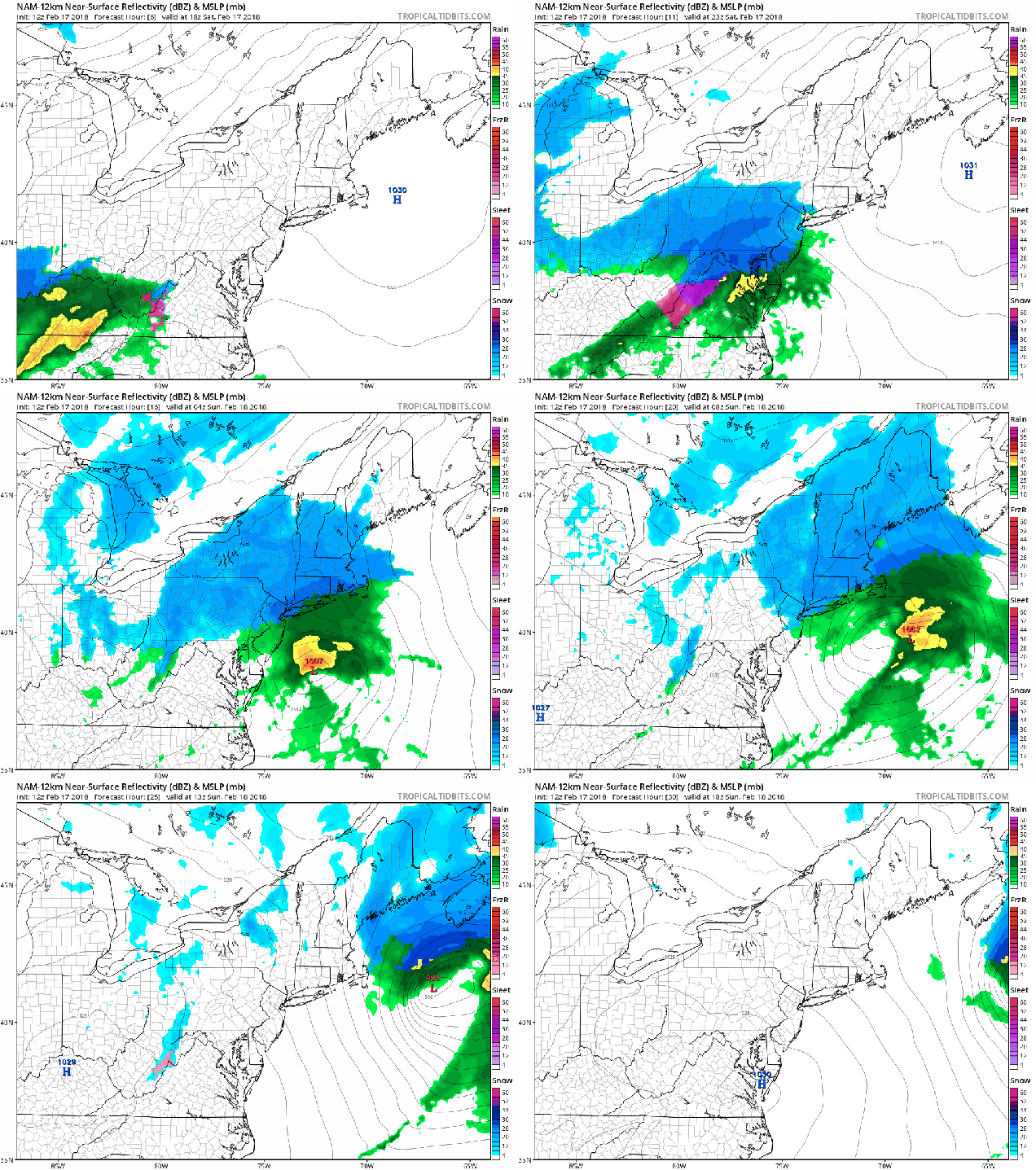
You’ve heard the news talking about it all week, and we mentioned it in our Weekly Outlook. A storm is coming on Friday, and it’s going to be a big one.
Forecast for the storm based on the NAM model. Loop provided by Tropical Tidbits.
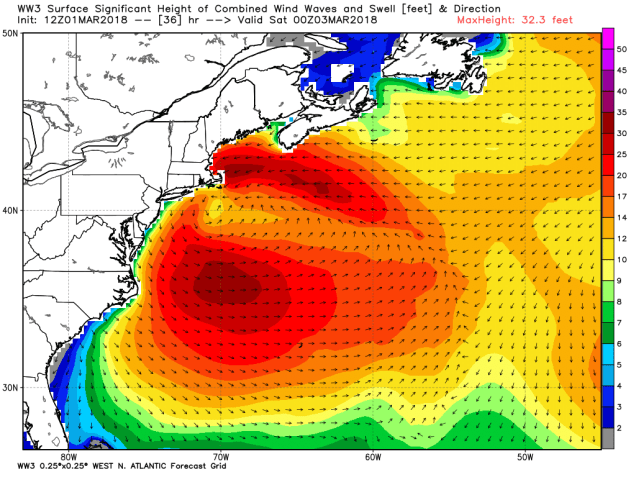
The biggest impacts from this storm will be felt along the coastline. We’ve already got astronomical high tides due to the full moon we had this week. As in the storm churning up the Atlantic and strong winds (more on that in a moment), and you’ve got a recipe for major coastal flooding. Parts of the coastline, especially east-facing shorelines, could see flooding worse than they saw with the storm in early January. Coastal flooding was already observed during the Thursday afternoon high tide without any impacts from the storm. What do you think is going to happen when you have onshore winds of 30-50 mph and 20-40 foot seas? Yeah, nothing good.
The Wave Watch Model shows a long eastern fetch and 20-30 foot seas slamming into New England Friday evening. Things won’t improve much over the weekend. Image provided by WeatherBell.
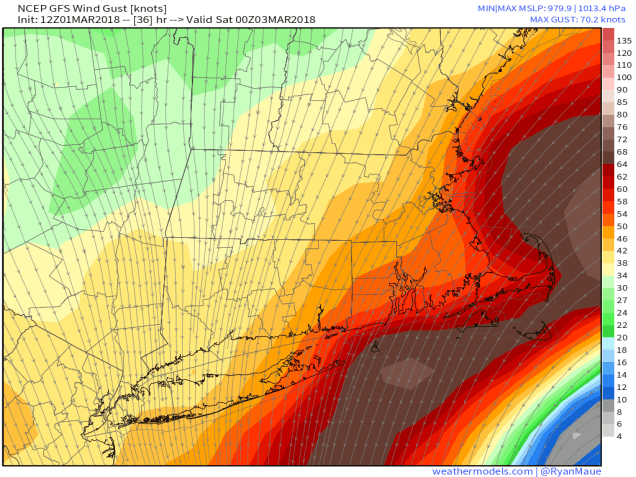
As we mentioned above, strong winds will impact most of the region starting late Thursday night and especially on Friday as the storm begins to intensify in the waters south of New England. High Wind Warnings are already in effect for much of the region. Sustained winds of 25-45 mph with gusts of 60-70 mph are likely, especially near the coastline. Some gusts in excess of hurricane force are possible, especially across Cape Cod. With winds this strong, power outages are likely, so make sure you are prepared for that possibility. Winds may start to diminish a little on Saturday, but as the storm heads southward and grows even larger, it will continue to produce gusty winds across the region right through the weekend.
GFS forecast for wind gusts across the region Friday evening. The red color is 50 knots (58 mph). The brown is hurricane force 64 knots/74 mph). Image provided by Weathermodels.com
In addition to the damaging winds and coastal flooding, heavy rain is also expected across the region. Rain will move in after midnight tonight, and continue for much of the day on Friday, heavy at times. The storm is drawing moisture northward from the Gulf of Mexico and the tropics, and as it moves into the relatively cooler air in place here, it will wring it out across the region. We’re looking at rainfall totals of 1 to 3 inches across the region, with some heavier amounts possible, especially across southeastern Massachusetts and Rhode Island. We’ve already had a wet start to the year, and the ground is close to saturated, so this will likely result in flooding in many areas. Rivers are also running fairly high, especially for this time of year, so river flooding will also become a concern.
GFS forecast for rainfall through Sunday morning. Image provided by Weathermodels.com
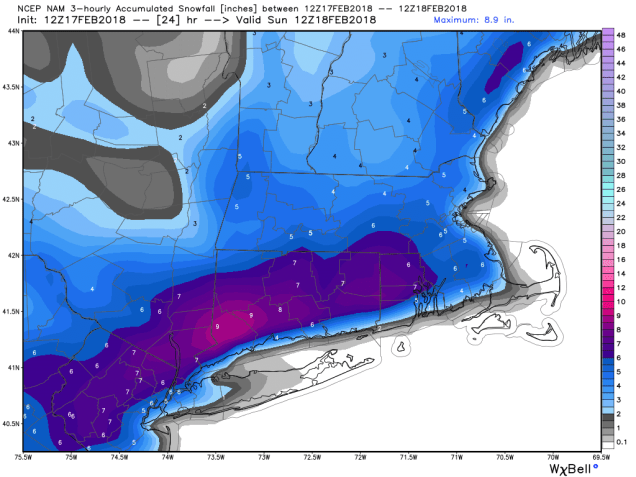
Now we get to the tricky part of the forecast, where the greatest uncertainty lies – snowfall. There’s not a lot of cold air in place when the storm moves in, and we don’t have a big high pressure area to the north to help keep any cold air around. However, there is some cold air aloft, and as the system gets cranked up, it may try to tap into that cold air. As we get into some of the heavier bands of precipitation, it may drag some of that cold air down, changing the rain to snow in some areas. This isn’t the type of thing we can predict well in advance, so trying to pinpoint now is futile. However, don’t be surprised if some places change over to snow for a while during the day on Friday. Of course, some of the higher elevations, especially in the Worcester Hills, Monadnocks, and Berkshire, should have enough elevation to have quite a bit of snowfall from this system. It will be the heavy, wet snow that nobody likes either. You know, the type that weights down tries and power lines, making it even easier for them to snap when you get wind gusts of 50 mph or more. The other thing we’re concerned about with snowfall is what happens on the backside of the system. As the storm starts to pull away late Friday, colder air will settle in behind the system. The questions are: 1. How quickly does that cold air move in? and 2. How much precipitation is still around? Right now, we wouldn’t be surprised to see some locations pick up a quick 1-3 inches, possibly even more. There’s also a chance that the colder air moves in too late, and many places see little to no snow at all. The worst-case scenario, and we’re not completely ruling it out yet, is that places change over to snow in a burst of heavy precipitation during the afternoon (like we mentioned above), and never change back. If that were to happen (and the place where that would be possible would be mainly north and west of Boston), then very heavy snowfall amounts would become more likely. For the record, we’re not expecting this, but we are a little wary that it’s at least possible.
Snowfall forecast through Sunday evening from the NAM model. Image provided by Pivotal Weather.
By Monday, high pressure builds in, and everything calms down. We may have another storm to deal with towards the middle of next week, but we’ll worry about that one after we get through this one.
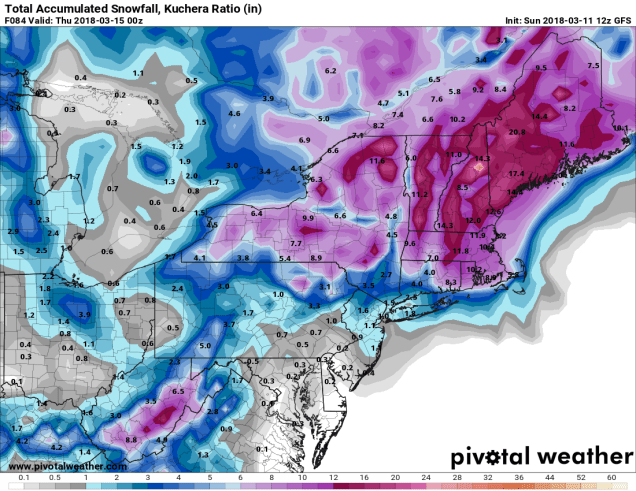
The last few days have been fairly mild around here, and even milder air is coming in for the first half of the upcoming week. So naturally, we’re talking about a snowstorm for tonight.
Low pressure is over the Tennessee Valley at midday, and will quickly move towards the Mid-Atlantic coastline this evening, passing south of New England as it intensifies tonight. Even though the sun is shining now, clouds will quickly move in this afternoon, with snow developing late this evening, around 9pm or so, give or take an hour. Snow will continue overnight, with the possibility for some briefly moderate to heavy snow. Since most of you will be sleeping, this shouldn’t cause too many problems. A change to rain seems likely across parts of Cape Cod and the Islands, possibly even into extreme southeastern Massachusetts.
Forecast for the progression of the storm based on the NAM model. Loops provided by Tropical Tidbits.
Everything winds down near or a little after daybreak. For most of us, a general 3 to 5 inches of snow is expected, with a few spots possibly seeing 6 or 7 inches. Across Cape Cod, where a change to rain is likely, amounts of 1 to 3 inches seem more plausible at this time.
The NAM model is probably closest to our thinking for snowfall totals with this storm. Image provided by WeatherBell.
The snow won’t last too long though. The sun will return Sunday afternoon, with temperatures getting up into the 40s. That will help to quickly melt a lot of what fell overnight. Temperatures will drop back below freezing Sunday night, so things may ice up once again. Use caution if you’re heading out for anything. Even warmer weather is heading in for the start of the week. A warm front will move through on Monday, with some showers preceding the front late in the day. Once the front moves through, unseasonably warm conditions are expected for Tuesday and especially Wednesday. On Tuesday, high temperatures should get into the upper 50s and 60s away from the South Coast. On Wednesday, we could challenge some record highs, with some places possibly making a run at 70 degrees. A cold front will move through late in the day on Wednesday, bringing an end to the warm weather, so enjoy the early taste of Spring while it’s here.
Yes, temperatures could reach or exceed 70 in parts of the region on Wednesday. Image provided by Weathermodels.com
















 Storm HQ