Some unsettled weather is on the way for the 2nd half of the week for our region. Meanwhile, Jamaica is going to get walloped by Hurricane Melissa.
Wednesday could be a chilly, damp day for a good portion of the region. Image provided by Weathermodels.com
We start the week off with dry and cool conditions thanks to a large area of high pressure of eastern Canada. However, with an upper-level low still overhead we’ll see clouds popping up today with just a slight chance for a shower, mainly across Cape Cod where northerly winds could generate a few ocean-effect showers. As we head into Tuesday, low pressure will move off the Carolina coast and head out to sea well south of New England. However, the gradient between the developing low and the high to our north will result in northeast winds, bringing some moisture in from the Atlantic. This will result in some clouds, and possibly a few showers or some drizzle across eastern Massachusetts from late Tuesday into Wednesday.
The potential exists for more heavy rain at the end of the week. Images provided by Pivotal Weather.
By late Wednesday, we’ll start to watch a low pressure area developing in the Tennessee Valley. It should head northeastward, but there is still quite a bit of uncertainty with this system. We’ll likely see some rain move in from this system on Thursday, ending Friday morning, which would result in dry weather for trick-or-treating Friday evening. But that’s not the entire story. It’ll likely be rather breezy with this storm, taking down a lot of the remaining leaves on the trees. As a result, if we get enough rain, it’ll result in some slick roads with the wet leaves covering them, as well as areas of poor drainage flooding. But wait, there’s more! We’ll also be keeping an eye on what remains of Hurricane Melissa (more on that in a moment). The system should be heading well out to sea, but it could be just close enough to the East Coast for our developing system to tap into it, and infuse some tropical moisture, which would result in much heavier rain from this system. This scenario is not looking that likely at this time, but it is a possibility, so we felt the need to mention it. An upper-level low pressure area will then move in for the weekend with breezy and cooler conditions.
Forecast track for Hurricane Melissa. Image provided by the National Hurricane Center.
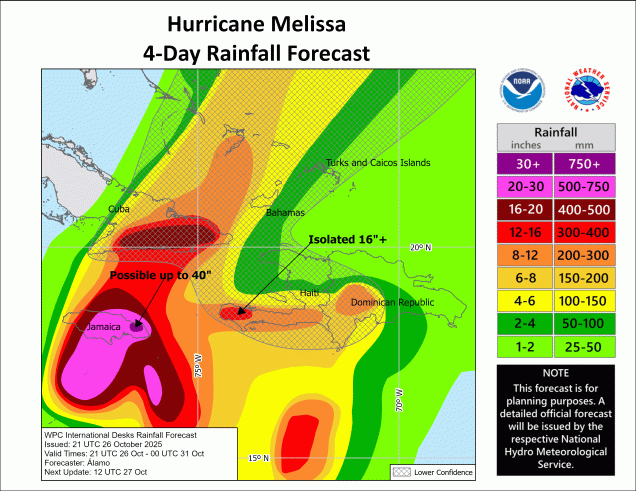
In the Caribbean, Hurricane Melissa is assaulting Jamaica and nearby portions of Cuba and Haiti, and this will continue for another day or two. As of 2am, Melissa was centered about 130 miles south-southwest of Kingston, Jamaica, drifting toward the west at 5 mph. Maximum sustained winds were near 150 mph, making Melissa a Category 4 storm. Unfortunately, the forecast for Jamaica is rather grim. Melissa will drift westward for another day or so, with some additional strengthening expected. That means rain and strong winds will continue to increase across Jamaica. By Monday night, the storm will start to turn more toward the north as a trough of low pressure off the Southeast begins to pick the storm up. That means it will likely cut right across the island, possibly as a Category 5 storm. In addition to sustained winds possibly in excess of 150 mph, a storm surge of up to 15-20 feet east of the center will likely result in widespread damage, including the capital city of Kingston. On top of that, rainfall totals of 20-40 inches (or higher) will result in catastrophic flooding and mudslides. Torrential rain and strong winds are also likely across portions of Haiti and eastern Cuba, especially as Melissa turns northward towards these areas. It will then cross the Turks and Caicos and parts of the Bahamas as it continues to slowly weaken. By mid-week, it could be a threat to Bermuda as well, possibly still at hurricane strength.
Rainfall totals of 20 to perhaps 40 or more inches are possible. Image provided by the Weather Prediction Center.
Monday: Morning sun with some afternoon clouds, slight chance for a shower or two, especially across Cape Cod. High 48-55.
Monday night: Clear skies north and west of Boston, partly to mostly cloudy south with a few showers or drizzle possible. Low 34-41, a little milder across Cape Cod.
Tuesday: Intervals of clouds and sun, breezy, chance for a few showers or some drizzle near the coast. High 49-56.
Tuesday night: Partly to mostly cloudy with some showers or drizzle around. Low 36-43, a little milder across southeastern Massachusetts and Cape Cod.
Wednesday: More clouds than sun, breezy, some additional showers or drizzle near the coast. High 49-56.
Wednesday night: Mostly cloudy, chance for a few showers. Low 38-45, a little milder across Cape Cod.
Thursday: Plenty of clouds, breezy, rain developing. High 54-61.
Thursday night: Periods of rain, breezy. Low 44-51.
Friday: Cloudy and breezy with rain ending. High 54-61.
Saturday: A mix of sun and clouds, breezy. High 51-58.
There’s a four letter word that begins with the letter R and rhymes with main that we really need, but you won’t find it in our forecast for the next week.
None of the models are forecasting any rain around here for the next 7 days. Images provided by Pivotal Weather.
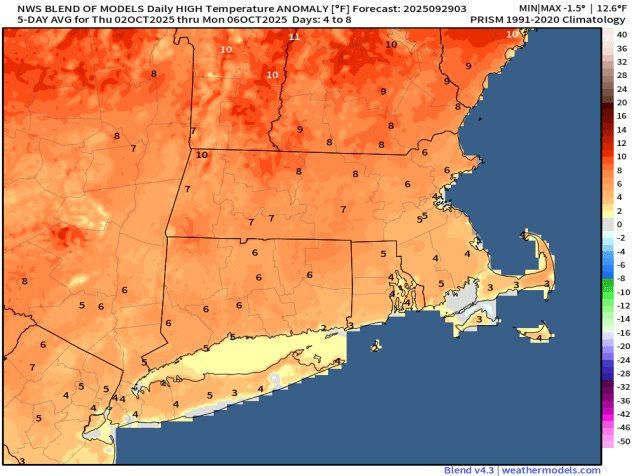
The week starts off with high pressure in control, keeping us rather mild for the end of the September. A cold front will move through on Tuesday, but only a few clouds will accompany it. Behind it, strong high pressure builds in with gusty north to northeast winds bringing much cooler air in for Wednesday and Thursday. Meanwhile, with Hurricane Humberto and Tropical Storm Imelda well offshore (more on them in a moment), the gradient between the large high and those systems will result in gusty winds towards the middle of the week. By the end of the week and the weekend, the high will slide off to the south, keeping us dry, but with temperatures getting back to near to above normal levels.
Temperatures will turn above normal once again for the end of the week and the weekend. Image provided by Weathermodels.com
Meanwhile, as previously mentioned, we have both Hurricane Humberto and Tropical Storm Imelda in the Atlantic at this time. While both storms could bring some adverse weather to Bermuda over the next few days, and they will both generate rough surf for the East Coast, they should both stay offshore, much to dismay of the Facebook Forecasters everywhere who were tossing around phrases like “Fujiwara Effect” without actually understanding what it meant.
Tropical Storm Imelda (lower left) and Hurricane Humberto (lower right) continue to churn up the Atlantic. Loop provided by NOAA.
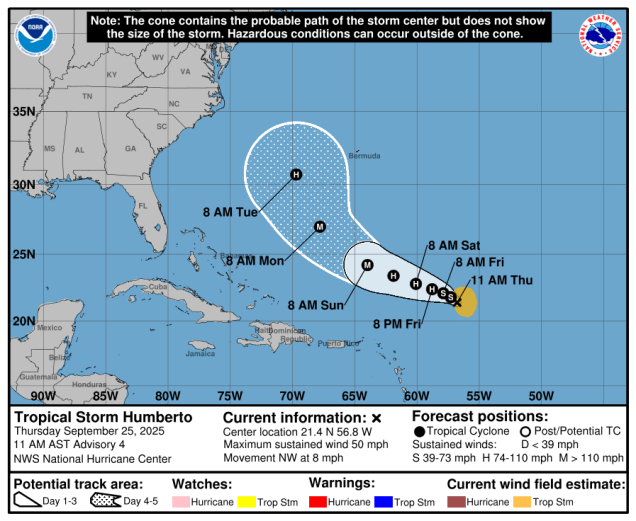
As of 2am Monday, Hurricane Humberto was centered about 400 miles south-southwest of Bermuda, moving toward the northwest at 14 mph. After reaching Category 5 strength over the weekend, the storm was still a Category 4 system with maximum sustained winds near 140 mph. Humberto should turn northward passing west of Bermuda Monday night and Tuesday before turning northeastward. Humberto may produce some gusty winds and heavy rain across Bermuda, which is why a Tropical Storm Watch has been issued. By Wednesday, Humberto will transition into an extratropical storm as it heads east-northeastward into the open waters of the Atlantic.
Forecast track for Hurricane Humberto. Image provided by the National Hurricane Center.
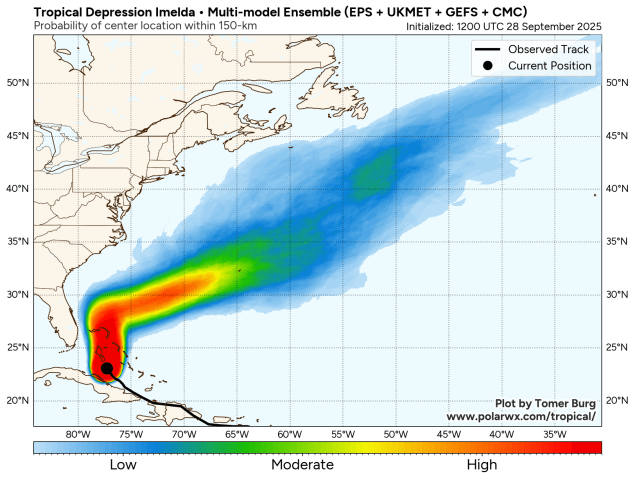
Closer to the East Coast is Tropical Storm Imelda, crossing the Bahamas early this morning while moving northward at 8 mph. Imelda has maximum sustained winds near 45 mph, and has been very slow to get organized. It will continue to bring squally conditions to the northwestern and central Bahamas on Monday where a Tropical Storm Warning remains in effect. As Imelda heads northward, some heavy rain may impact coastal portions of the Carolinas. By Tuesday, the storm should make a hard right turn and pull away from the coast, while strengthening, possibly becoming a hurricane by midweek. The current forecast calls for Imelda to pass very close to Bermuda Wednesday night or Thursday as a hurricane, making for a very rough week for the British Overseas Territory. After that, it should also become an extratropical storm over the open waters of the Central Atlantic.
Imelda could become a threat to Bermuda later this week. Image provided by Polar Wx.
Monday: Sunshine dimmed by some afternoon high clouds. High 73-80.
Monday night: Partly to mostly cloudy. Low 54-61.
Tuesday: Partly sunny. High 70-77.
Tuesday night: Clear to partly cloudy, becoming breezy. Low 44-51.
Wednesday: Mostly sunny, breezy, cooler. High 59-66.
Wednesday night: Clear skies, breezy along the coast. Low 38-45.
Thursday: Plenty of sunshine, breezy in the morning. High 57-64.
Thursday night: Clear to partly cloudy. Low 38-45.
Quieter weather is on the way for the weekend around here, but the Atlantic is anything but quiet right now.
There are two active storms in the Atlantic, and a third one could form soon. Loop provided by NOAA.
A cold front will push offshore tonight, with the much-needed rain finally coming to an end. However, that front is going to stall out south of New England, so skies will only slowly start to clear out on Friday as high pressure builds in. Saturday looks to be a pretty nice day with sunshine and mild temperatures, however, another wave riding along that stalled out front will send some clouds back in by late in the day. While most of the rain associated with that wave will stay offshore, there is the chance that some showers could reach the South Coast Saturday night and early Sunday. As that wave starts to pull away on Sunday skies will only slowly clear out. High pressure returns on Monday with more sunshine and mild temperatures.
Most of the models keep the rain near or off the South Coast Saturday night and early Sunday. Images provided by Pivotal Weather.
Meanwhile, in the Atlantic, we have two named storms and a third that likely will be named in the next few days. We’ll start with Hurricane Gabrielle, which still has maximum sustained winds near 75 mph. It is centered about 385 miles west of the Azores, moving toward the east at 31 mph. A Hurricane Warning is in effect for the Azores at this time. Gabrielle will cross the Azores tonight and early Friday, then will likely become extratropical and weaken over cooler waters as it approaches the coast of Portugal this weekend.
Radar from the Azores shows Hurricane Gabrielle approaching the islands. Loop provided by Brian McNoldy, Univ. of Miami, Rosenstiel School.
A little closer to home is Tropical Storm Humberto, which now has maximum sustained winds near 50 mph. It is centered about 465 miles east-northeast of the Northern Leeward Islands, moving toward the northwest at 8 mph. Humberto is expected to strengthen into a hurricane on Friday, and could become a pretty potent storm this weekend as it passes well north of the Greater Antilles. The current forecast shows that it should turn more toward the northwest and eventually north as it reaches the western edge of a ridge of high pressure, passing west of Bermuda early next week. However, Humberto’s future isn’t quite that simple. We’ll get into that a bit more later.
Forecast track for Tropical Storm Humberto. Image provided by the National Hurricane Center.
The more immediate concern is with a tropical wave crossing Hispaniola and the Turks and Caicos this afternoon. This system has been producing squally conditions across the northeastern Caribbean for the past day or two, and will continue to do so as it moves northwestward over the next few days. The system could consolidate into an area of low pressure tonight or Friday as it moves into the Bahamas. The storm may become a tropical depression or tropical storm this weekend, and if it does, it would be named Imelda. The future of this system is a lot murkier than the others. It will be traversing the very warm waters of the Gulf Stream, and upper-level conditions should be favorable, so the system could intensify pretty rapidly, but where it goes is still a giant question mark. Forecast models always struggle with systems that haven’t developed yet, and they already have a wide range of solutions for this system. Complicating that is the fact the Humberto will not be that far away, and there is the potential for the storms to interact with each other. This could alter the tracks of both storms,, making for even higher uncertainty that usual.
There is a considerable amount of uncertainty where the system goes once it gets past the Bahamas. Image provided by Polar Wx.
While the track will obviously dictate what effects this system would have on land, there are bigger concerns. A frontal system will stall out near the region, bringing some heavy rain into parts of the Mid-Atlantic states and the Carolinas. With this system likely to be at least nearby for a couple of days to start the week, there is the potential for some very heavy rain across parts of the Carolinas and Mid-Atlantic states. In fact, some models show the potential for as much as 5-10 inches (or more) of rain over the next week. While the region has been in a drought, that much rain at once will likely lead to widespread significant flooding. Parts of this region experienced devastating flooding just one year ago from Hurricane Helene, and still have not recovered. This would be a significant setback to those recovery efforts.
Most of the models show some significant rainfall for the Carolinas over the next week. Images provided by Pivotal Weather.
Friday: Morning clouds give way to some afternoon sunshine. High 74-81.
Friday night: Clear to partly cloudy. Low 55-62.
Saturday: Morning sun, then clouds return in the afternoon. High 71-78, coolest along the coast.
Saturday night: Mostly cloudy, chance for a few showers, mainly near the South Coast. Low 55-62.
Sunday: Any linger showers near the South Coast end early, otherwise plenty of clouds with some afternoon sun developing, especially north of the Mass Pike. High 73-80.
Hurricane Erin will pass well offshore over the next 24 hours while we enjoy some rather nice weather for most of the upcoming weekend.
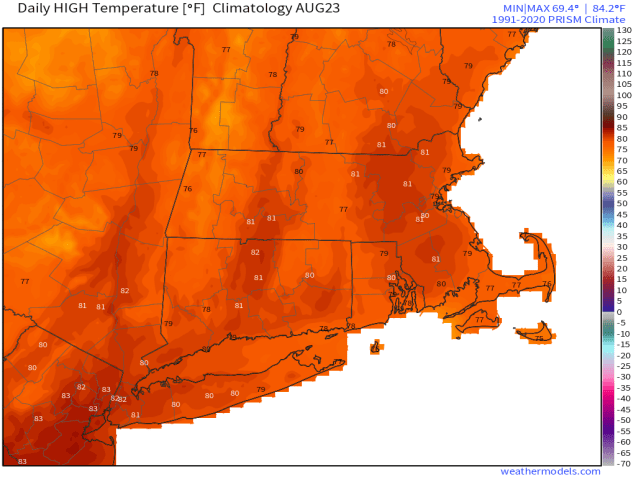
Average high temperatures in late August are around 80. Image provided by Weathermodels.com
High pressure will slowly build into the region this evening, allowing skies to gradually clear out tonight. With the high in control on Friday we’ll have lots of sunshine, with temperatures getting back close to where they should be in the latter half of August. It will remain breezy, especially during the morning, due to the gradient between the high building in and distant Hurricane Erin pulling away offshore (more on that in a moment). As the high moves off to the east on Saturday, southwest winds will usher warmer air in, with many areas away from the coast likely topping 80 degrees. We’ll see things start to change on Sunday as a cold front begins to slowly approach the region. Clouds will increase, and gusty southerly winds will develop, increasing humidity levels across the area. Some showers and thunderstorms are expected ahead of the front, but they should hold off until evening, so don’t cancel any outdoor plans for Sunday. The front will take its time moving through, with showers and thunderstorms expected for Sunday night into Monday. We’ll also be watching a small area of low pressure moving up the East Coast on Monday. While most of the models keep it far enough offshore to have little to no impact here, some bring it close enough to bring in a periods of steadier rain to Cape Cod and possibly southeastern Massachusetts Monday afternoon and evening. We’re leaning towards it staying too far offshore to impact us, but we are keeping an eye on it just in case.
Low pressure should remain offshore on Monday, but that doesn’t mean we’ll stay dry. Images provided by Pivotal Weather.
Hurricane Erin was centered about 400 miles northwest of Bermuda as of early Thursday afternoon, moving off toward the northeast at 18 mph. Maximum sustained winds were near 100 mph. Tropical Storm Warning are in effect for parts of the Mid-Atlantic coast as well as Bermuda. As Erin accelerates northeastward and steadily weakens conditions will improve across Bermuda and the East Coast, though rough seas and rip currents will still be a significant hazard into the weekend. With astronomically high tides, some minor coastal flooding is also still possible for the next day or two in parts of New England and Atlantic Canada.
Hurricane Erin remains a large and potent storm off the East Coast. Loop provided by NOAA.
There are two other tropical waves we’re keeping an eye on this afternoon, but neither is a significant threat to land at this time. A tropical wave is approaching the Leeward Islands this afternoon. It remains disorganized, but as it heads northwestward, conditions will become more favorable for development, and it could become a tropical depression over the weekend or early next week as it turns northward out over the open Atlantic. It will bring squally conditions to the Leeward Islands as well as the Virgin Islands and possibly Puerto Rico over the next few days, but otherwise won’t be a threat to land areas, though it could threaten Bermuda by early next week. Another wave is in the central Atlantic, and shows some signs of organization. While conditions are favorable for some development right now, they will become more hostile by this weekend, which would effectively end any further chances for development.
Hurricane Erin is pulling away from the East Coast but there are other areas we’re watching in the Atlantic. Loop provided by Tropical Tidbits.
Thursday night: Skies clear out from northwest to southeast, still breezy across Rhode Island, southeastern Massachusetts, and Cape Cod. Low 51-58, a little milder on Cape Cod.
Friday: Plenty of sunshine, winds diminish by early afternoon. High 77-84, a little cooler across Cape Cod.
Friday night: Clear to partly cloudy. Low 54-61.
Saturday: Sunshine and a few clouds. High 80-87, a little cooler across the South Coast and Cape Cod.
Some cooler weather is on the way for a good portion of the upcoming week. Hurricane Erin remains a potent storm east of the Bahamas, and could have a minor impact on the region later this week.
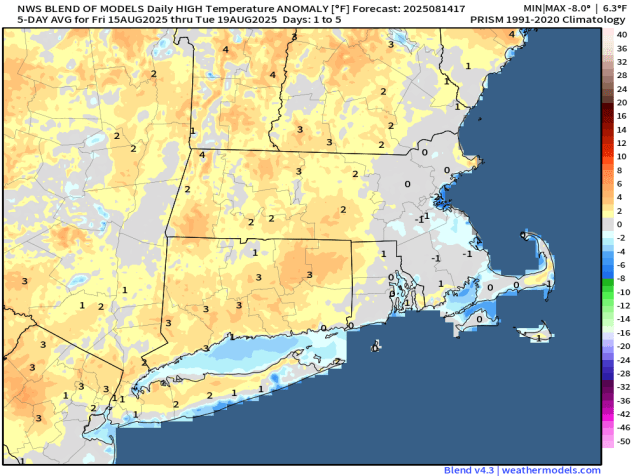
Temperatures will be below normal for much of the upcoming week. Image provided by Weathermodels.com
We’re starting the week off with high pressure building in, bringing us dry and rather cool conditions for Monday and Tuesday. Temperatures will only get into the 70s during the day, possibly staying in the 60s in a few spots, especially near the coast. Some of the normally cooler locations could drop into the 40s during the next few nights, especially tonight. Time to turn off the air conditioning and open the windows, but possibly grab an extra blanket at night. As we get to Wednesday, a weak disturbance will head out way from the Great Lakes, bringing in some clouds and a few showers as well. For now, the showers don’t look to be that heavy or widespread, but at this point, we need any rain we can get.
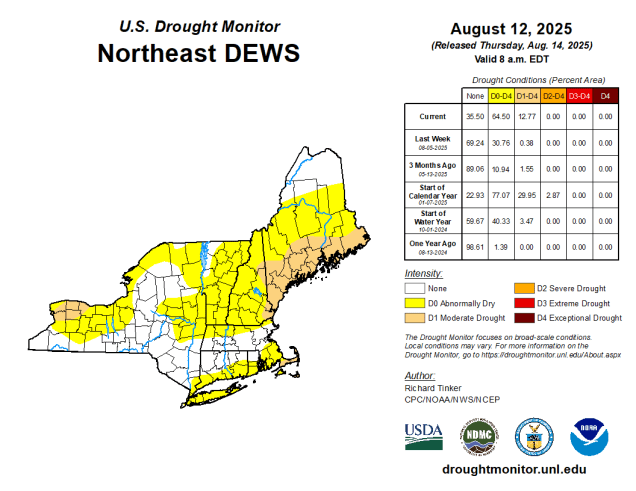
Drought conditions are expanding and worsening across the Northeast. Image provided by the National Drought Mitigation Center.
High pressure returns for Thursday with drier weather, and temperatures remaining on the cool side, but that might not be the whole story, as we’ll also need to keep an eye on Hurricane Erin. Erin should be passing well offshore (more on that a little later), but with a high to the northwest and the potent storm offshore, the gradient in between the two could result in some gusty winds across Cape Cod and the Islands, and possibly southeastern Massachusetts as well. In addition, the high clouds around the edge of Erin may dim the sun during the day. One thing that is definite is that Erin will produce rough seas, high waves, and a significant risk for rip currents at beaches across the region, especially across the South Coast and east-facing beaches on Cape Cod. When you add in the fact that there’s a new moon this weekend tides will be running astronomically high, so there is the chance for some coastal flooding in a few spots toward the end of the week.
Wave heights could reach 10 feet or more near the South Coast by Friday. Image provided by WeatherBell.
Once Erin pulls away Friday should be another sunny and cool day, but as the high pressure area moves offshore, it will allow warm and increasingly humid conditions to return on Saturday. Another frontal system may move in on Sunday with some showers and thunderstorms, but the timing is still in question, so don’t go cancelling any outdoor plans just yet.
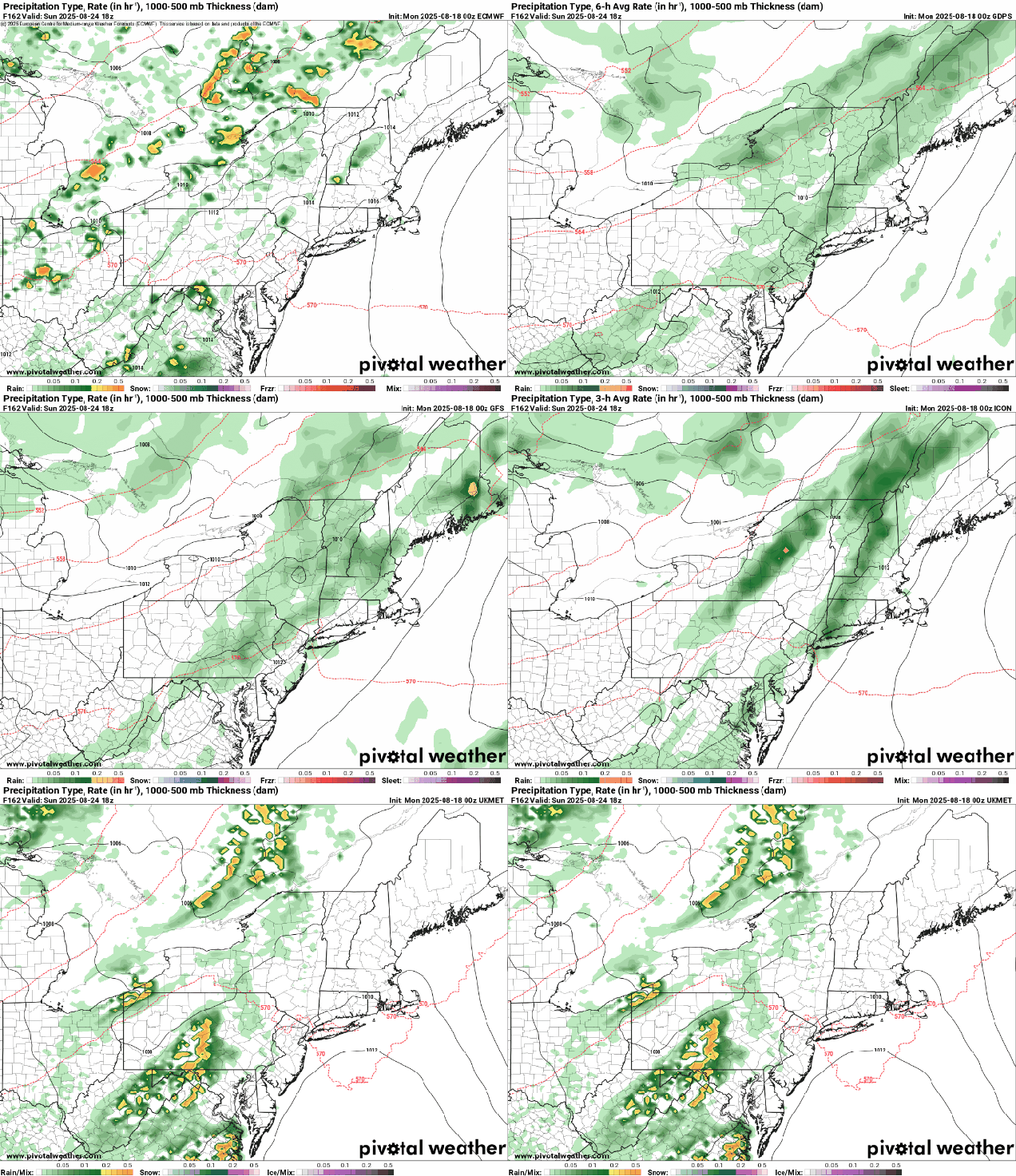
Will Sunday be wet or will the showers hold off until late? It’s too early to tell. Images provided by Pivotal Weather.
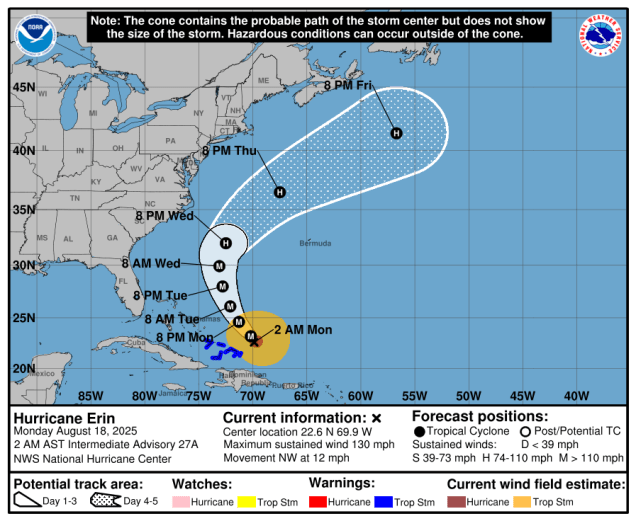
As for Hurricane Erin, it peaked as a Category 5 hurricane north of Puerto Rico on Saturday then weakened a bit, before restrengthening Sunday night. As of 2am Monday, Erin was centered about 110 miles northeast of Grand Turk Island, moving toward the northwest at 12 mph. Maximum sustained winds were near 130 mph. Erin will turn more toward the north over the next day or so, and could strengthen a little more before a weakening trend begins. Erin should pass in between the East Coast and Bermuda towards midweek before turning more toward the northeast and heading out into the open Atlantic. As Erin heads northward it will expand in size, and some of its outer bands could clip Bermuda and/or the Outer Banks of North Carolina with some squalls around midweek. Erin will generate high waves, rough surf, and a high danger for rip currents up and down the East Coast this week.
Forecast track for Hurricane Erin. Image provided by the National Hurricane Center.
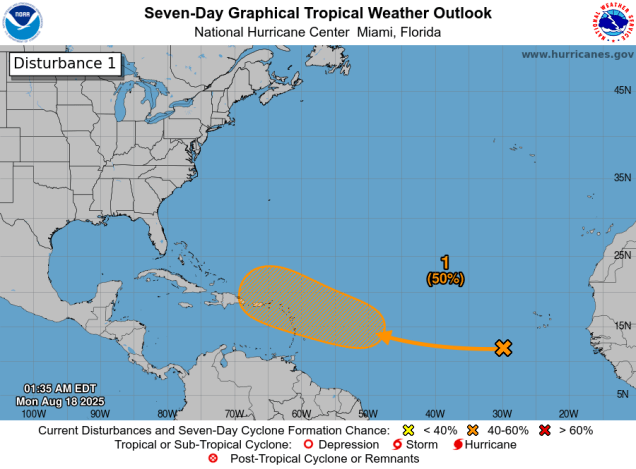
Meanwhile, there’s another tropical wave we’ll be keeping an eye on in the Atlantic. The wave is pulling away from the Cabo Verde Islands today, and will make its way across the Atlantic this week. While conditions are not favorable for any development right now, toward the end of the week they could become a little more conducive, and some of the models show the potential for this system to develop towards next weekend as it heads toward the Lesser Antilles.
Another system crossing the Atlantic could develop later this week. Image provided by the National Hurricane Center.
Monday: Morning clouds, then becoming partly to mostly sunny, breezy early. High 69-76, coolest along the coast.
Monday night: Clear to partly cloudy. Low 47-54, a little warmer in urban areas and right along the coast.
Tuesday: A mix of sun and clouds. High 70-77.
Tuesday night: Partly cloudy. Low 54-61.
Wednesday: Partly sunny, chance for a few showers. High 71-78.
Wednesday night: Partly cloudy. Low 54-61.
Thursday: Sunshine filtered through some high clouds, especially across southeastern Massachusetts and Cape Cod, where it will also be breezy. High 71-78.
Thursday night: Clear to partly cloudy. Low 53-60.
Friday: Some high clouds early, otherwise sunny, breezy across southeastern Massachusetts and Cape Cod. High 77-84.
Saturday: Sunshine and some afternoon clouds, breezy. High 80-87, a little cooler at the coast.
Sunday: Partly sunny, breezy, a little more humid, chance for some showers and thunderstorm. High 77-84.
A good portion of the upcoming weekend should feature some very nice mid-summer weather. Meanwhile, Tropical Storm Erin continues to gather strength in the central Atlantic.
Temperatures will average close to normal through the weekend despite some ups and downs. Image provided by Weathermodels.com
A cold front will slide offshore this evening, taking any remaining shower and thunderstorm activity with it. Behind it, high pressure builds in with sunshine, cooler temperatures and lower humidity for Friday. As the high moves off to the east, temperatures will start to creep back up on Saturday, but will be pretty close to where they should be in mid-August. Sunday looks to be another hot and humid day, though it won’t be anywhere near as oppressive as some days we had earlier in the summer. A cold front will be approaching the region though, and it may produce some showers and thunderstorms late in the day and into the evening. High pressure then builds back in with much cooler and drier air for Monday.
Tropical Storm Erin continues to slowly intensify in the central Atlantic. Loop provided by NOAA.
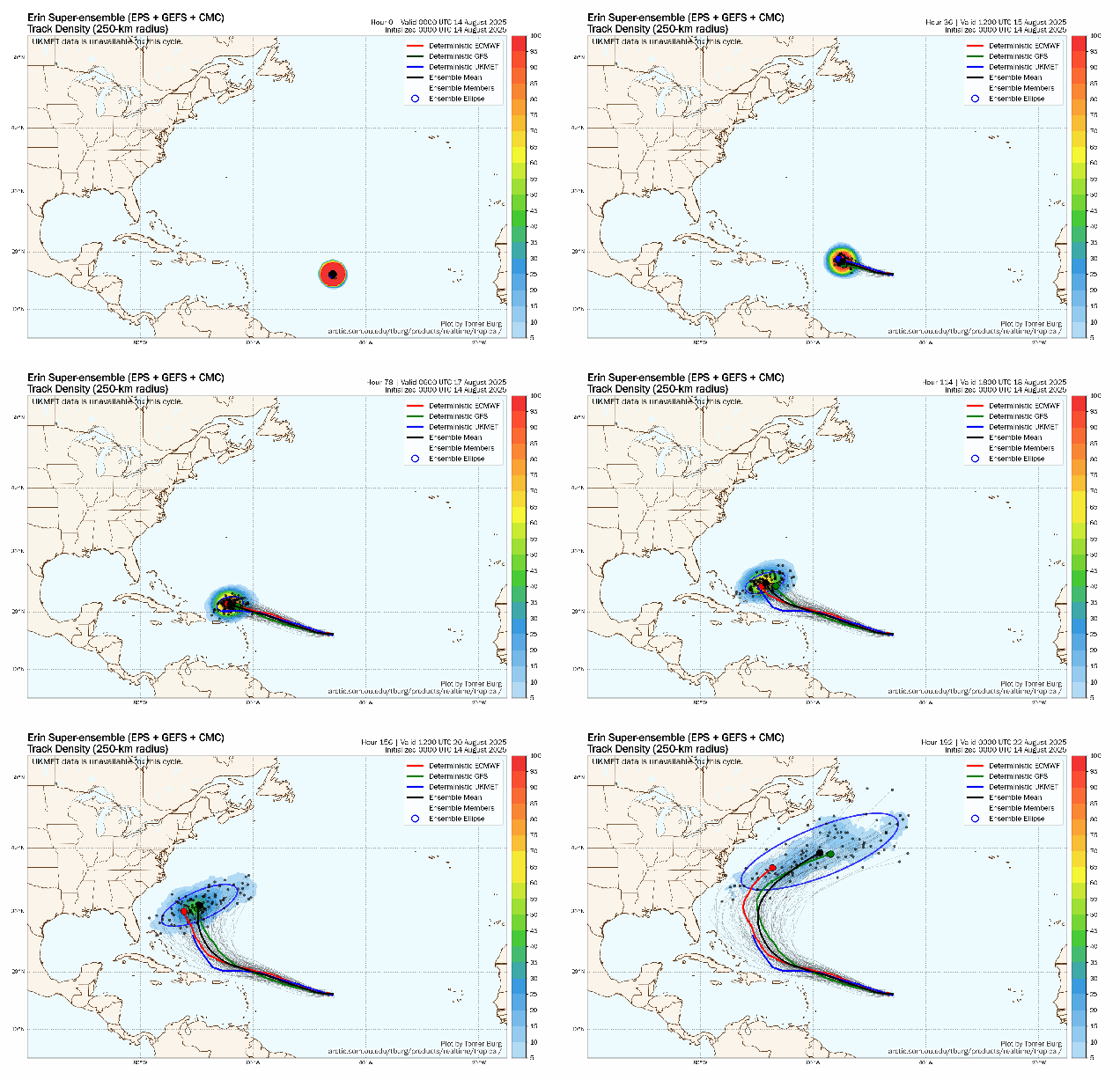
Out in the central Atlantic Ocean, Tropical Storm Erin continues to slowly get its act together. As of 11am Thursday, Erin was centered about 890 miles east of the Northern Leeward Islands, moving toward the west at 17 mph. Maximum sustained winds were near 60 mph. Conditions are becoming more favorable for Erin to intensify, as wind shear is limited at this time, the atmosphere ahead of Erin is more moist, and sea surface temperatures gradually increase as you head westward. Erin is expected to become a hurricane on Friday. As for the track, that’s fairly simple for now. A large ridge of high pressure remains in place to the north, so Erin should continue in a general west to west-northwest direction for the next few days, likely passing north of the Caribbean this weekend. It may be close enough that some of the outer bands from the storm will bring squally conditions to parts of the Virgin Islands and Puerto Rico, but a direct hit is unlikely at this time. Erin should continue to intensify this weekend, likely become a major hurricane.
Beyond this weekend, things become a little less clear. Erin will encounter a weakness in the ridge to the north, which should allow the storm to turn more toward the northwest and then north. However, when that turn occurs and how quickly it will make the turn are still very uncertain. Most of the models show the storm passing in between Bermuda and the East Coast, eventually turning northeastern and heading out into the Atlantic, but that is far from a lock at this point. The earlier the turn happens, the bigger the threat to Bermuda. The later the turn happens, the more likely that the storm could impact parts of the Bahamas. The storm will produce rough surf and increase the chances for riptides along the East Coast next week, but for now at least, that looks to be the only impact from the storm. That could change if the turn happens later, but we’ll worry about that if it happens.
Ensemble forecasts for the track of Erin. Loop provided by Tomer Burg.
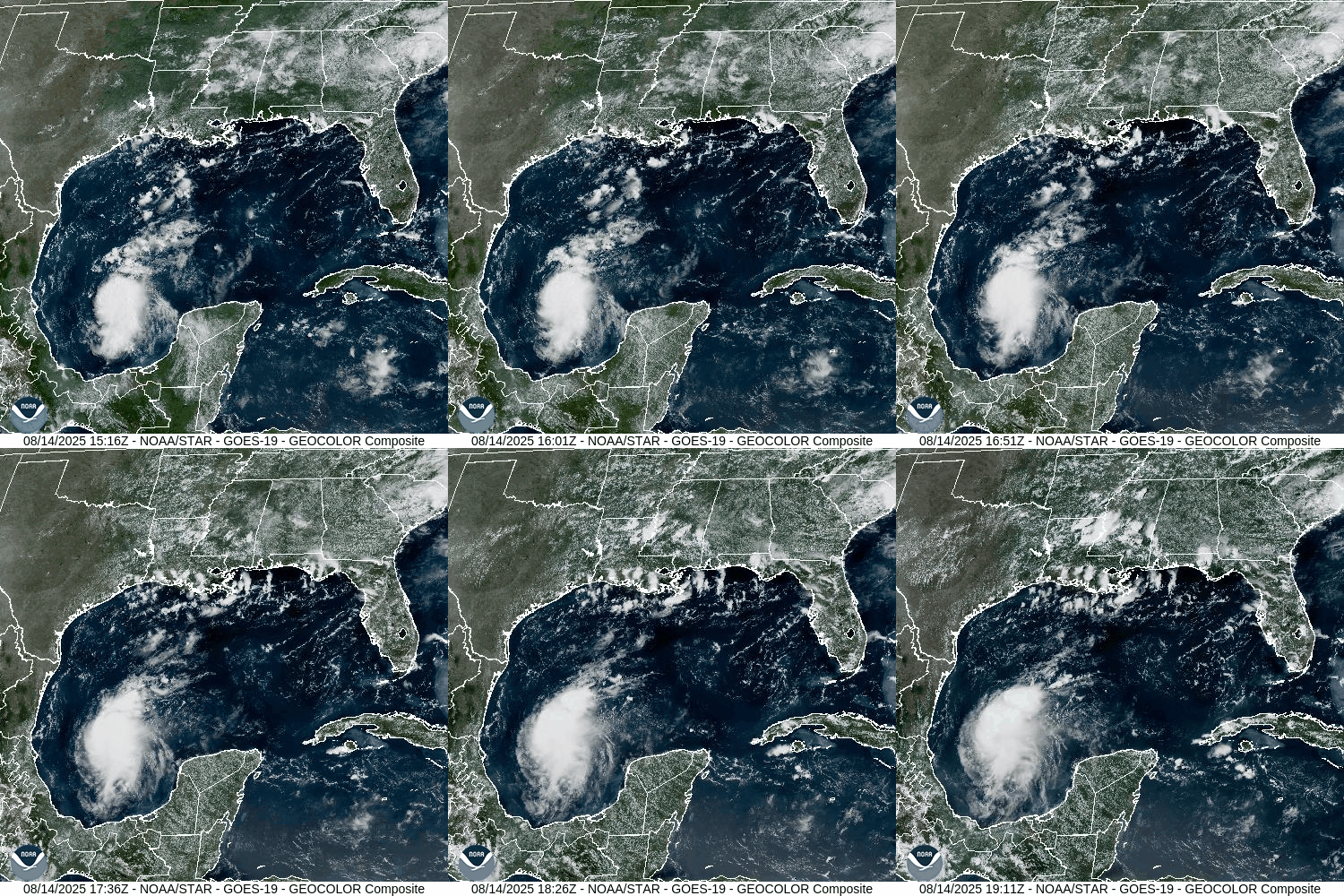
There’s also a system we’re keeping an eye on in the Bay of Campeche. A cluster of thunderstorms has been slowing organizing over the past day or so, and as it heads northwestward, conditions are favorable for some development over the next day or so. The system doesn’t have a lot of time, as it will likely move inland somewhere close to the Texas/Mexico border late Friday or Friday night, but it could become a Tropical Depression or Tropical Storm before moving inland. Whether it develops of not, heavy rain, gusty winds, and coastal flooding are possible in this region for the next few days.
We’re also keeping an eye on a developing system in the western Gulf of Mexico. Loop provided by NOAA.
Thursday night: Any lingering showers or thunderstorms end in the evening, becoming clear to partly cloudy overnight. Low 62-69.
Friday: Partly to mostly sunny, not as humid. High 76-83, coolest along the coast.
Friday night: Partly cloudy, some patchy fog may develop. Low 57-64.
Saturday: Sunshine and a few clouds. High 81-88, cooler near the coast.
Saturday night: Clear to partly cloudy. Low 62-69.
Sunday: Morning sun, then increasing clouds, chance for a late-day shower or thunderstorm, humid. High 85-92, a little cooler across the South Coast and Cape Cod.
Sunday night: Any showers or thunderstorms end in the evening, becoming partly cloudy overnight. Low 59-66.
Monday: A mix of sun and clouds, cooler and less humid. High 72-79.
Once again, most of this week will be fair quiet weather-wise. The tropics, however, are not going to be quiet.
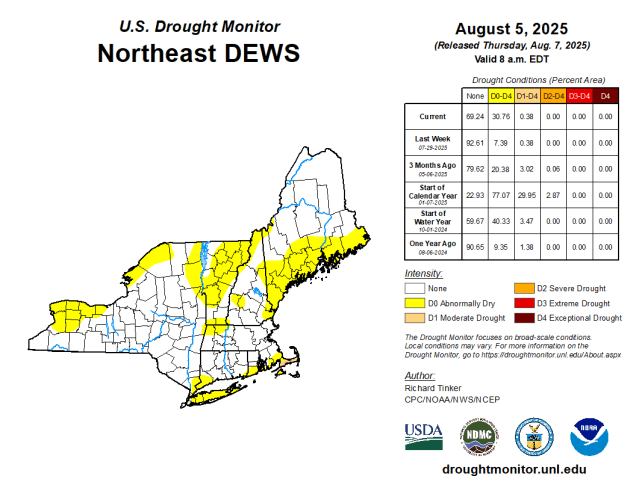
Drought conditions are beginning to re-emerge, especially in SE Massachusetts and Cape Cod. Image produce by the National Drought Mitigation Center.
High pressure remains in control for the first half of the week with warm and increasingly humid conditions. While the humidity levels will be on the rise, it won’t be oppressive, certainly not like it was earlier in the summer. Temperatures will likely be near or over 90 degrees for the next few days inland, but a seabreeze will keep coastal areas cooler each afternoon. We could see a shower or thunderstorm across inland areas Wednesday, but otherwise, it should remain dry. A cold front will move in on Thursday, likely producing some showers and thunderstorms, along with some cooler weather. Temperatures on Thursday will be dependent on the timing of the front and the associated thunderstorms. A later arriving front likely means another day of 90-degress temperatures inland, but and earlier-arriving front would prevent that. High pressure builds back in with drier and cooler conditions on Friday. As the high slides off to the east, warmer weather will return for the weekend.
Tuesday looks like the hottest day with temperatures well into the 90s away from the coast. Image provided by Weathermodels.com
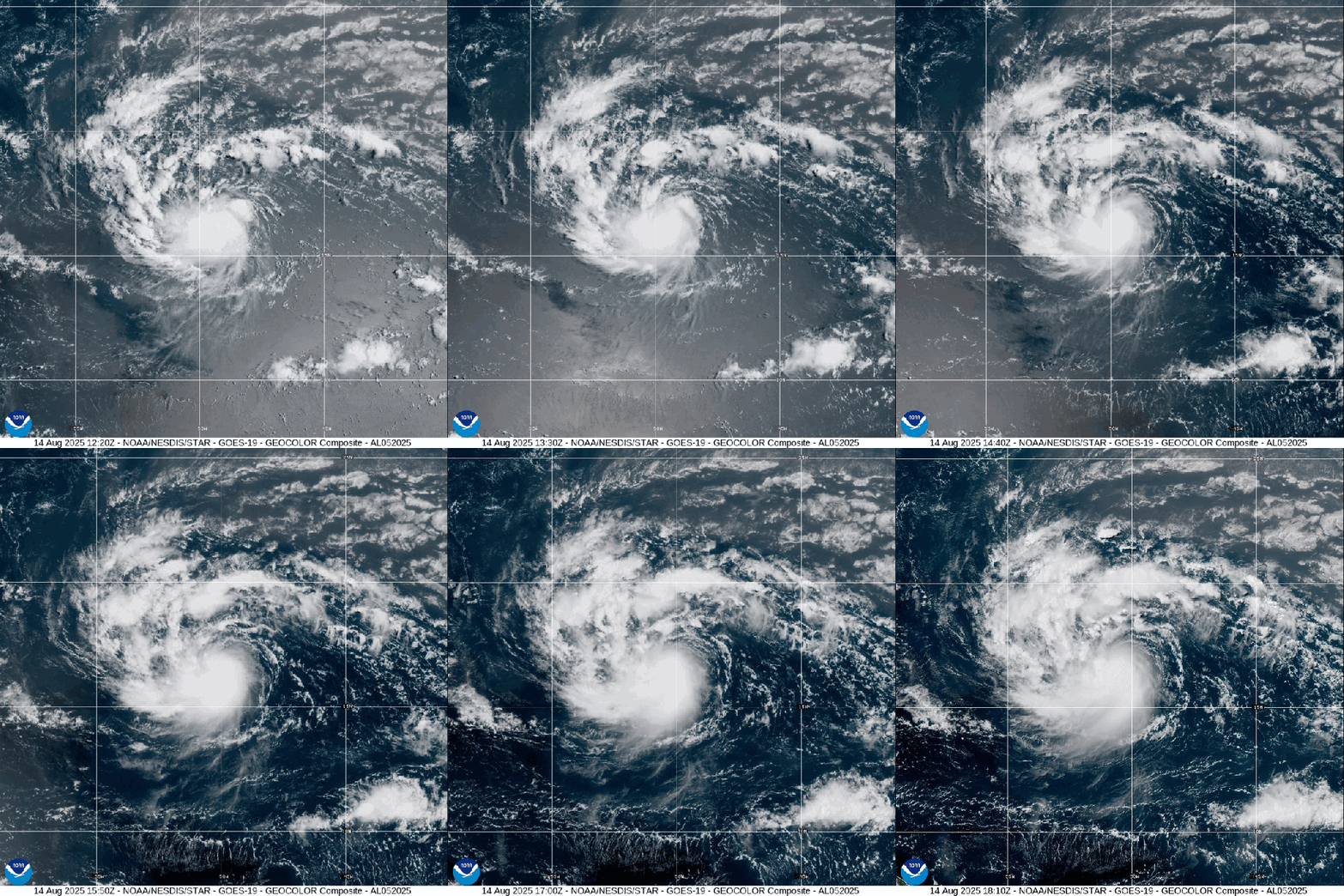
Now we’ll talk about the tropics. As you may have seen from all the Facebook Forecasters out there, Major Hurricane Erin is going to wipe out the East Coast in about 10 days. Well, that’s what a few of the models have shown at times over the past several days, and since the models show it, that’s what’s going to happen, because the models are always spot on 10 or more days in advance, right? Now, we’ll give you some real data. There is a strong tropical wave that moved off the west coast of Africa a few days ago. It has been fighting off some dry air and is over water that isn’t quite warm enough to sustain a tropical system, but it has shown some signs of organization in the past day or so. In fact, by the time some of you read this the National Hurricane Center may have already declared the system Tropical Depression 5. It will pass close to or over the Cabo Verde Islands today and then head in a general westward direction, likely strengthening as it does. The strengthening should be slow and steady as the system spending the next 5 day or so over the open waters of the Atlantic, and it will probably get upgraded to Tropical Storm Erin over the next day or two. It could become a hurricane later this week or next weekend. At that point, it should be approaching the longitude roughly near the Lesser Antilles. Most (but not all) of the models show the system passing north of the Islands, but that does not mean they are safe yet. However, around that point is an important spot to watch what the storm is doing. Some models show it turning more toward the northwest or even north at that point and heading out to sea (though possibly threatening Bermuda), while other models show it continuing off toward the west-northwest or even west. This would increase the threat to the Bahamas (and possibly the Greater Antilles). Of course, this is all still a week away, at which point the average error in the models is several hundred miles, so this really is just pure speculation. We won’t even get into how strong it might be, as intensity forecasts in the models are notoriously poor. For now, we’ll just say that it’s something to keep an eye on, but don’t worry about yet. *IF* it were to become a threat to the East Coast (and that’s a very big IF), we’ll give you plenty of advance notice. We’re not here for hype or page clicks (like the Facebook Forecasters), we’re here to give you a true look at what’s going on. We’ll likely be writing special blogs about this system (and the rest of the tropics) at various times this week. For now, ignore the noise, and listen to a trusted source, not one that picks out the scariest looking forecast model for 10 days from now and insists that is exactly what is going to happen (because it almost certainly won’t).
There’s still a wide range in model solutions for where the tropical system will track over the next 7 days. Image provided by Tomer Burg.
Monday: Sunshine and a few clouds. High 88-95, a little cooler along the coast.
Monday night: Clear skies. Low 65-72.
Tuesday: Plenty of sunshine. High 90-97, cooler along the coast.
Tuesday night: Clear to partly cloudy. Low 65-72.
Wednesday: Sunshine gives way to increasing afternoon clouds, chance for a late-day shower or thunderstorm, humid. High 86-93, cooler along the coast.
Wednesday night: Partly to mostly cloudy. Low 67-74.
Thursday: Partly sunny, showers and thunderstorms possible in the afternoon. High 83-90, cooler across the South Coast and Cape Cod.
Thursday night: Becoming clear. Low 62-69.
Friday: Sunny, drier. High 78-85, coolest near the coast.
Saturday: More sunshine. High 81-88, a little cooler along the coast.
Sunday: Mostly sunny. High 86-93, cooler along the coast.
The forecast for most of the upcoming week will be a fairly simple one for our region. Meanwhile, Tropical Storm Dexter has developed in the Atlantic well off the East Coast, but it won’t have any impact here.
Little to no rainfall is expected across the region this week. Image provided by Weathermodels.com
High pressure will dominate our weather for most of the upcoming week, with mostly sunny skies, seasonably warm temperatures, and comfortable humidity levels. Today will likely be the warmest day, with some places across the interior approaching 90, but the rest of the week will feature temperatures mainly in the upper 70s and 80s across the interior, with seabreezes keeping coastal areas a little cooler. We could see a few pop-up showers and thunderstorms well inland towards midweek, but for the most part, it will remain dry into next week. Some smoke in hazy conditions at times, mainly during the first half of the week.
Smoke from Canadian wildfires will dim the sun at times through midweek. Loop provided by WeatherBell.
The only real question mark in the forecast is Sunday. As we mentioned in the previous blog about the tropics, we need to keep an eye on a potential system developing near the Southeast coast later this week. Some models bring the system into the Southeast or Carolinas, with some of the moisture drifting northward towards next weekend. Some models try to bring the system itself up the coast as the high shifts off to our east. Of course, this system may not even develop, and the entire point would be moot. Right now, it looks like the high may be strong enough to keep us dry, but also turning hot once again. We should have a much better idea when we get to our Weekend Outlook later this week.
We’ll be watching a potential low pressure area near the Southeast later this week to see if it may have any impact here down the road. Images provided by Pivotal Weather.
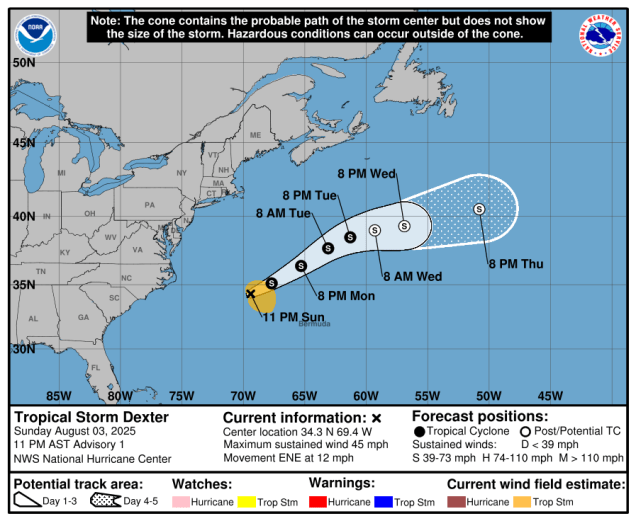
Tropical Storm Dexter developed late Sunday night off the East Coast. It was centered about 300 miles west-northwest of Bermuda, moving toward the east-northeast at 12 mph. Maximum sustained winds were near 45 mph. Dexter may strengthen a little more on Monday, but not much, as wind shear will remain in place. Beyond that, wind shear will take more of a toll on the system, and it will likely lose its tropical characteristics by midweek as it continues east-northeastward into the open waters of the Atlantic. It may churn up some rough seas and create some rip currents along the East Coast later this week, but that should be its only impacts.
Forecast track for Tropical Storm Dexter. Image provided by the National Hurricane Center.
Monday: Sunshine filtered through haze and smoke. High 84-91, a little cooler across the South Coast and Cape Cod.
Monday night: Partly cloudy. Low 61-68.
Tuesday: A mix of sun and clouds, hazy, a shower or thunderstorm possible well inland. High 77-84, a little cooler along the coast.
Tuesday night: Partly cloudy. Low 57-64.
Wednesday: Partly sunny, hazy, slight chance for a stray shower well inland. High 75-82, coolest along the coast.
Wednesday night: Partly cloudy. Low 58-65.
Thursday: A mix of sun and clouds. High 76-83, coolest along the coast.
Thursday night: Clear skies. Low 56-63.
Friday: Sunshine and a few clouds. High 78-85, coolest along the coast.
Saturday: Mostly sunny. High 82-89, a little cooler across the South Coast and Cape Cod.
Sunday: A mix of sun and clouds. High 86-93, a little cooler across the South Coast and Cape Cod.
Atlantic hurricane season officially starts on Sunday June 1 and runs through November 30, and indications are that it shouldn’t be as active as last year.
List of names for storms that form during the 2025 Hurricane Season. Image provided by NOAA.
The 2024 season was an above normal season by the numbers, with 18 named storms, 11 hurricanes, and 5 major hurricanes. The season got off to a slower start than recent years, with only 3 storms through the beginning of August, and 5 through Labor Day, but 8 named storms formed in a 4 week span between September 9 and October 5. Hurricane Helene made the most headlines, hitting the Big Bend region of Florida area as a Category 4 hurricane on September 27, producing catastrophic wind damage and flooding in parts of the Carolinas. Hurricane Milton was the strongest storm of the season, reaching Category 5 intensity. The estimated minimum pressure in the storm of 895mb tied it with 2005’s Hurricane Rita for the 4th lowest pressure in the Atlantic Basin. Milton made landfall near Siesta Key, Florida on October 9 as a Category 3 hurricane. The other storms to make landfall in the US were Hurricane Beryl in central Texas on July 8, Hurricane Debby which hit the Florida Big Bend on August 5, and Hurricane Francine, which hit Louisiana on September 11. The 5 US hurricane landfalls is the most since 2020, when 6 hurricanes struck the United States. That year also featured 2 major hurricane landfalls, just like 2024. In 2021, a total of 8 tropical systems made landfall in the United States, but only 2 at hurricane strength. That includes 2 tropical storms that made landfall in New England that summer – Elsa and Henri. Both Elsa and Henri each made landfall near Westerly, Rhode Island about 6 weeks apart. This was just the 5th time since 1851 that two tropical systems made landfall in Southern New England or Long Island in the same year, and only the 2nd time (1961 being the other), that both storms were only tropical storm strength. (We’ll have more info on New England tropical systems a little later in this post).
2024 was another active hurricane season. Image provided by the National Hurricane Center.
Forecasts for the upcoming season are calling for a season that features near to above normal activity, though conditions are not nearly as favorable as they were at this time last year. Sea surface temperatures in the Atlantic are considerably cooler, especially in the Main Development Region. In terms of ENSO, last year’s La Nina has faded and we are now in a neutral phase, which is not as favorable for storm development. NOAA issued their seasonal hurricane outlook on May 22, and it calls for a 60 percent chance for an above normal season, a 30 percent chance for a near normal season, and a 10 percent chance for a below normal season. Most of the other hurricane outlooks issued by various outlets are also expecting an above normal season, due to the signals mentioned above. An average season consists of 14.4 named storms, of which 7.2 become hurricanes and 3.2 become major hurricanes (Category 3 or higher on the Saffir-Simpson scale). NOAA’s forecast for this season calls for 13-19 named storms, 6-10 hurricanes, and 3-5 major hurricanes. The Tropical Meteorology Project at Colorado State, the first group to forecast how active a hurricane season would be, originally led by the late Dr. Bill Gray, will issue their updated forecast on June 11. Their initial forecast from April called for an above average season, with 17 named storms, 9 hurricanes, and 4 major hurricanes. They also pegged the chance at a storm making landfall in the Massachusetts at 40% (33% is the average in any given year), and the odds of a hurricane making landfall in Massachusetts at 18% (14% is the average). Overall, 8 of the past 9 hurricane seasons have featured above normal activity across the Atlantic.
Forecasters are expecting another active hurricane season. Image provided by NOAA.
Despite the early start for the many of the past several years, the average date for the first named storm in the Atlantic is still June 20, and the average date for the first hurricane is August 11. Over 97% of all named storms in the Atlantic form between June 1 and November 30. Most early season storms tend to be on the weaker side. A hurricane hasn’t made landfall in the United States before July 1 since Hurricane Bonnie came ashore as a minimal hurricane near the Texas/Louisiana border on June 26, 1986.
Based on climatology, the most likely spots for an early season storm are off the Southeast coast, in the Gulf of Mexico, or the northwestern Caribbean. Image provided by the National Hurricane Center.
The number of storms that form in any given season has no correlation on how many storms (if any) will impact the United States. In 2010, 19 named storms were observed in the Atlantic, 12 of them became hurricanes, and 5 were major hurricanes. Only one storm made landfall in the United States, and that was Bonnie, which was a minimal tropical storm at landfall. In 1990, there were a total 14 named storms, 8 of them hurricanes and 1 major hurricane. Not a single one of them made landfall in the United States. On the flip side, only 7 named storms formed in 1992, and the first one didn’t develop until August 16. That storm, however, was named Andrew, and it made landfall just south of Miami as a category 5 storm. It only takes one storm to ruin your entire year.
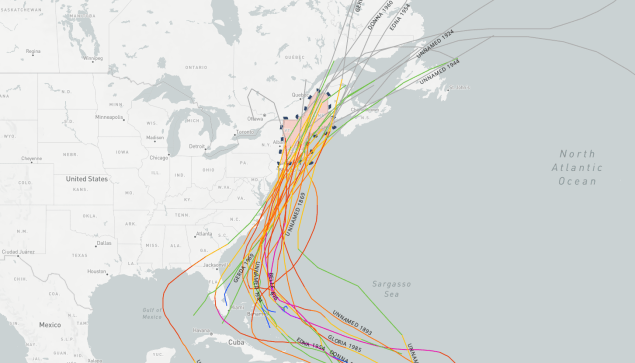
Map showing the track of all of the hurricanes that crossed New England since 1851. Image provided by NOAA.
Here in New England, we should always pay attention when a storm is nearing the Bahamas, as those are the ones that have the potential to impact us, and we are extremely overdue for a hurricane to make landfall. Using the HURDAT database which has data back to 1851, here are some stats that show exactly how overdue we are:
Since 1851, 39 storms of tropical storm strength of greater have made landfall in New England or Long Island, an average of one every 4.5 years. The longest we’ve ever gone without one is 11 years, between 1897 and 1908 and also between 1923 and 1934. In 2021, we had two tropical storms (Elsa and Henri) make landfall in the region, so it’s been 4 years, which means we are due for another.
Since 1851, 32 strong tropical storms (maximum sustained winds of 60 mph or more) have made landfall in New England or Long Island, an average of one every 5.4 years. The longest we’ve ever gone without one is 19 years, between 1897 and 1916. In 2021, we had two strong tropical storms (Elsa and Henri) make landfall in the region.
Since 1851, a hurricane has made landfall in New England or Long Island 18 times, an average of one every 9.7 years. The longest we’ve ever gone between hurricane landfalls is 38 years, between 1896 and 1934. It’s now been 34 years since Hurricane Bob, our 2nd longest drought on record.
Since 1851, 8 hurricanes of Category 2 intensity or stronger have made landfall in New England or Long Island, an average of one every 21.8 years. The longest we’ve gone between hits by storms of that intensity is 69 years, between 1869 and 1938. We’re at 34 years since Bob, the last one to do so.
Since 1851, New England/Long Island has had 3 Major Hurricanes (Category 3 or higher) make landfall – an unnamed storm in October of 1869 that grazed the eastern tip of Long Island before making landfall just west of Charlestown, RI; the infamous 1938 Long Island Express that made landfall near Brookhaven, NY and then again near New Haven, CT; and Hurricane Carol in 1954 which crossed East Hampton, NY and then made a 2nd landfall near Groton, CT. That’s an average of 1 every 58 years, and we’re now at 71 years since Carol, making this the longest stretch on record. There are also 3 documented storms from before 1851 – The Great Colonial Hurricane of 1635, the 1815 New England Hurricane, and the Norfolk and Long Island Hurricane of 1821. That’s it. That changes the numbers to 6 in 390 years, or one every 65 years, with a longest drought of 180 years.
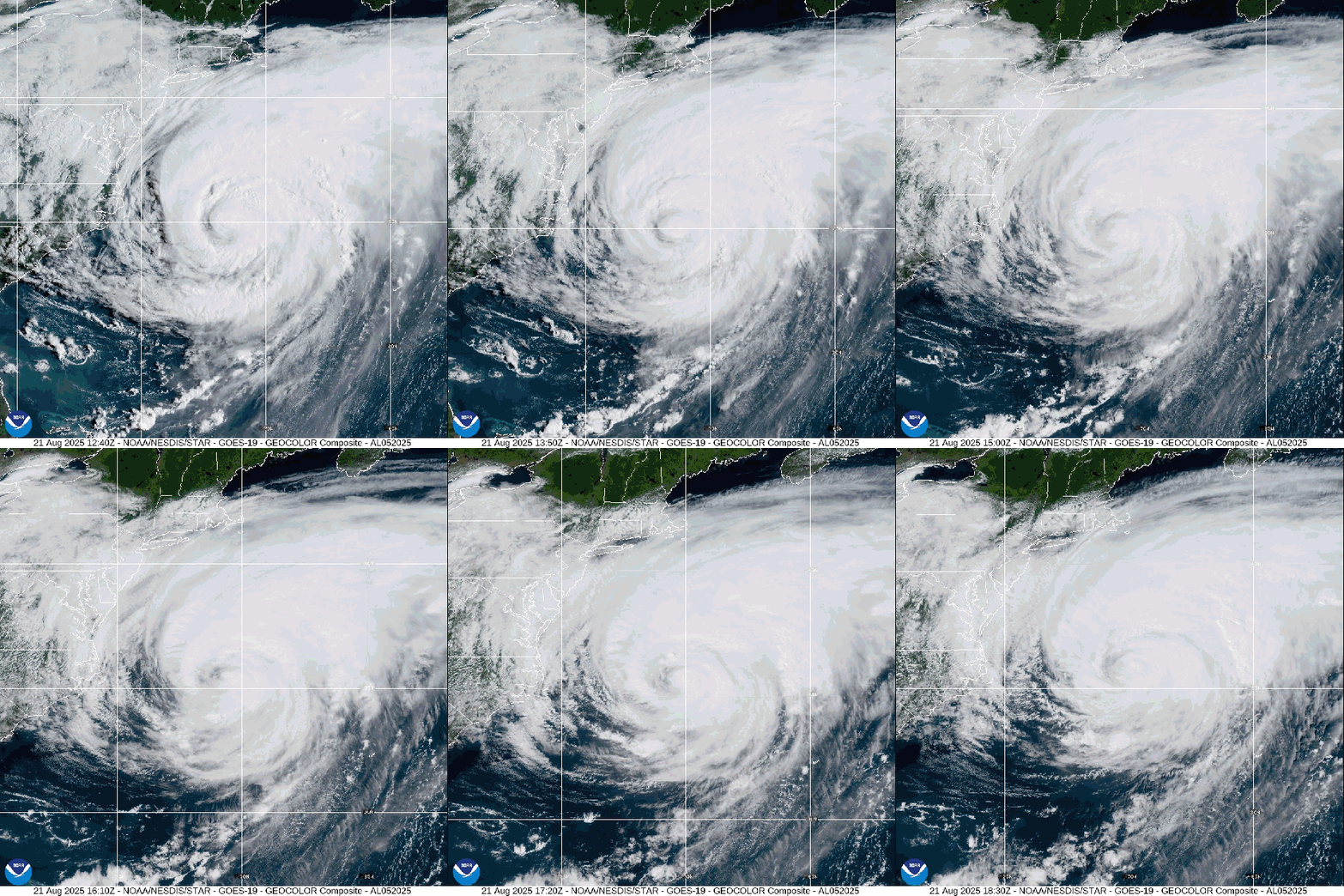
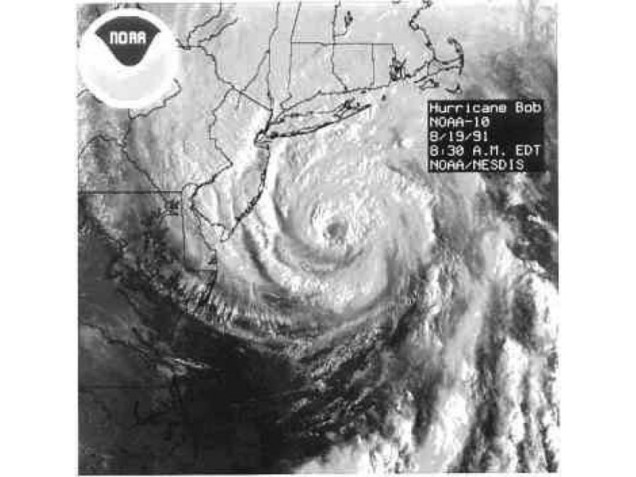
Satellite photo of Hurricane Bob approaching New England. Bob was the last hurricane to make landfall in New England – 34 years ago. Image provided by NOAA.
We all saw what Sandy did back in 2012, and that was a minimal hurricane that eventually made landfall in southern New Jersey (technically as an extratropical storm), though there were other factors that led to the amount of damage it caused. When (not if) the next big storm comes up the coast, much of this region will not be prepared for the storm or its aftermath. A storm doesn’t need to make a direct hit on New England to have significant impacts. In addition to Sandy, the so-called “Perfect Storm” in 1991 was an offshore system that became a hurricane and battered the coastline with strong winds and significant coastal impacts for a few days around Halloween. In 1955, Hurricane Connie and Tropical Storm Diane both made landfall in North Carolina 5 days apart. Connie tracked into the eastern Great Lakes, but still produced some heavy rain in New England, especially western New England. A few days later, Diane passed just south of New England on its way out to sea, but produced widespread rainfall totals of 5-15 inches across most of southern New England, with 19.75″ in Westfield, Massachusetts. The combination of these back-to-back storms resulted in some of the worst flooding this region has ever seen.
Rainfall totals from Tropical Storm Diane in August, 1995. Image provided by NOAA.
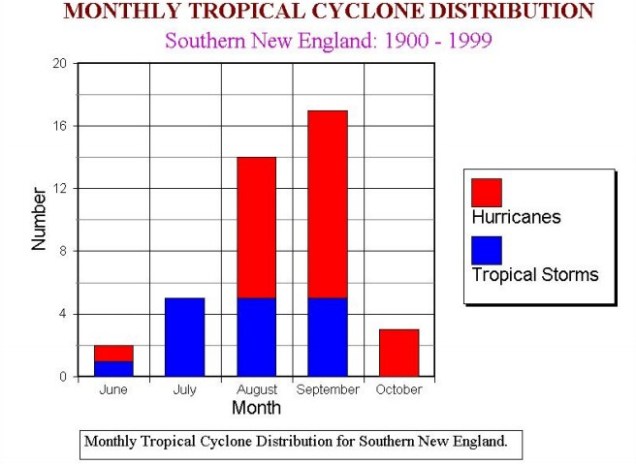
The Atlantic is quiet right now, but even if something were to form off the East Coast in the next few weeks and head this way, the waters off of New England are still much too cold to sustain a tropical system, so we’d see something more like a typical nor’easter. Only two tropical storms have ever made landfall in the Northeast before the end of June. The first was an unnamed minimal tropical storm that crossed extreme eastern Long Island and went into southeastern Connecticut on May 30, 1908. The other was Tropical Storm Agnes, which made landfall near New York City on June 22, 1972, then caused devastating flooding across parts of the Mid-Atlantic states. In terms of hurricanes, the earliest one to ever make landfall up this way was Hurricane Belle, which slammed into Long Island as a minimal hurricane with 75 mph winds on August 9, 1976. We did have Hurricane Arthur pass just offshore of Nantucket on July 4, 2014. While it did not make landfall, it made for a rather wet and cool holiday, especially across Cape Cod and southeastern Massachusetts. Statistically, the most likely time for a hurricane to hit New England is between the middle of August and late September. Of the 18 hurricanes that made landfall in New England or Long Island since 1851, 15 of them have done so between August 19 and September 27.
The most likely time for a tropical system to impact our area is August of September. Image provided by the National Weather Service office in Norton, MA.
As always, you should get your weather information from a trusted source (hopefully you trust us), especially when dealing with tropical systems. Much like with snowstorms in the winter, there will be plenty of hype and exaggeration on Twitter and Facebook, as well as people posting doom and gloom maps showing how a thunderstorm near the coast of Africa will develop into a Category 5 storm and head right for the East Coast in the next 2 weeks. We’re not among that group, we give you facts and our best forecasts, without any hype. If there’s reason to worry, we’ll let you know with plenty of advance warning. It’s always best to prepare ahead of the season. Chances are, you won’t have anything to worry about, but in case you do, it’s always good to be prepared.


















 Storm HQ