Tropical Storm Ernesto developed just east of the Leeward Islands on Monday and crossed the Virgin Islands late Tuesday.
Tropical Storm Ernesto began to get organized as it crosses the US Virgin Islands late Tuesday. Loop provided by NOAA.
The disturbance we had been watching for several days finally got itself organized enough to be classified as Tropical Storm Ernesto late Monday afternoon. The storm passed very close to Guadeloupe as it crossed the Leeward Islands Tuesday morning, producing wind gusts as high as 65 mph on St. Barthelemy. The storm crossed the US Virgin Islands Tuesday evening, producing a gust to 79 mph on Buck Island in St. Thomas. As it pulled away, it produced sustained winds of 68 mph and a gust to 86 mph on Culebra, just off the northeastern coast of Puerto Rico. As of 5am EDT, Ernesto was centered about 85 miles north-northwest of San Juan, Puerto Rico, moving toward the northwest at 16 mph. Maximum sustained winds had increased to 70 mph.
Ernesto was still rather disorganized when crossing the Leeward Islands early Tuesday. Loop proovided by Brian McNoldy, Univ. of Miami, Rosenstiel School
A trough of low pressure moving off the East Coast will help turn Ernesto northward over the next day or two, passing northeast of Puerto Rico overnight and early Wednesday. Upper-level conditions will be favorable for development, and with very warm water in the western Atlantic, Ernesto could rapidly strength once it gets a little better organized. The current forecast calls for Ernest to become a hurricane later today, and it could become a major hurricane before the end of the week. As a ridge of high pressure tries to build back in, Ernesto may slow down a bit toward the end of the week as it starts to approach Bermuda. The current forecast calls for Ernesto to pass very close to Bermuda late Friday or Saturday as a Category 2 or 3 hurricane. However, it is important to note that forecast errors with tropical systems can be quite large, in terms of both track and intensity that far out. Still, anyone on Bermuda or with plans to head there late this week should pay very close attention to Ernesto’s progress.
Forecast track for Tropical Storm Ernesto. Image provided by the National Hurricane Center.
Once past Bermuda’s latitude, another trough of low pressure will move off the East Coast, which should help to steer Ernesto off toward the northeast and eventually east. The question is, how close does Ernesto get to Nova Scotia and/or Newfoundland. This is still a week or so away, and Ernesto will almost certainly be extratropical by that point, but it is impossible to tell what, if any, impact Ernesto may have on Atlantic Canada, but again, residents of these areas should keep a close eye on the storm. Large swells generated by Ernesto will begin to impact much of the East Coast later this week and this week, creating rough seas offshore, and the risk for rip currents and possibly coastal flooding as well, as tides reach astronomical highs this weekend and early next week. Keep this in mind if you have beach plans this weekend anywhere in the Northeast or Mid-Atlantic states.
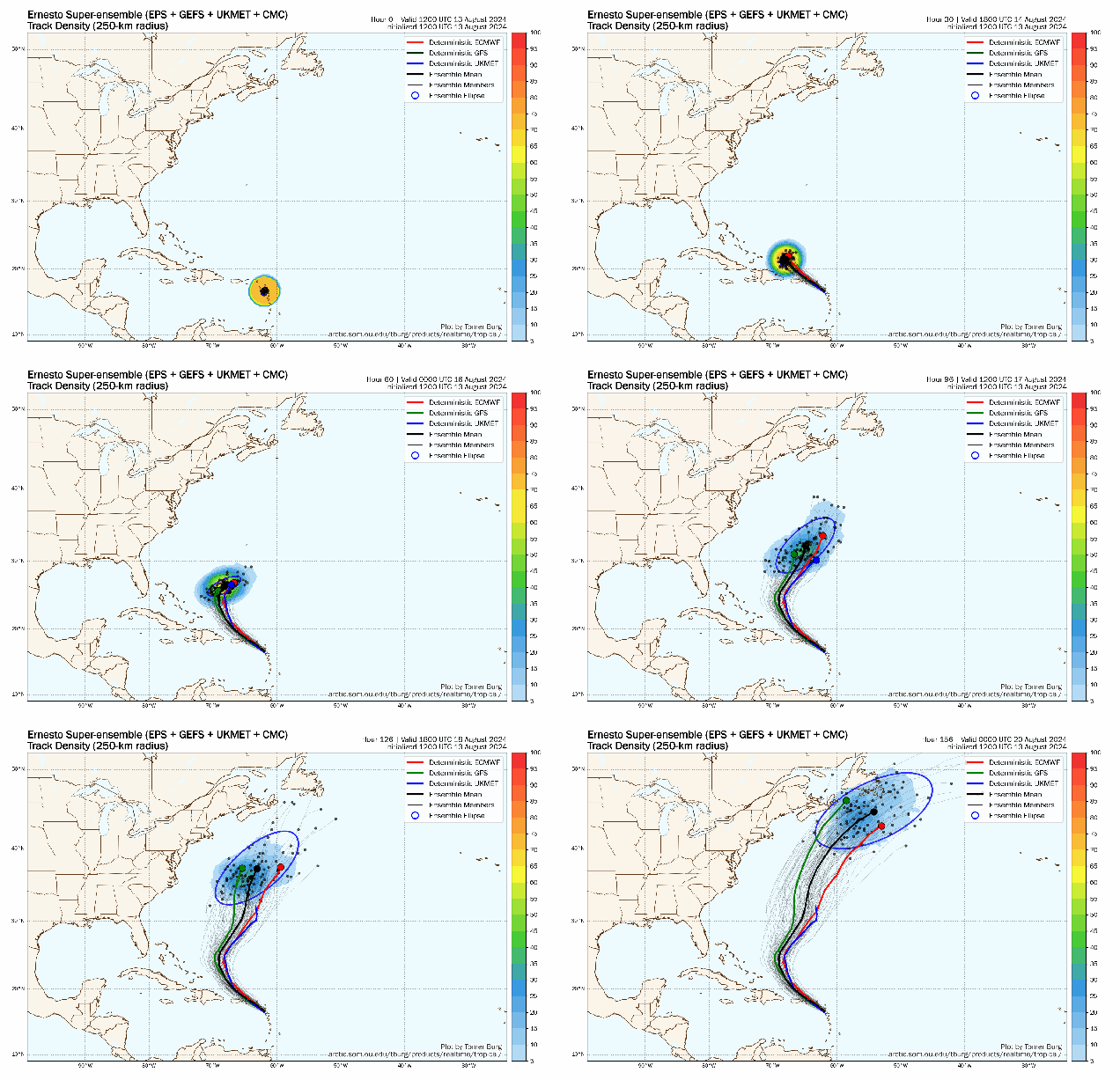
Model ensembles show a threat to Bermuda and possibly Atlantic Canada by early next week. Loop provided by Tomer Burg.
Ernesto generated a lot of hype before it even developed. Several forecast models showed the potential for the storm to develop into a potent hurricane and possibly threaten the East Coast. In turn, these maps got shared all across social media, spreading the hype. While the models can be helpful tools, their effectiveness, especially out 10-14 days as these forecasts were, is very limited. The model ensembles, which are essentially multiple versions of the same model run anywhere from 20-100 times with slight tweaks, showed the more likely scenario that actually played out, of a storm staying well off the East Coast. As you can see in the map above, none of the dozens of ensemble members show a threat to the East Coast at this point. Next time you see someone sharing a map that shows a storm threatening the East Coast two weeks in advance, keep this in mind. This is no different than in the winter when a model shows a paralyzing blizzard for the Northeast 10-14 days in advance, and it doesn’t materialize.
If you picked this week to take a vacation, then you’re in luck, because most of the week will feature some fantastic mid-August weather.
Temperatures this week will be pretty close to where they should be in mid-August. Image provided by Weathermodels.com
Most of the week will feature seasonably warm temperatures, moderate humidity, and dry weather, with high pressure in control. There are a few exceptions though. One of them is today, when a weak upper-level disturbance moves across the Northeast. It will generate a few more clouds, and possibly a few showers, but they shouldn’t be too widespread. Thursday will be similar with another disturbance generating a few pop-up showers, but again, nothing to cancel outdoor plans over. The weekend is when things become a little more uncertain. A cold front will be moving in from the west. Saturday should be another dry, but likely warm and a bit more humid, day. Sunday, however, may not be as nice, depending on the timing of the front. We could see more clouds and a better chance for showers and thunderstorms, though at least one model delays the front until the beginning of next week, so there’s a chance Sunday could end up dry as well.
Sunday may feature showers or thunderstorms, or maybe it won’t. Depends which model your trust. Images provided by Pivotal Weather.
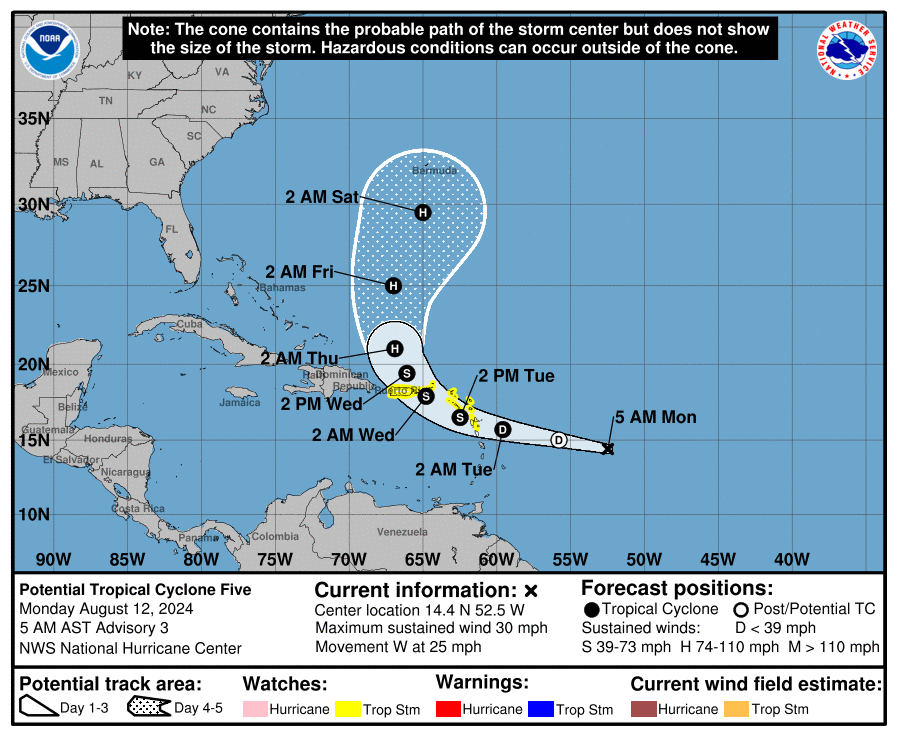
Finally, we’ll touch on the tropics. The hype train is already rolling down the tracks about “soon-to-be Ernesto”, and the threat is presents to the East Coast. Well, that’s not exactly the case. Yes, a couple of models a few days ago showed the potential for the storm to threaten the East Coast in about 10 days, but as of now, there is no actual storm to begin with. Sunday evening, the National Hurricane Centered designated the system as “Potential Tropical Cylone Five”. It still has a broad circulation, but it could become a tropical depression later today, assuming it can develop a low-level circulation. Conditions are not that favorable at the moment, but should become more conducive for development later today and Tuesday. The forecast calls for it to cross the Leeward Islands on Tuesday, then across the Virgin Islands Tuesday night and Wednesday, before turning northwestward and then northward. Tropical Storm Watches are in effect for the Leeward Islands and the British and US Virgin Islands as well as Puerto Rico. The forecasts calls for it to become a hurricane toward the middle of the week, and with additional strengthening possible, it could become a significant threat to Bermuda by next weekend. Of course, a lot can change between now and then, but at this point, the threat to the East Coast is minimal, despite all the recent hype. We’ll go into more detail on this system in a separate blog post once it has actually developed.
Forecast track for Potential Tropical Cyclone Five. Image provided by the National Hurricane Center.
Monday: A sunny start, then some clouds move in with a few showers possible in the afternoon. High 75-82.
Monday night: Any lingering showers end in the evening, then skies become clear. Low 56-63.
Tuesday: Sunshine and some afternoon clouds. High 77-84.
Tuesday night: Partly cloudy. Low 58-65.
Wednesday: Partly to mostly sunny. High 78-85.
Thursday: A mix of sun and clouds, chance for a few showers. High 76-83.
Friday: Partly to mostly sunny. High 77-84.
Saturday: Partly sunny, a little more humid, chance for some late-day showers. High 76-83.
Sunday: Intervals of clouds and sun with a chance for showers and thunderstorms. High 74-81.
Despite what the app on your phone says, most of the weekend will actually be rather pleasant.
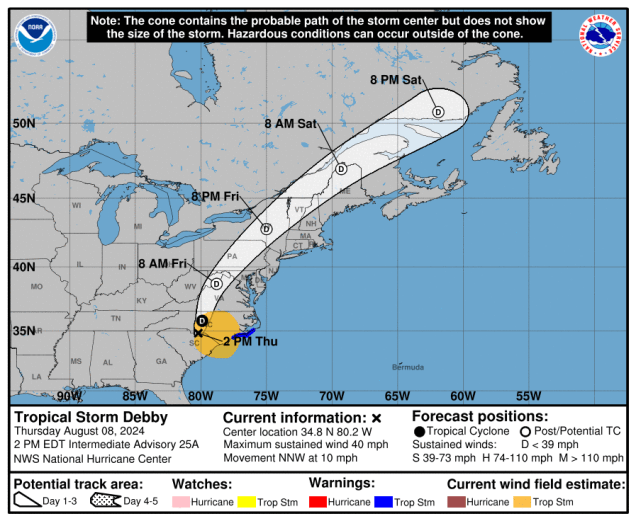
What’s left of Debby will pass well north and west of us Friday night. Images provided by the National Hurricane Center.
What’s left of Debby will head northward tonight, sending a warm front across the region. Some showers may accompany it, but you’ll notice humidity levels increasing once again. Temperatures may actually rise a few degrees overnight as winds shift into the southeast and south. Ex-Debby will pass well north and west of the region Friday and Friday night, keeping us in the warm and humid side ahead of the storm. We’ll have some occasional showers during the day on Friday, but it won’t be a washout. Some steadier and potentially heavier showers are likely Friday night into early Saturday as Ex-Debby crosses northern New England and drags a cold front across our area. The showers end Saturday morning, then we’ll clear out in the afternoon, with gusty west to northwest winds ushering drier air in, though it will remain quite warm. High pressure then builds in for Sunday and Monday with sunshine, warm temperatures, and comfortable humidity levels.
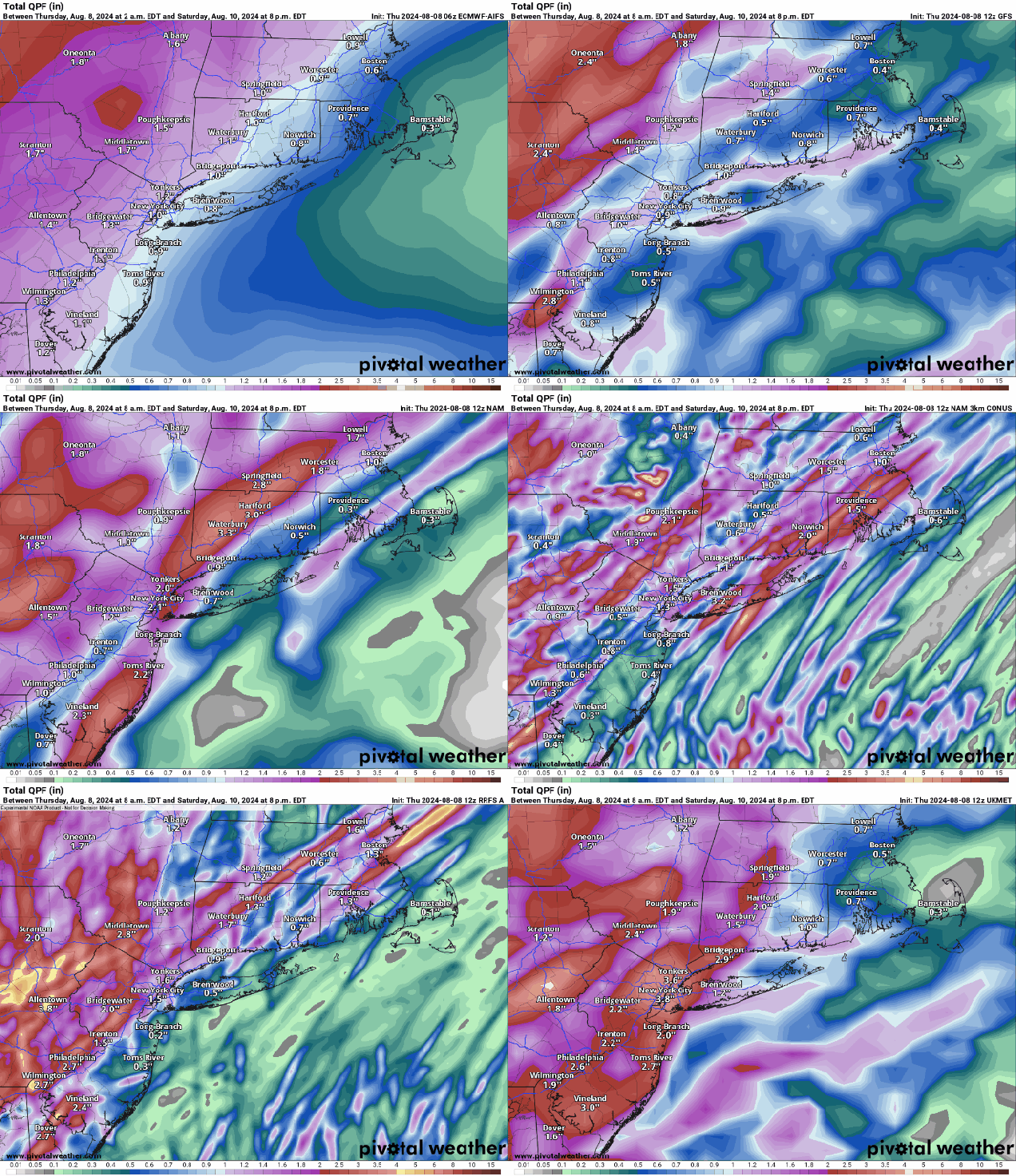
There may be some heavier downpours, but for the most part, the models do not bring heavy rain into the region for Friday. Images provided by Pivotal Weather.
Thursday night: Cloudy with a few showers likely. Low 60-67 during the evening, temperatures may rise a bit after midnight.
Friday: Mostly cloudy, some occasional showers at times, becoming breezy in the afternoon. High 77-84.
Friday night: Mostly cloudy, breezy, showers becoming more widespread with some heavier downpours and a few rumbles of thunder. Low 69-76.
Saturday: Breezy with showers and thunderstorms ending in the morning (early afternoon across Cape Cod), becoming partly to mostly sunny. High 81-88, a little cooler across Cape Cod.
Saturday night: Clear to partly cloudy. Low 58-65.
Sunday: Sunshine and a few clouds, not as humid. High 76-83.
A much cooler and wetter week is upcoming for the region.
Some models show the potential for a significant amount of rain Tuesday and Wednesday. Images provided by Pivotal Weather.
We’ve got one more hot and humid day today with high pressure offshore, but big changes are on the way. A cold front will move in tonight, possibly accompanied by some showers and thunderstorms. The front is expected to stall out near or just south of us on Tuesday, with much cooler weather likely behind it. Some additional showers are likely during the day on Tuesday. A wave of low pressure riding along the front will bring in some rain for Tuesday night and Wednesday, possibly some heavy rain, especially south of the Mass Pike. Despite how wet it has been around here for the past year or more, we’ve actually been rather dry for the past month or two, and can use the rain, though maybe not all at once. High pressure briefly brings in drier air for Wednesday night and part of Thursday before Debby impacts the region.
By Friday evening, there is a more than 1000 mile spread in the Ensemble members for the location of Debby. Image provided by Tomer Burg.
As of 2am, Hurricane Debby was centered only 40 miles west of Cedar Key, Florida, moving toward the north at 12 mph. Maximum sustained winds were near 80 mph. By the time most of you read this, Debby will have already made landfall in the Florida Big Bend region. Storm surge flooding will gradually die down this morning, and winds will steadily weaken, but rain will continue across the Southeast for several days, with widespread significant flooding likely from northern Florida into the Carolinas. Once inland, Debby is likely to stall out as steering currents collapse, and meander around in the Southeast, resulting in all of that rainfall. While Debby is doing that, some of the moisture from it will get drawn northward, interacting with that stalled frontal system, bringing us some rain for Friday and Saturday. In fact, we could be looking at quite a bit of rain. The wildcard is Debby itself. Some models have Debby dissipate across the Southeast, some bring it back offshore then into the Carolinas before heading up the coast in a weakened state, and some keep it inland and weak, then bring it up here. If it gets up here, there is even more uncertainty, as some models bring what’s left of the circulation right across southern New England, some bring it south of New England, while strengthening as it becomes extratropical, which introduces even more issues here, including gusty winds, not to mention temperature forecasts depending on the where the storm tracks. What you see below is our “best guest-imate” right now, but obviously this is very low confidence based on everything we just mentioned. A cold front will move through Saturday night, kicking whatever is left of Debby out to sea, and bringing drier weather in for Sunday.
Depending on Debby’s track, parts of the region could receive more heavy rain Friday and Saturday. Images provided by Pivotal Weather.
Monday: Mostly sunny, clouds start to increase late in the day. High 85-92, little cooler across Cape Cod.
Monday night: Partly to mostly cloudy with showers likely. Low 65-72.
Tuesday: More clouds than sun, any showers end early, possibly redevelop towards evening. High 72-79, early, cooler in the afternoon.
After a nearly month-long slumber, the Atlantic is waking up again with the formation of Tropical Storm Debby.
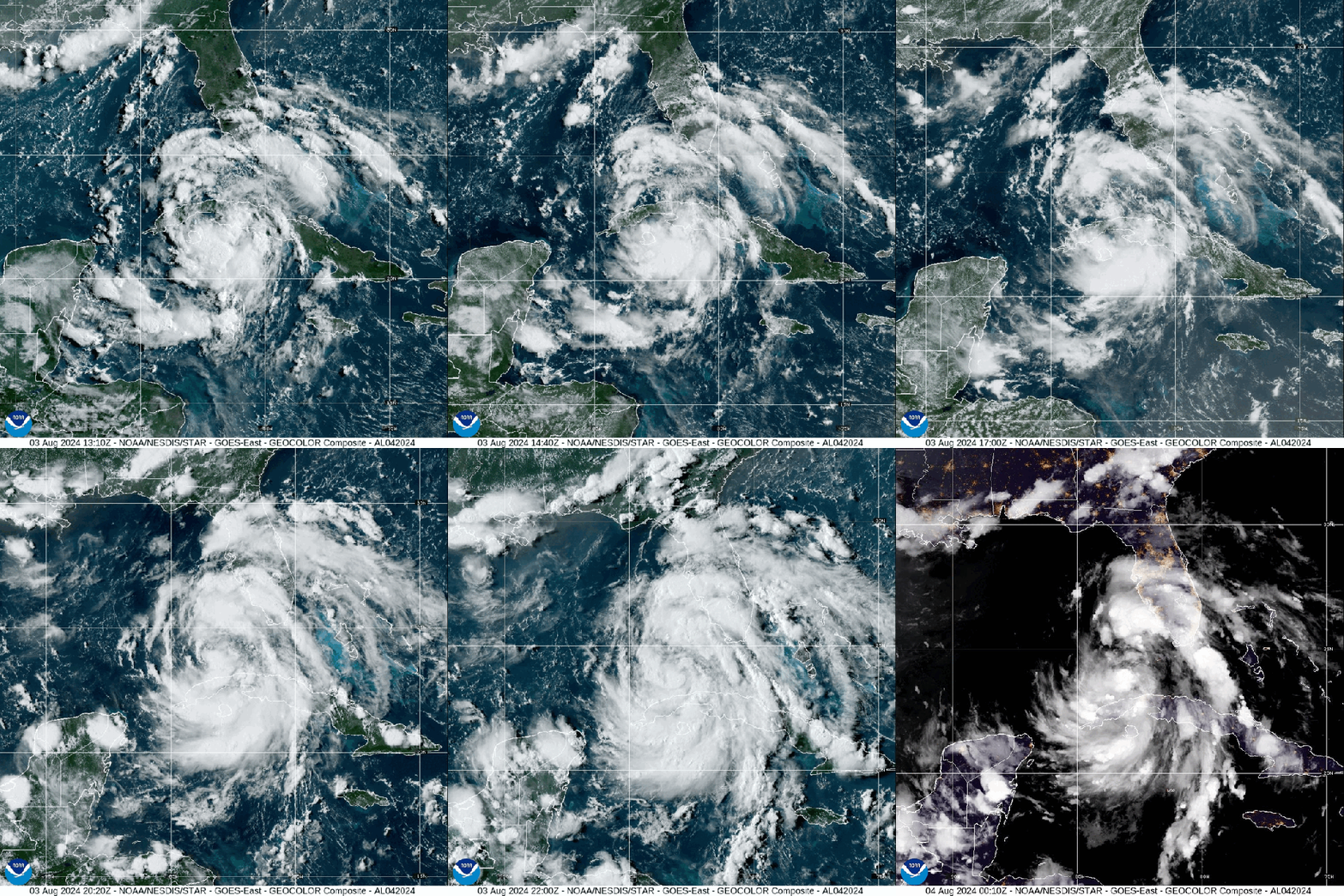
Satellite loop of Tropical Storm Debby. Loop provided by NOAA.
A tropical wave that we’ve been watching for nearly a week finally found some favorable atmospheric conditions as it moved into the eastern Gulf of Mexico, and became Tropical Depression Four Friday night, then was upgraded to Tropical Storm Debby Saturday afternoon. As of 8pm Saturday, Debby was centered about 100 miles west-southwest of Key West, Florida, moving toward the northwest at 14 mph. Maximum sustained winds were near 40 mph. Most of the west coast of Florida and the Florida Panhandle are under a variety of Tropical Storm, Hurricane, and Storm Surge Watches or warnings.
Forecast track for Tropical Storm Debby. Image provided by the National Hurricane Center.
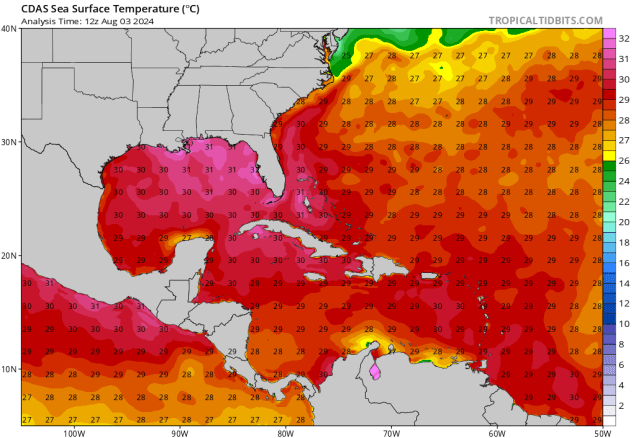
Debby’s immediate future is fairly simple – it will turn more toward the north while strengthening over the next day or so, heading towards the Florida Panhandle or the Big Bend area. The official forecast from the National Hurricane Center calls for Debby to reach minimal hurricane strength before making landfall early Monday. However, the models (and NHC) do a poor job forecasting rapid intensification, and the water in the eastern Gulf of Mexico is extremely warm, providing plenty of fuel for the storm. While the forecast doesn’t show it, we wouldn’t be surprised if Debby does intensify rapidly at some point on Sunday, and is a much stronger storm at landfall.
Water temperatures in the eastern Gulf of Mexico are 30-32C (85-90F). Image provided by Tropical Tidbits.
Once inland, the steering currents collapse, and Debby will slow down and meander around across parts of northern Florida, Georgia, or South Carolina during the first part of next week while weakening. This will increase the flooding threat across the region (more on that in a bit). After that, things get very uncertain. Some models keep the storm inland over the Southeast, steadily weakening before heading northeastward later in the week. Other models bring the storm back out into the Atlantic, with some strengthening, with a second landfall in the Carolinas, or a turn out to sea. At this point, it’s impossible to tell which scenario will happen, so we won’t even attempt to.
The various model ensembles show a wide range of potential tracks for Debby over the next 5 days. Loop provided by Tomer Burg.
Debby will have significant impacts across Florida and parts of the Southeast over the next few days. Strong winds are obviously a threat near where the storm makes landfall. Storm surge is likely across most of the Florida Gulf Coast, with the highest surge and correspondingly highest chance for coastal flooding near and to the right of where the storm makes landfall. By far, the biggest threat is freshwater flooding from heavy rainfall. Widespread rainfall totals of 5-10 inches are expected from central Florida into southern North Carolina, with heavier amounts likely, especially if the storm does stall out. Rainfall totals in excess of 20 inches are not out of the question, especially in parts of Georgia and South Carolina.
Extreme rainfall is likely across the Southeast from Debby with widespread flooding likely. Image provided by Weathermodels.com
While there are no other storms on the horizon at this time, we are getting closer to the peak of hurricane season, so it is likely just a matter of time until the next storm develops.
Unsettled weather returns this week, but that doesn’t mean any of the days will be a washout.
Showers should taper off this morning, but a few are still possible through the evening. Loop provided by WeatherBell.
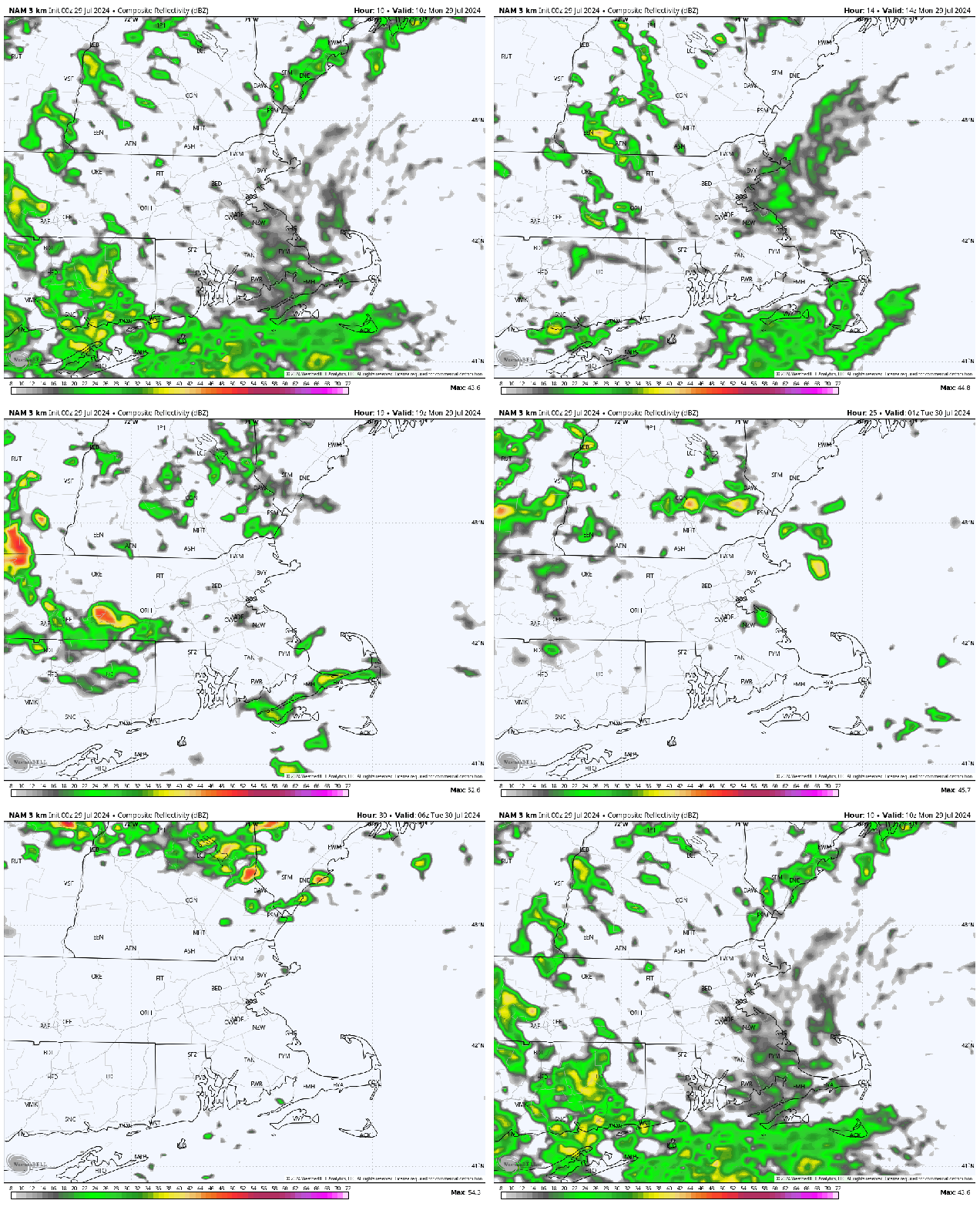
A weak low pressure system will pull away from the region today, with any lingering showers coming to an end, and some sunny breaks developing. We could see a few more showers and thunderstorms pop up during the afternoon, but they’ll likely be few and far between. After that, the Bermuda High sets up shop offshore once again, with humidity levels increasing, and temperatures following suit later in the week. We’ll have a series of weak upper-level disturbances also scooting across the Northeast, and these will help to trigger some pop-up showers and thunderstorms each afternoon right through the week. Once of these disturbances may be a little stronger than the others when it moves through on Wednesday, which could lead to some stronger storms, with heavy downpours and strong winds possible in some of them. By the end of the week, temperatures may top 90 again in some areas, accompanied by high humidity, resulting in heat indices well into the 90s or even higher.
Temperatures could top 90 later this week. Image provided by Weathermodels.com
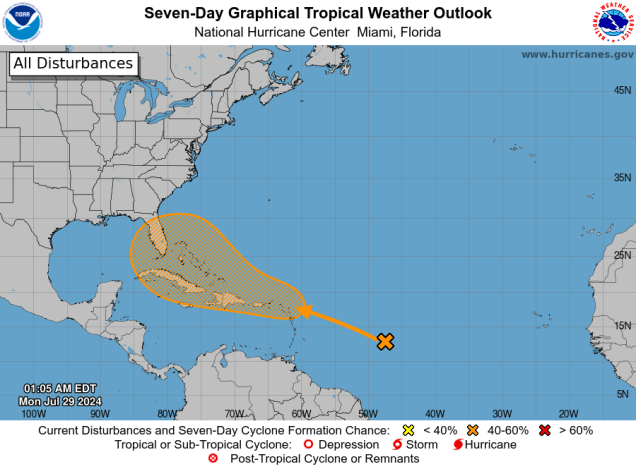
Just a quick note about the tropics as well. After Beryl made landfall in Texas, it’s been rather quiet for a few weeks, but that may be changing. A tropical wave crossing the Atlantic may interact with another disturbance as it approaches the Lesser Antilles. There is some potential for this system to develop into a tropical depression later this week. One of the forecast models has been rather insistent on the development of this system, and not only that, it tries to make it a threat to the East Coast. This is just one model, and most of the others do not show this scenario. Of course, this hasn’t stopped the Facebook Forecasters from cranking up the hype machine already. The odds that this system will be a threat up here are extremely tiny at this point in time. We won’t say they are zero, but for now, it’s roughly the same odds that the USA Basketball team doesn’t win a medal at the Olympics. Still, it’s looking like the next couple of months will be rather active, and we are extremely overdue for a hurricane to come calling, so we’ll be keeping a close eye on things for you and will let you know if there is a storm we actually need to be concerned about.
After a 3-week slumber, the Atlantic could be waking up again. Image provided by the National Hurricane Center.
Monday: Plenty of clouds with showers early, some afternoon sunny breaks with another shower or thunderstorm possible, humid. High 71-78.
Monday night: Any lingering showers end in the evening, otherwise partly cloudy, areas of patchy fog may develop. Low 62-69.
Tuesday: Partly sunny, slight chance for an afternoon shower or thunderstorm. High 81-88.
Tuesday night: Partly to mostly cloudy. Low 66-73.
Wednesday: Intervals of clouds and sunshine with scattered showers and thunderstorms, a few could produce heavy downpours and gusty winds. High 76-83.
Thursday: A mix of sun and clouds, chance for a pop-up shower or thunderstorm. High 82-89.
Friday: Partly sunny, some late-day showers or thunderstorms are possible. High 84-91.
Saturday: Partly sunny, chance for a shower or thunderstorm. High 84-91.
Sunday: A mix of sun and clouds, slight chance for a shower or thunderstorm. High 83-90.
The long weekend will feature typical summertime weather – warm temperatures, moderate to high humidity, and a daily chance for pop-up showers and thunderstorms.
Dewpoints will get well into the 70s around here on Saturday. Image provided by WeatherBell.
After a couple of warm but dry days, we’ll see humidity levels increasing over the next few days thanks to southwest winds. A weak front will move in for the Fourth of July, but it won’t ruin any plans you may have. It will bring in some clouds, but only a few widely scattered showers and/or thunderstorms. So, keep an eye to the sky if you’ve got outdoor plans, but don’t go cancelling them, as most places will remain dry. Some patchy dense fog is likely Thursday night, especially near the South Coast, but it shouldn’t impact any fireworks displays. Friday looks like a typical summertime day with partly sunny skies, warm and humid conditions, and a few pop-up showers or thunderstorms. Another weak system moves in for Saturday, resulting in a very humid day, with a better chance for showers and thunderstorms, especially late in the day and at night. Sunday and Monday will be similar to Friday, with intervals of sun and clouds, fairly humid conditions (but not as humid as Saturday), and a few widely scattered showers and thunderstorms each afternoon.
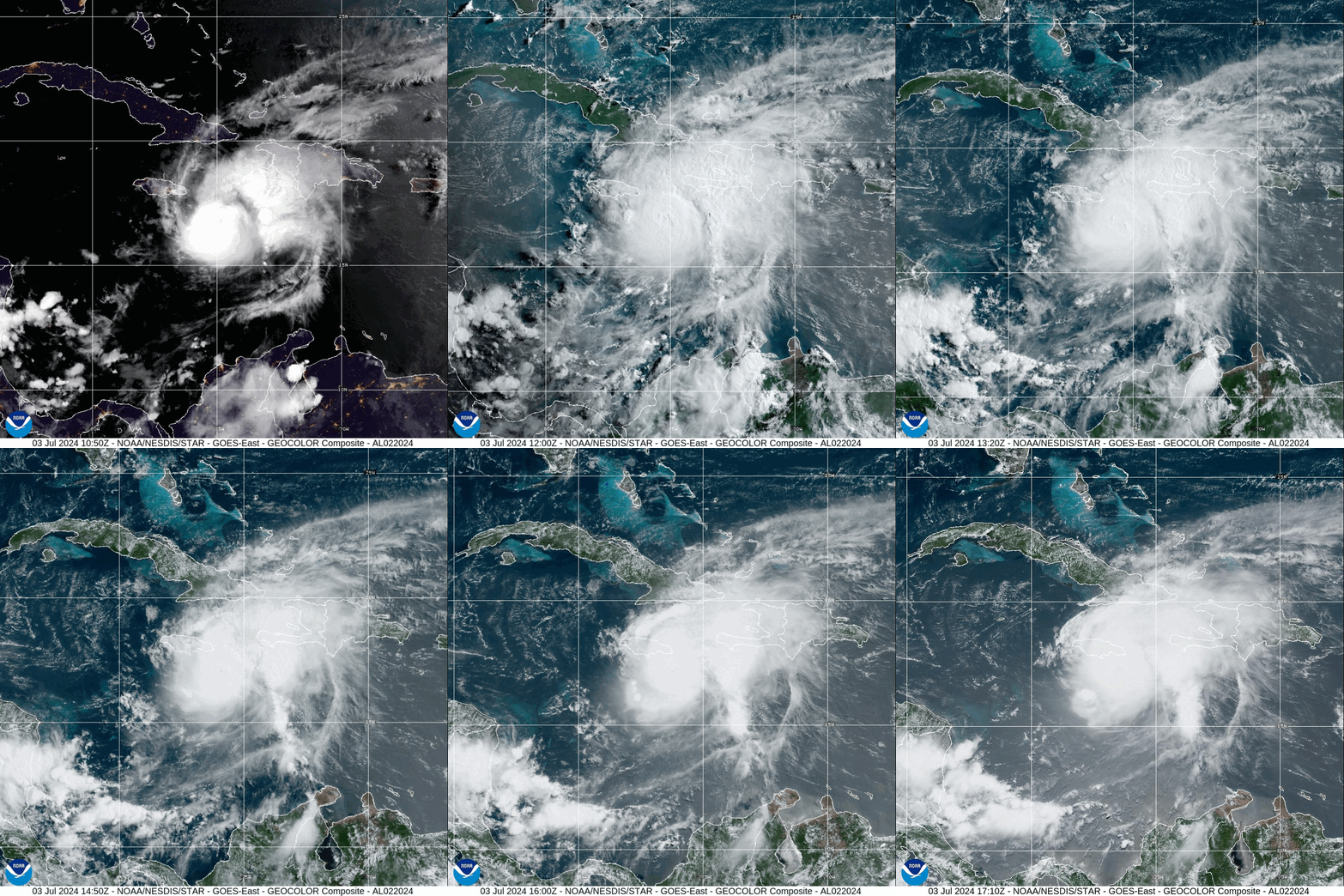
Hurricane Beryl is approaching the south coast of Jamaica this afternoon. Loop provided by NOAA.
Meanwhile, in the tropics, Hurricane Beryl is barreling towards Jamaica this afternoon. As of 2pm, Beryl was centered about 45 miles south of Kingston, Jamaica, moving toward the west-northwest at 18 mph. Maximum sustained winds were near 140 mph, making Beryl a Category 4 hurricane. It is the strongest storm to impact Jamaica since Hurricane Dean in 2007. Damaging winds, torrential rain, and flooding are likely across Jamaica for the rest of the afternoon and evening, especially southern portions of the island, then Beryl will head toward the Cayman Islands tonight. Beyond that, it will continue across the Caribbean while gradually weakening before another likely landfall in the Yucatan Peninsula early Friday. It should weaken over the Yucatan, but it will move back into the Gulf of Mexico late Friday, then could strengthen once again. The models are split on whether it continues westward into Mainland Mexico or makes it a right turn and heads for southern Texas, but we’ll worry about that later this week.
After Jamaica, Beryl will head towards the Cayman Islands and the Yucatan Peninsula. After that, things ger murky. Loop provided by Tomer Burg.
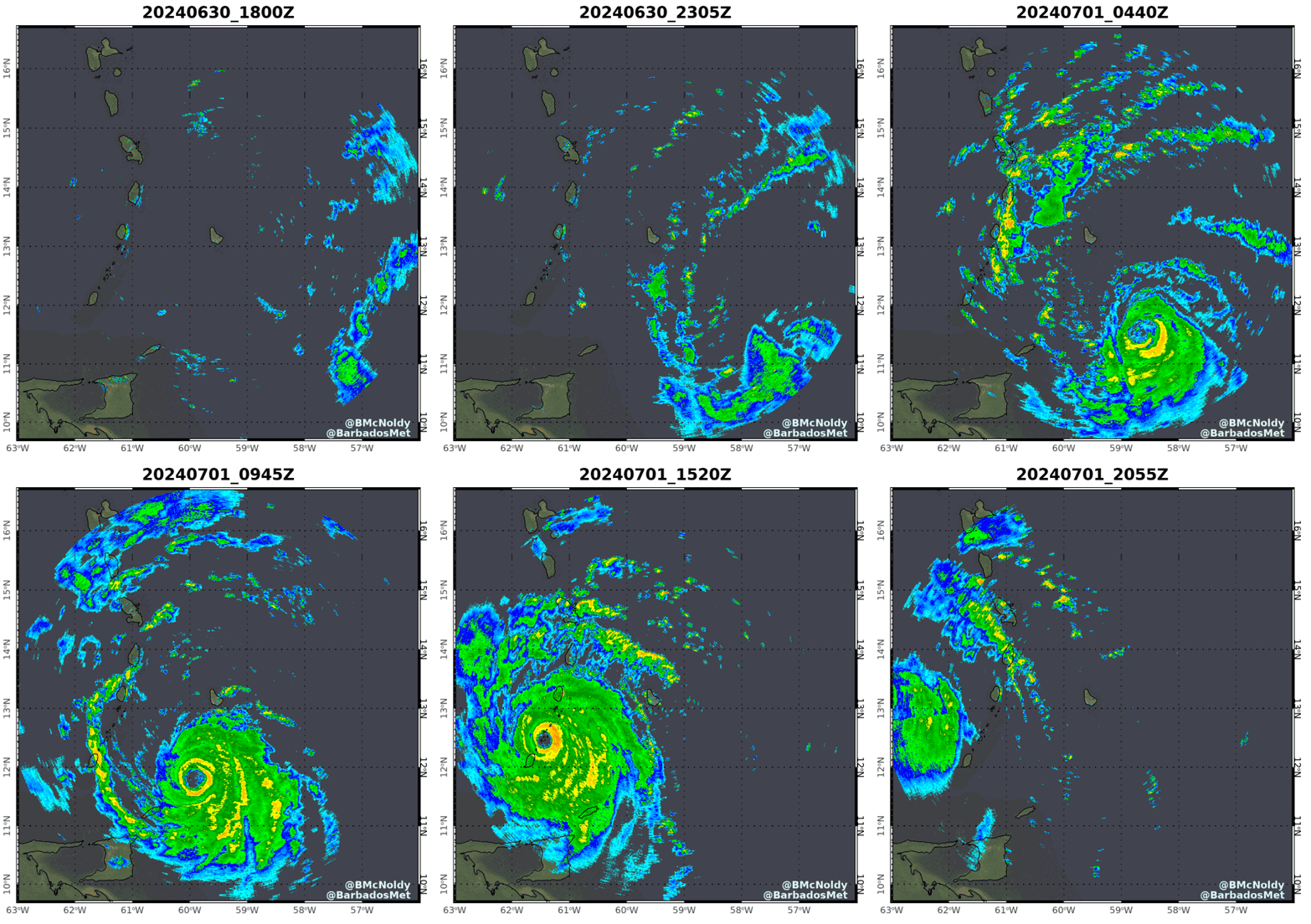
Beryl has been shattering records over the past several days even before crossing the Windward Islands. It is the strongest storm ever in the Atlantic during the months of June and July. It is the earliest Category 5 hurricane ever in the Atlantic (by more than 2 weeks). It was the strongest storm to ever cross the Southern Windward Islands when it moved across Carriacou Island on Monday with top winds near 140 mph. Sea surface temperatures are well above normal across the Atlantic and Caribbean, which aided in Beryl getting so strong, but it also featured upper-level conditions that were nearly ideal for development and strengthening, which is not that common during June and July.
Radar loop from Barbados showing Beryl’s approach and passage. Loop provided by Brian McNoldy/University of Miami.
Wednesday night: Partly cloudy. Low 59-66.
Thursday: Partly sunny, more humid, slight chance for a shower. High 80-87, a little cooler near the coast.
Thursday night: Partly to mostly cloudy with a few showers possible and some patchy fog developing. Low 63-70.
Friday: Partly sunny, slight chance for a shower or thunderstorm. High 83-90, a little cooler across Cape Cod.
Friday night: Mostly cloudy, chance for a few showers. Low 64-71.
Saturday: More clouds than sun, very humid, chance for a few showers or thunderstorms. High 77-84.
Saturday night: Partly to mostly cloudy with a few showers or thunderstorms. Low 66-73.
Sunday: A mix of sun and clouds. High 85-92, a little cooler across Cape Cod.
Sunday night: Partly cloudy. Low 63-70.
Monday: Intervals of sun and clouds. High 84-91, a little cooler across Cape Cod.
Early season forecasts called for an active hurricane season in the Atlantic due to a multitude of factors, and so far, we’re off to a fast start.
Forecast track for Tropical Depression Two. Image provided by the National Hurricane Center.
Earlier in June, Tropical Storm Alberto brought heavy rain and some gusty winds to parts of Mexico and southern Texas. Given that this area has been in a drought, the rainfall was actually quite welcome, though probably not all at once. The moisture from Alberto also helped to get the Southwest Monsoon season off to an early start. Now as we approach the final days of June, we have a new Tropical Depression in the Atlantic, and it’s in a spot that we normally wouldn’t expect a storm to form this early in the season (more on that in a minute).
Tropical Storm Alberto brought very heavy rain to parts of northeastern Mexico earlier in June. Image provided by WeatherBell.
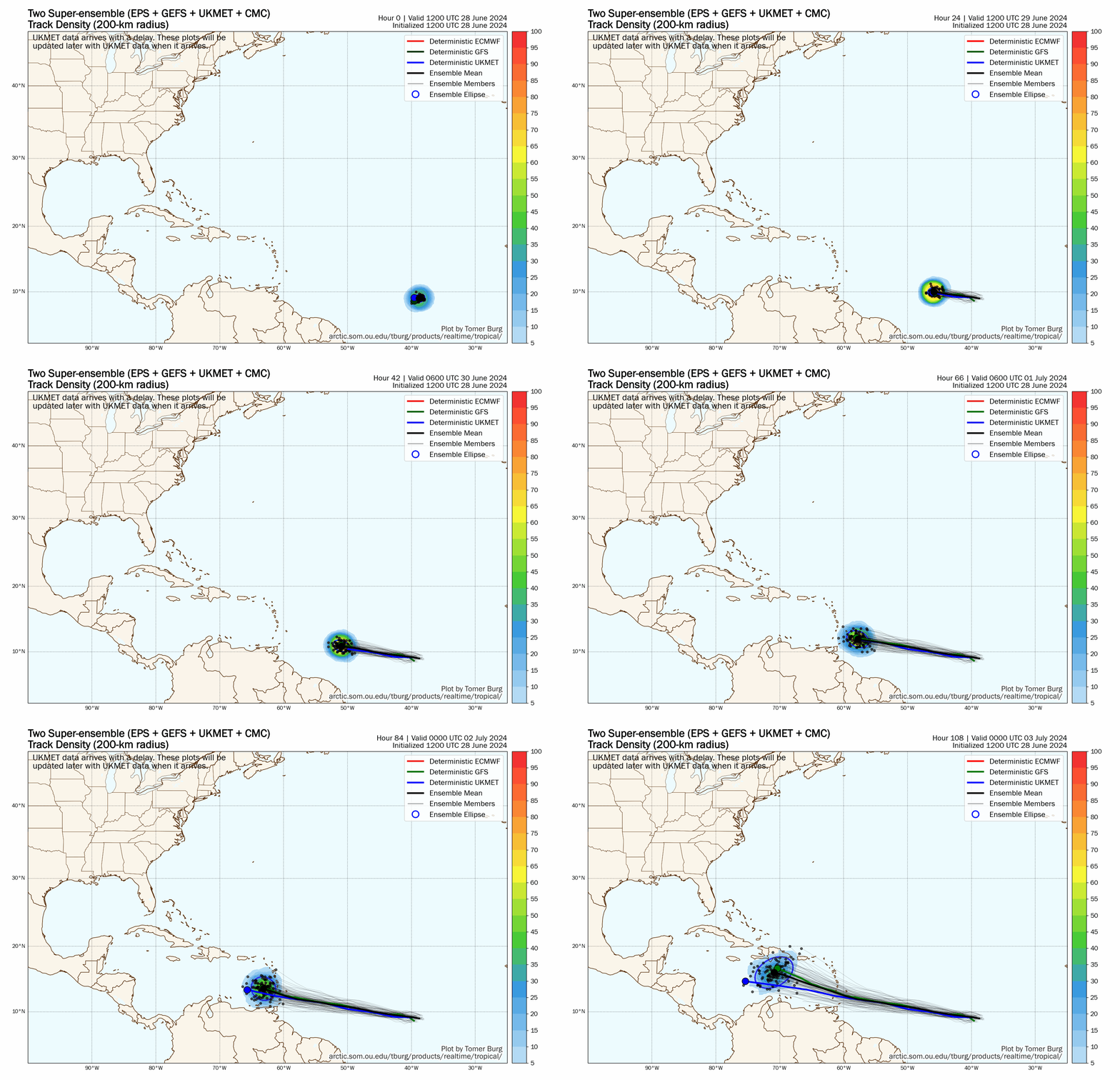
As of 5pm, the National Hurricane Center has initiated advisories on newly-formed Tropical Depression Two. It was centered about 1225 miles east-southeast of Barbados, moving toward the west at 21 mph. Maximum sustained winds were near 35 mph. The system should gradually strengthen, likely becoming Tropical Storm Beryl later tonight or Saturday, while heading off toward the west-northwest. It will likely become a threat to the Windward Islands by late Sunday or early Monday, but as of now, there are no watches or warnings in effect. Once it passes the islands, it should continue west-northwestward across the Caribbean, but obviously other factors can impact the exact track that it takes, as well as the intensity the storm reaches. Given that these forecasts have considerable uncertainty beyond 3-4 days, we won’t even begin to speculate on where it might head.
Forecast tracks for TD2 from the members of several model ensembles. Loop provided by Tomer Burg.
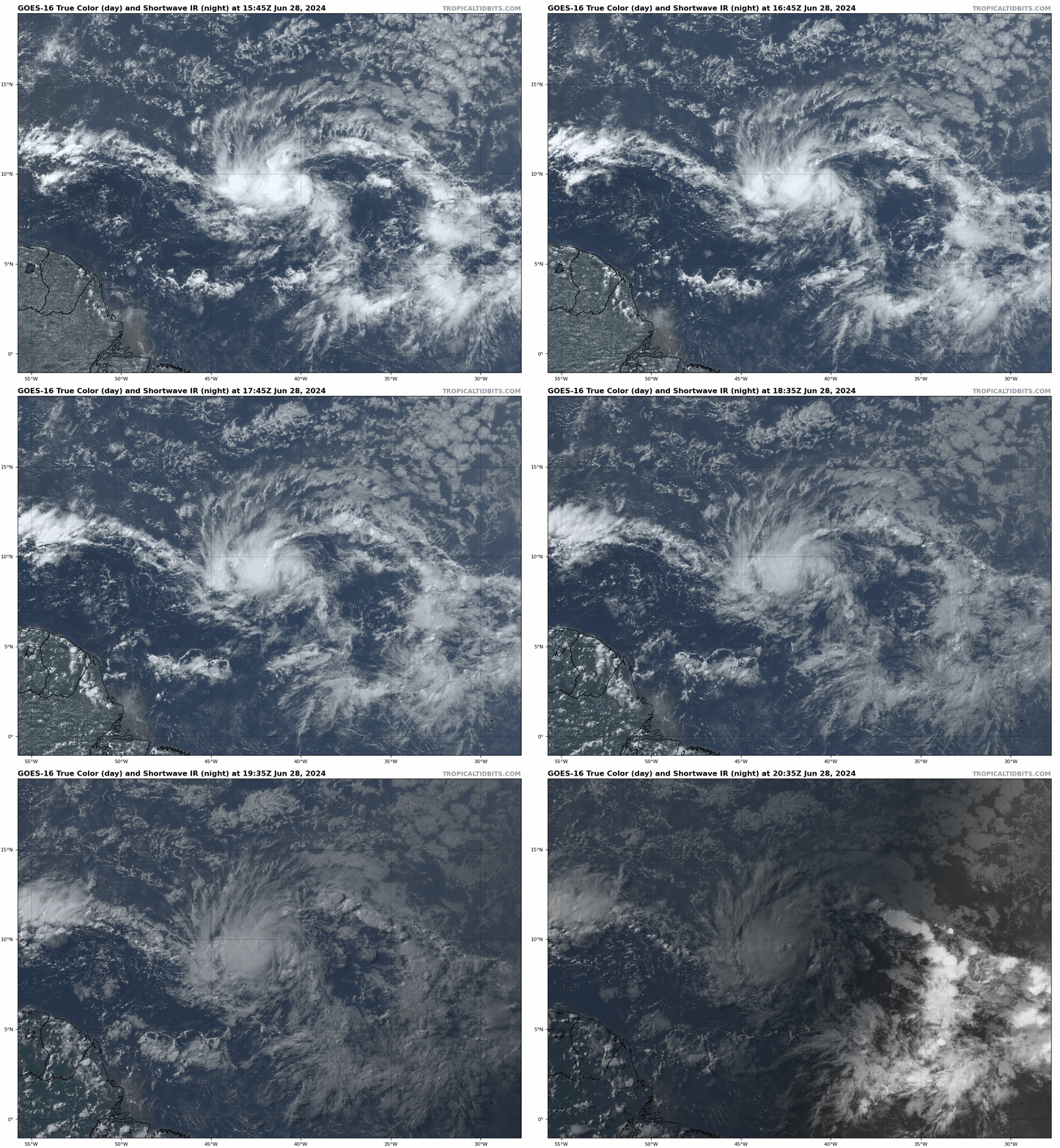
We’ve been keeping a close eye on this system for a few days now as the tropical wave responsible for the system has been crossing the Atlantic. The wave stayed rather far south, which is what helped it develop. To the north, there has been some Saharan Dust making its way across the Atlantic, and wind shear has been higher. Both of those factors inhibit the development of tropical systems, but by staying farther south and avoiding those, it has taken advantage of favorable conditions to gradually get organized this week.
Satellite loop centered on Tropical Depression 2. Loop provided by Tropical Tidbits.
If this system can become a tropical storm before Sunday evening (and all indications are that it will), it will become only the 7th named storm to form east of the Caribbean during the month of June since 1851. The previous 6 storms were:
Unnamed Storm #2 in 1933
Tropical Storm Ana in 1979
Tropical Storm Bret in 2017
Tropical Storm Bonnie in 2022
Tropical Storm Bret in 2023
Tropical Storm Cindy in 2023
Of those six storms, only the 1933 storm reached hurricane strength during the month of June.
Only one hurricane has ever been recorded in June east of the Caribbean in the deep tropics – the first hurricane of 1933, still the most active hurricane season on record by Accumulated Cyclone Energy or ACE. pic.twitter.com/1X2HeryavY
Tropical Depression Two isn’t the only storm we’re keeping an eye at this time. A tropical wave and associated area of low pressure are approaching the Yucatan Peninsula this evening. Once it moves into the Bay of Campeche on Saturday, there is a small window for the system to develop. Whether it does or not, it will bring another round of heavy rain into northeastern Mexico.
There are a couple of areas of interest across the tropics at this time Image provided by the National Hurricane Center.
There’s also another tropical wave way out in the Atlantic, several hundred miles south-southwest of the Cabo Verde Islands. It’s disorganized right now, and conditions aren’t favorable for development at this time, but as it makes its way across the Atlantic, it could move into a more favorable area by early next week.
Atlantic hurricane season officially starts on Saturday June 1 and runs through November 30, and all indications are that it is going to be a very active one.
List of names for storms that form during the 2023 Hurricane Season. Image provided by NOAA.
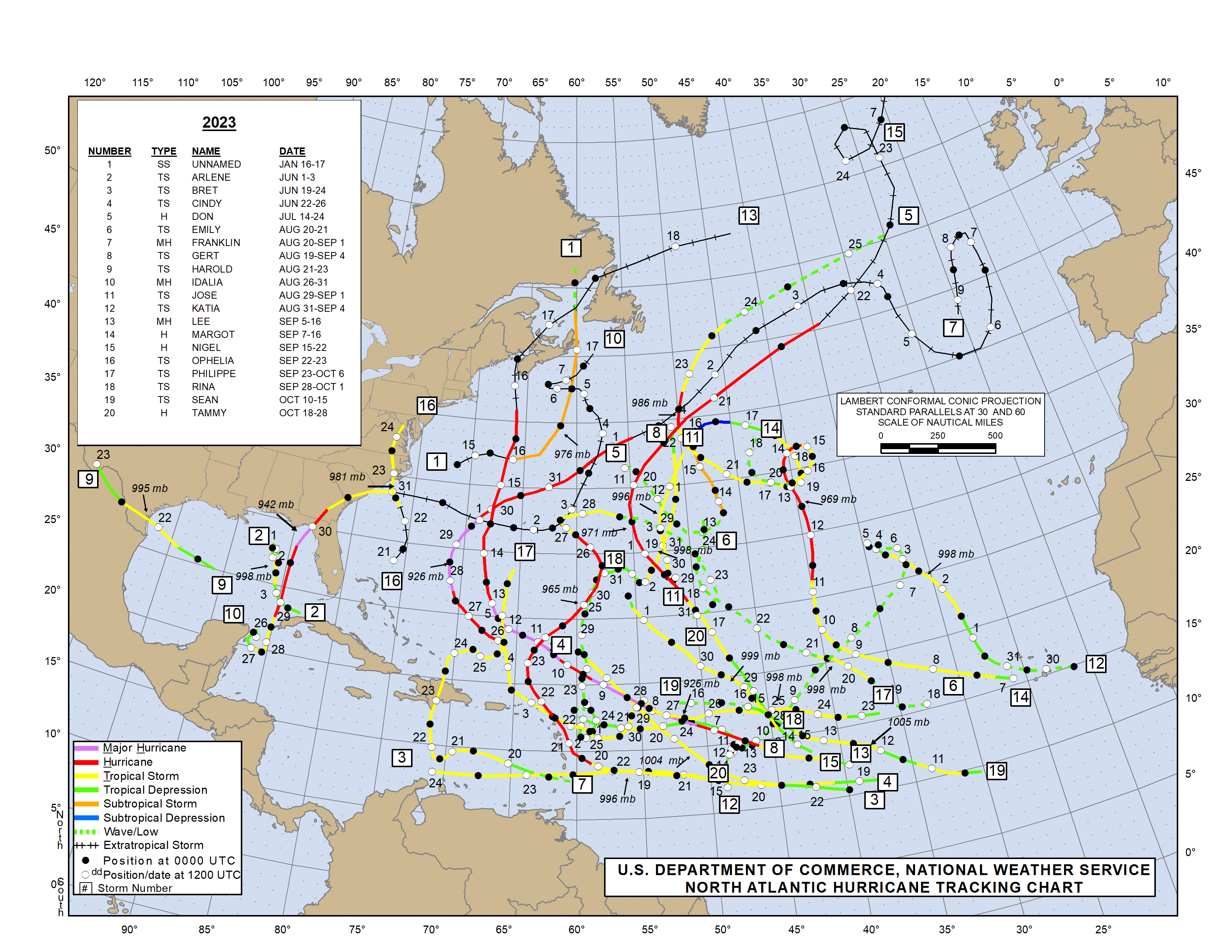
The 2023 season was an above normal season by the numbers, with 20 named storms, 7 hurricanes, and 3 major hurricanes, but the bulk of the activity occurred during a 7-week span between August 20 and October 6. The 20 named storms was tied with 1933 for the fourth most in a single season. Hurricane Idalia made the most headlines, hitting the Big Bend region of Florida area as a strong Category 3 hurricane on August 30 after peaking as a Category 4 storm earlier that day. Hurricane Lee was the strongest storm of the season, reaching Category 5 intensity. It passed west of Bermuda and for a time looked like a potential threat to New England, eventually making landfall as a strong extratropical storm in southwestern Nova Scotia on September 16. The only other storms to make landfall in the US were Tropical Storm Harold in southern Texas on August 22 and Tropical Storm Ophelia in North Carolina on September 23. With only 3 US landfalls, and just 1 at hurricane strength this was a welcome change from 2021 when a total of 21 storms formed, 3rd most ever in a single season, and a total of eight of them made landfall in the United States. That includes 2 tropical storms that made landfall in New England that summer – Elsa and Henri. Both Elsa and Henri each made landfall near Westerly, Rhode Island about 6 weeks apart. This was just the 5th time since 1851 that two tropical systems made landfall in Southern New England or Long Island in the same year, and only the 2nd time (1961 being the other), that both storms were only tropical storm strength. (We’ll have more info on New England tropical systems a little later in this post).
2023 was another active hurricane season. Image provided by the National Hurricane Center.
Forecasts for the upcoming season are nearly unanimous that a very active season is expected. Sea surface temperatures in the Atlantic are well above normal, near record highs in places, which would tend to lead toward a more active year. We also are transition from an El Nino to a La Nina in the Pacific, and that tends to increase Atlantic tropical activity. NOAA issued their seasonal hurricane outlook on May 23, and it calls for a 85 percent chance for an above normal season, a 10 percent chance for a near normal season, and a 5 percent chance for a below normal season. Most of the other hurricane outlooks issued by various outlets are also expecting an above to well above normal season, due to the signals mentioned above. An average season consists of 14.4 named storms, of which 7.2 become hurricanes and 3.2 become major hurricanes (Category 3 or higher on the Saffir-Simpson scale). NOAA’s forecast for this season calls for 17-25 named storms, 8-13 hurricanes, and 4-7 major hurricanes. The Tropical Meteorology Project at Colorado State, the first group to forecast how active a hurricane season would be, originally led by the late Dr. Bill Gray, will issue their updated forecast on June 11. Their initial forecast from April called for a well above average season, with 23 named storms, 11 hurricanes, and 5 major hurricanes. They also pegged the chance at a storm making landfall in the Massachusetts at 49% (33% is the average in any given year), and the odds of a hurricane making landfall in Massachusetts at 23% (14% is the average). Overall 7 of the past 8 hurricane seasons have featured above normal activity across the Atlantic.
Forecasts call for a very active Hurricane Season. Image provided by NOAA.
Despite the early start for the many of the past several years, the average date for the first named storm in the Atlantic is still June 20, and the average date for the first hurricane is August 11. Over 97% of all named storms in the Atlantic form between June 1 and November 30. Most early season storms tend to be on the weaker side. A hurricane hasn’t made landfall in the United States before July 1 since Hurricane Bonnie came ashore as a minimal hurricane near the Texas/Louisiana border on June 26, 1986.
Based on climatology, the most likely spots for an early season storm are off the Southeast coast, in the Gulf of Mexico, or the northwestern Caribbean. Image provided by the National Hurricane Center.
The number of storms that form in any given season has no correlation on how many storms (if any) will impact the United States. In 2010, 19 named storms were observed in the Atlantic, 12 of them became hurricanes, and 5 were major hurricanes. Only one storm made landfall in the United States, and that was Bonnie, which was a minimal tropical storm at landfall. In 1990, there were a total 14 named storms, 8 of them hurricanes and 1 major hurricane. Not a single one of them made landfall in the United States. On the flip side, only 7 named storms formed in 1992, and the first one didn’t develop until August 16. That storm, however, was named Andrew, and it made landfall just south of Miami as a category 5 storm. It only takes one storm to ruin your entire year.
Map showing the track of all of the hurricanes that made landfall New England or Long Island since 1851. Image provided by NOAA.
Here in New England, we should always pay attention when a storm is nearing the Bahamas, as those are the ones that have the potential to impact us, and we are extremely overdue for a hurricane to head this way. Using data back to 1851, here are some stats that show how overdue we are:
Since 1851, 39 storms of tropical storm strength of greater have made landfall in New England or Long Island, an average of one every 4.4 years. The longest we’ve ever gone without one is 11 years, between 1897 and 1908 and also between 1923 and 1934. In 2021, we had two tropical storms (Elsa and Henri) make landfall in the region.
Since 1851, 32 strong tropical storms (maximum sustained winds of 60 mph or more) have made landfall in New England or Long Island, an average of one every 5.4 years. The longest we’ve ever gone without one is 19 years, between 1897 and 1916. In 2021, we had two strong tropical storms (Elsa and Henri) make landfall in the region.
Since 1851, a hurricane has made landfall in New England or Long Island 18 times, an average of one every 9.6 years. The longest we’ve ever gone between hurricane landfalls is 38 years, between 1896 and 1934. It’s been 33 years since Bob, our 2nd longest drought on record.
Since 1851, 8 hurricanes of Category 2 intensity or stronger have made landfall in New England or Long Island, an average of one every 21.6 years. The longest we’ve gone between hits by storms of that intensity is 69 years, between 1869 and 1938. We’re at 33 years since Bob, the last one to do so.
Since 1851, New England/Long Island has had 3 Major Hurricanes (Category 3 or higher) make landfall – an unnamed storm in October of 1869 that grazed the eastern tip of Long Island before making landfall just west of Charlestown, RI; the infamous 1938 Long Island Express that made landfall near Brookhaven, NY and then again near New Haven, CT; and Hurricane Carol in 1954 which crossed East Hampton, NY and then made a 2nd landfall near Groton, CT. That’s an average of 1 every 57.7 years, and before this year, the longest time between 2 major hurricanes was 69 years (1869-1938). We’re now at 70 years since Carol, making this the longest stretch on record. There are also 3 documented storms from before 1851 – The Great Colonial Hurricane of 1635, the 1815 New England Hurricane, and the Norfolk and Long Island Hurricane of 1821. That’s it. That changes the numbers to 6 in 389 years, or one every 64.8 years, with a longest drought of 180 years.
Satellite photo of Hurricane Bob approaching New England. Bob was the last hurricane to make landfall in New England – 33 years ago. Image provided by NOAA.
We all saw what Sandy did back in 2012, and that was a minimal hurricane that eventually made landfall in southern New Jersey (technically as an extratropical storm), though there were other factors that led to the amount of damage it caused. When (not if) the next big storm comes up the coast, much of this region will not be prepared for the storm or its aftermath.
The Atlantic is quiet right now, but even if something were to form off the East Coast in the next few weeks and head this way, the waters off of New England, despite being warmer than normal, are still much too cold to sustain a tropical system, so we’d see something more like a typical nor’easter. Only two tropical storms have ever made landfall in the Northeast before the end of June. The first was an unnamed minimal tropical storm that crossed extreme eastern Long Island and went into southeastern Connecticut on May 30, 1908. The other was Tropical Storm Agnes, which made landfall near New York City on June 22, 1972, then caused devastating flooding across parts of the Mid-Atlantic states. In terms of hurricanes, the earliest one to ever make landfall up this way was Hurricane Belle, which slammed into Long Island with 90 mph winds on August 9, 1976. We did have Hurricane Arthur pass just offshore of Nantucket on July 4, 2014. While it did not make landfall, it made for a rather wet and cool holiday, especially across Cape Cod and southeastern Massachusetts. Statistically, the most likely time for a hurricane to hit New England is between the middle of August and late September. Of the 18 hurricanes that made landfall in New England or Long Island since 1851, 15 of them have done so between August 19 and September 27.
The most likely time for a tropical system to impact our area is August of September. Image provided by the National Weather Service office in Norton, MA.
As always, you should get your weather information from a trusted source (hopefully you trust us), especially when dealing with tropical systems. Much like with snowstorms in the winter, there will be plenty of hype and exaggeration on Twitter and Facebook, as well as people posting doom and gloom maps showing how a thunderstorm near the coast of Africa will develop into a Category 5 storm and head right for the East Coast in the next 2 weeks. We’re not among that group, we give you facts and our best forecasts, without any hype. If there’s reason to worry, we’ll let you know with plenty of advance warning. It’s always best to prepare ahead of the season. Chances are, you won’t have anything to worry about, but in case you do, it’s always good to be prepared.
Another rainy Saturday? Yup, we’ve got another rainy Saturday on the way.
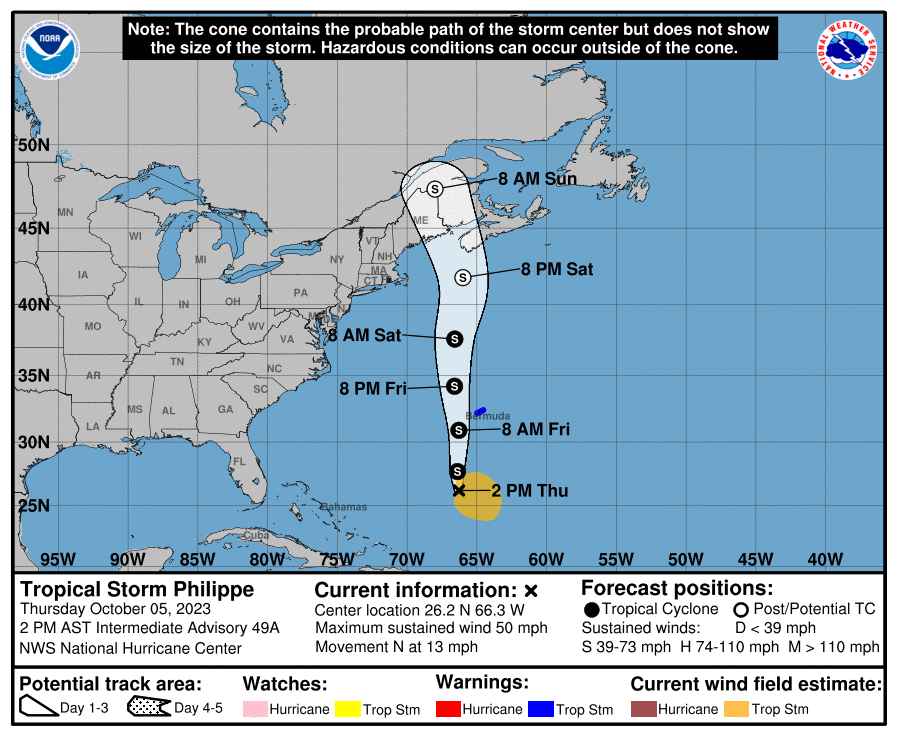
Tropical Storm Philippe may have a role in our weather this weekend. Image provided by the National Hurricane Center.
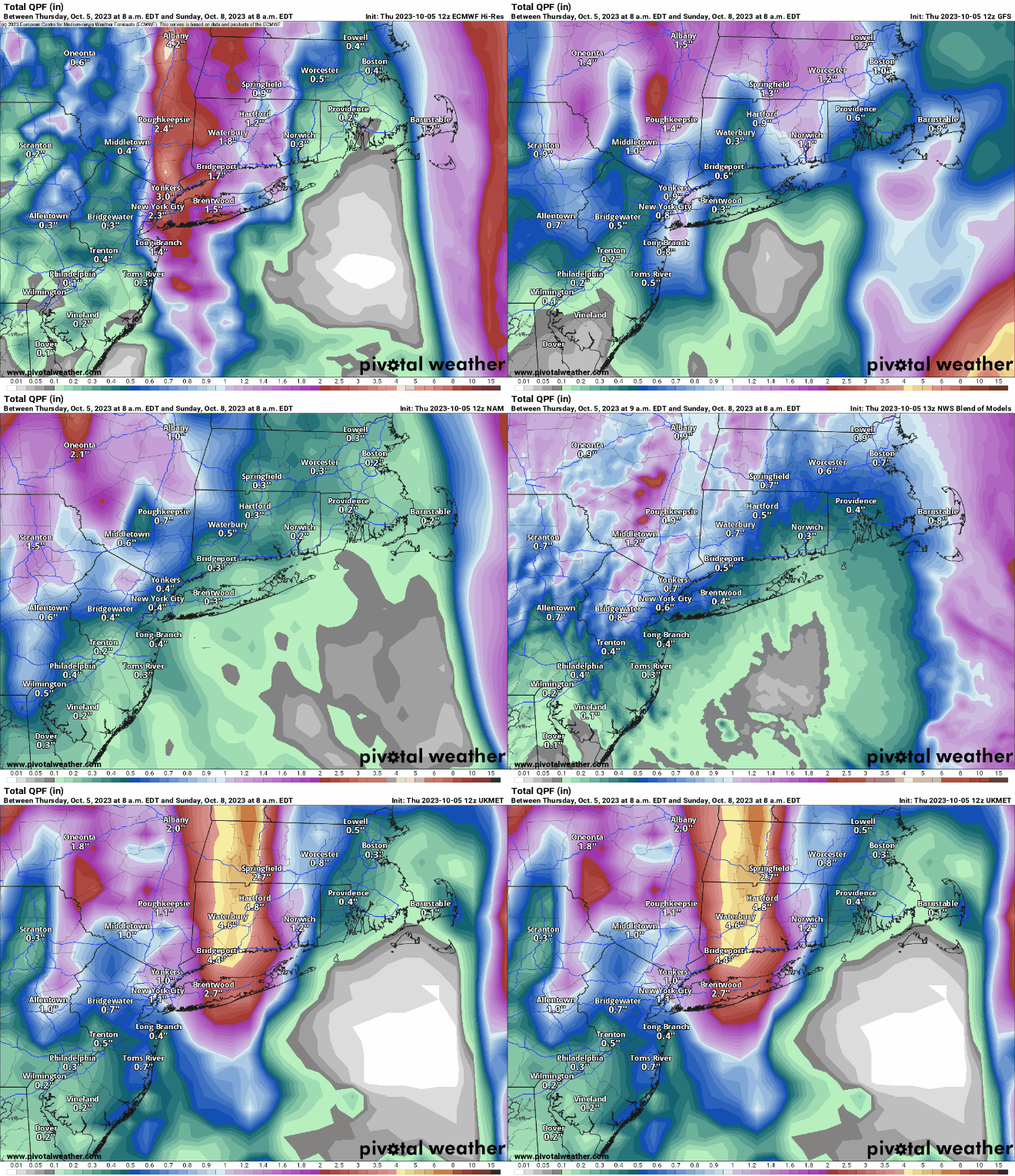
We start off with another foggy night tonight, with plenty of moisture around and high pressure sliding off to the east. Once the fog burns off Friday morning, we’ll still have plenty of clouds ahead of a cold front slowing moving in from the west. A few showers are possible during the day, but they’ll become more likely at night, and through a good chunk of the day on Saturday. Complicating matters is Tropical Storm Philippe, or what’s left of it. It will be moving northward, passing east of the region, but some of the rain from it could move into eastern Massachusetts. Eventually, it’ll get tugged northwestward by an upper-level low (more on that in a minute), moving into Maine or New Brunswick this weekend, with some heavy rain and gusty winds for parts of northern New England. The cold front moves across the region Saturday evening, bringing an end to the rain, then much cooler air settles in behind it. However, that upper-level low over southeastern Canada will move southeastward, which means that despite high pressure building in at the surface, we’ll still have plenty of clouds around Sunday and Monday, with a few popup showers possible.
The heaviest rain will stay well to our west, but there is the potential for some heavy rain in eastern New England this weekend. Images provided by Pivotal Weather.
Thursday night: Becoming mostly cloudy with areas of fog, some of it dense. Low 54-61.
Friday: Partly to mostly cloudy with a chance for a shower or two. High 67-74.
Friday night: Cloudy with showers developing. Low 57-64.
Saturday: Periods of rain and showers. High 61-68.
Saturday night: Showers end, some clearing possible late at night, becoming breezy. Low 46-53.
Sunday: A mix of sun and clouds, windy, cooler. High 57-64.



















 Storm HQ