Tropical Update + Weekly Outlook: August 28 – September 4, 2023

The final days of meteorological summer feature more rain, which is pretty much keeping to the theme we had all summer.

Rainfall has been well above normal across New England this summer. Image provided by the Northeast Regional Climate Center.

The week starts off with a rather complex forecast, but today should be mainly dry with high pressure moving offshore. With the high centered mainly north and then east of us, we’ll have onshore winds, keeping temperatures on the cooler side of normal near the coastline. Moisture will begin streaming northward in the form of high clouds today, though they will thicken up and lower later in the day. Here’s where things start to get complicated. A frontal system is currently stalled out across the Southeast, it will gradually lift northward tonight and Tuesday, allowing some tropical moisture to follow. As moisture rides northward along the front, some rain is expected to move in late tonight and Tuesday, especially across southeastern New England. Some of this rain could be quite heavy, but how far north and west the rain shield extends, and how far northward the heavy rain gets is still a question mark. Right now, it looks like it’ll be mainly across the South Coast and parts of southeastern Massachusetts, but that is obviously subject to change. At the same time, we’ll also have another cold front approaching from the northwest. We’ll also be keeping a close eye on Hurricane Franklin well offshore and Tropical Storm (possibly Hurricane) Idalia in the Gulf of Mexico (more on these two below). Franklin will be helping to push the front to our south northward, while the other front moves in from the west. In between, we’ll have another round of showers and thunderstorms on Wednesday, especially during the morning hours, before the approaching front finally moves through the region. Again, some heavy rain is possible in spots, but probably not with coverage or intensity expected across the South Coast on Tuesday.

More heavy rain is possible Tuesday and Wednesday. Images provided by Pivotal Weather.

High pressure builds in behind the cold front for Wednesday night, and remains in place into the weekend, keeping us mostly on the dry side, with temperatures starting cool, but gradually warming up as we get to the weekend. There is a potential fly in that ointment though. Idalia is expected to make landfall near the Big Bend area of Florida Tuesday night or early Wednesday, then head into the Carolinas and offshore on Thursday. The high building in here should block its northward progress and steer it out to sea well to our south. However, if the timing is off a bit, say Idalia slows down and makes landfall later than currently expected, then perhaps some of the moisture from it or its remnants ends up being dragged farther north, and ruins our forecast of drier weather into Labor Day Weekend. While this isn’t likely right now, it’s several days away, and things can change quickly, especially when tropical systems are involved. Either way, between Franklin and Idalia, we’ll have some rough surf across the beaches and coastal waters for much of the upcoming week, so keep that in mind if that’s where your plans bring you.

The GFS model shows high pressure building in for the end of the week and the weekend, shunting Idalia out to sea well to the south. Loop provided by Tropical Tidbits.

By the weekend and into Labor Day, another cold front will approach the region, but aside from a few showers as it moves in on Sunday, it looks to remain mostly dry and warm.

As for the tropics, here’s the latest on our two named systems:

Satellite loop showing Tropical Storm Idalia in the northwestern Caribbean and Hurricane Franklin northeast of the Bahamas. Loop provided by Tropical Tidbits

Hurricane Franklin was centered about 530 miles southwest of Bermuda as of 11pm Sunday, moving toward the north-northwest at 8 mph. Maximum sustained winds were near 105 mph. Franklin continues to get better organized and will continue to strengthen for another day or two as it heads northward and then northeastward over warm waters. While it will pass west and northwest of Bermuda late Tuesday and Wednesday, it will likely be close enough to produce tropical storm conditions on the island, with some locally heavy showers, and winds gusting upwards of 40-60 mph. A Tropical Storm Watch will likely be issued for Bermuda on Monday. After that, Franklin will likely head northeastward out into the open Atlantic while gradually losing tropical characteristics.

Forecast track for Hurricane Franklin. Image provided by the Bermuda Weather Service.

Meanwhile, Tropical Storm Idalia formed on Sunday in the northwestern Caribbean Sea. As of 2am Monday, it was centered about 150 miles south of the western tip of Cuba and barely moving. Maximum sustained winds were up to 60 mph. The forecast for Idalia calls for it to start heading northward, passing close to or across extreme western Cuba on Monday before heading into the eastern Gulf of Mexico. Steady strengthening is expected, and Idalia will likely become a hurricane on Monday. Once into the Gulf, the water is very warm, and the warm water extends rather deeply under the surface, which is one of the main ingredients that feeds tropical systems. While the upper-level environment may not be perfect, the potential is there for Idalia to rapidly strengthen on Monday and Tuesday, possibly into a major hurricane as it approaches the Gulf Coast of Florida. Eventually it will start turning more toward the northeast, but when that turn occurs will be crucial for pinpointing landfall. A Hurricane Watch is in effect for the Florida Gulf Coast from Englewood to Indian Pass, which includes the Tampa Bay area. Once inland, it will start to weaken, but it should start to turn more toward the east-northeast and eventually east, as the high building in up here should block its northward progress. How quick that turn occurs will determine how long it stays over land before moving into the Atlantic, which in turn will determine how strong it still is when it reaches the Atlantic, if it survives that long. We’ll have a much more detailed post about the tropics on Tuesday as Idalia nears the Gulf Coast and Franklin makes its closest pass to Bermuda.

Forecast track for Tropical Storm Idalia. Image provided by the National Hurricane Center.

Monday: Partly to mostly sunny in the morning after some patchy fog burns off, clouds increase and thicken in the afternoon. High 73-80.

Monday night: Mostly cloudy, showers developing near the South Coast, Cape, and Islands late at night. Low 58-65.

Tuesday: Mostly cloudy with showers likely, possibly a thunderstorm, except some locally heavy rain and thunderstorms possible across parts of Rhode Island, southeastern Massachusetts, Cape Cod, and Islands. High 71-78.

Tuesday night: Cloudy with scattered showers, possibly a rumble of thunder. Low 61-68.

Wednesday: Cloudy with more showers, possibly a thunderstorm, ending in the afternoon, followed by clearing in the evening. High 72-79.

Thursday: Sunshine and a few clouds, breezy. High 69-76.

Friday: Plenty of sunshine. High 72-79.

Saturday: Sunshine and some afternoon clouds. High 74-81.

Sunday: A mix of sun and clouds, breezy, chance for a shower. High 75-82.

Labor Day: Partly to mostly sunny. High 77-84.

Weekend Outlook: August 25-28, 2023

More rain is on the way, but most of the weekend should end up rather nice.

Rainfall totals over the past few months have been 1.5 to 3 times the normal amount. We’ll add to that tonight and Friday. Image provided by WeatherBell.

Low pressure is moving across the Great Lakes this afternoon, and it will slowly head eastward, sending clouds into the region today, with rain developing tonight. Friday is looking like a cloudy, breezy, cool, and wet day ahead of the system, with episodes of rain and showers, possibly a few embedded thunderstorms, especially near the South Coast. The system will try to send a warm front across the region, but it doesn’t look like it’ll make too much progress northward, so most of us will stay cool, except areas closer to the South Coast. Some of the rain may be heavy during the day on Friday. The rain will taper off Friday night, but it may not end until Saturday morning, especially across eastern Massachusetts. As a cold front pushes offshore, we’ll see some sunshine develop, but another upper-level disturbance will move across the region, generating some additional clouds, and possibly a few late-day showers. High pressure starts to build in on Sunday, but yet another upper-level disturbance will move through, likely producing more clouds. We’ll have some drier air in place, but there will still be a chance for a stray shower or two as the disturbance moves through. Monday looks like the pick of the weekend with partly to mostly sunny skies and mild temperatures.

The potential exists for some heavy rainfall across the region between tonight and Saturday morning. Images provided by Pivotal Weather.

Thursday night: Cloudy with periods of rain and showers developing, especially after midnight. Low 58-65.

Friday: Breezy and cool with episodes of rain and showers, some possibly heavy, a few rumbles of thunder are also possible. High 67-74.

Friday night: Mostly cloudy, rain and showers slowly taper off. Low 61-68.

Saturday: Some lingering showers in the morning, then becoming partly sunny, with a few more showers possible late in the day. High 74-81.

Saturday night: Any showers end during the evening, becoming partly cloudy. Low 58-65.

Sunday: A mix of sun and clouds, slight chance for a shower or two. High 69-76.

Sunday night: Clear to partly cloudy. Low 54-61.

Monday: Partly to mostly sunny. High 71-78.

Tropical Update – Things Are Getting Active

The tropics in the Pacific and Atlantic can be described using the titles of two of Shakespeare’s plays – “The Tempest” for the Eastern Pacific Ocean, and “Much Ado About Nothing” for the Atlantic Ocean.

Hurricane Hilary has been downgraded to a Tropical Storm as it continues northward very close to the coast of the Baja California peninsula. As of 11am EDT, Hilary was centered about 220 miles south-southeast of San Diego, moving toward the north-northwest at 25 mph. Maximum sustained winds are near 70 mph. Tropical Storm Warnings remain in effect for northern portions of the Baja California peninsula, as well as the southern California coast from the Mexican border northward to Point Mugu, including Catalina Island.

Satellite loop of Tropical Storm Hilary. Loop provided by NOAA.

Hilary is expected to continue weakening today as it passes very close to the Baja coastline and into southern California. Despite the hype over the past few days, Hilary will probably not make landfall in southern California, but instead across extreme northwestern Mexico, with the center moving into southern California farther inland, but still as a tropical storm. Hilary will produce gusty winds and storm surge along the coast, with a few tornadoes possible across parts of the Southwest, but heavy rain and the resultant flooding are the most significant threat with this storm. Rainfall totals of 3-6 inches are likely across many locations in southern California and Nevada, with some totals in excess of 10 inches possible. In some of the desert locations, including Death Valley, this is more rain than they normally receive in an entire year. Widespread flooding is likely, including the San Diego, Los Angeles, and Las Vegas metropolitan areas. As Hilary continues to push northward and weakens, heavy rain will spread across the Great Basin, and Inland Northwest, with rainfall totals of 1-3 inches possible, likely producing some flooding in these areas as well.

In the Atlantic, Saharan Dust has suppressed activity for the past few weeks, but now that it has moved out, there are several areas of interest, including a pair of storms.

Tropical Storm Emily has developed about 1000 miles west-northwest of the Cabo Verde Islands, moving toward the west-northwest at 10 mph. Maximum sustained winds are near 50 mph. Emily is expected to continue toward the west-northwest for the next day or two, but conditions will become increasingly hostile, with wind shear increasing over the next few days, which will basically rip the system apart. This will result in steady weakening of Emily, with it likely become extratropical on Monday or Tuesday. After that it will turn toward the northwest and north, heading out into the open waters of the Atlantic, without impacting any land areas.

Satellite loop of Tropical Storm Emily. Loop provided by Tropical Tidbits.

Tropical Depression Six is barely hanging on as an organized system about 625 miles east of the Northern Leeward Islands. Top winds are near 35 mph, and it is moving toward the west at 12 mph. Wind shear is ripping this system apart, and it is expected to dissipate over open water later today or tonight. At least the Hurricane Center didn’t waste a name on this piece of junk.

Another area of low pressure is moving across the southeastern Caribbean Sea this afternoon, producing numerous showers and thunderstorms across the eastern Caribbean. It should continue toward the west-northwest for the next day or two, and conditions are favorable for it to continue to develop. Reconnaissance aircraft are scheduled to investigate this system during the afternoon to check on the structure and strength of the system. It will continue to produce heavy rain and gusty winds across the northern and eastern Caribbean for the next few days, but it should turn more toward the north early this week, which will increase the threat to some of the islands, depending on when the turn occurs. Right now, it looks like Hispaniola will have the biggest threat, but this is predicated on when (or if) that turn occurs. It should eventually move north of the islands, possibly near the Turks and Caicos Islands, before heading out into the Atlantic. Once into the open waters of the Atlantic, it could become a potent storm system, but again, this is dependent on what it does in the next few days first.

An area of low pressure that brought heavy rain and thunderstorms to the Bahamas and southern Florida has moved into the Gulf of Mexico this afternoon. It is expected to continue westward across the Gulf over the next few days, with some development possible. It could become a tropical depression toward midweek before approaching the Texas coastline. Whether it develops or not, it should bring some much-needed heavy rain to parts of central and southern Texas later this week, helping to not only put a dent in the ongoing drought in the region, but also provide some relief from the heat. Of course, places like Dallas and Austin, where temperatures will be in the 100-110 range for the next few days won’t get any relief.

A system will bring much needed rainfall to parts of Texas this week. Image provided by Pivotal Weather.

Yet another tropical wave has moved off the African coast and into the eastern Atlantic. Conditions will be favorable for development over the next several days, and it could become a tropical depression later this week. If it does actually develop, it is expected to remain over open water, with no impact to land areas through at least next weekend.

Weekend Outlook: July 14-17, 2023

Another summer weekend, another upper-level low impacting our weather.

You’ve heard this from us plenty of times, but the pattern just hasn’t changed much. We’ve got a blocking pattern in place across Greenland, with a trough of low pressure, often times a closed low, setting up shop over the Midwest. These lows slowly drift eastward, and as they move out, we get a couple of nice days before the next trough/low drops into the Midwest. As disturbances rotate around those troughs, they help to trigger showers and thunderstorms, especially during the afternoon and evening hours. At least we’re on the warm side of the troughs, with southwest flow aloft, meaning it’s warm and humid most of the time. Consider yourselves lucky, in places on the other side of the trough, like the Northern and Central Plains, not only have the last few weeks been quite wet, temperatures have been well below normal.

Temperatures have been well below normal across the nation’s midsection so far in July. Image provided by Weathermodels.com

In terms of what we can expect around here, well, expect some showers and thunderstorms to develop each day, mainly during the afternoon hours, and they should diminish after sunset. These storms will be most widespread on Friday and again on Sunday as disturbances rotate through the region. Any storms that develop may produce heavy rainfall, which could trigger flooding, especially with the ground quite wet across much of the region. Temperatures will be mainly in the upper 70s and 80s during the day, but it will remain humid.

Some locally heavy rainfall is possible over the next few days. Images provided by Pivotal Weather.

Thursday night: Partly to mostly cloudy, some showers and thunderstorms possible during the evening. Low 67-74.

Friday: Plenty of clouds, showers and thunderstorms likely, mainly from late morning into the afternoon. Some of the storms may produce heavy rain and gusty winds. High 78-85.

Friday night: Partly to mostly cloudy, showers taper off in the evening. Low 65-72.

Saturday: Intervals of clouds and sunshine, a few showers and storms possible in the afternoon. High 80-87.

Saturday night: Mostly cloudy, chance for a few showers. Low 67-74.

Sunday: Mostly cloudy, breezy, showers and thunderstorms likely, some may produce heavy rain. High 76-83.

Sunday night: Plenty of clouds, showers end in the evening. Low 66-73.

Monday: A mix of sun and clouds, chance for a few showers or thunderstorms in the afternoon. High 82-89.

Weekly Outlook: July 10-16, 2023

Stop us if you’ve heard this before – we’ll be dealing with upper-level lows and upper-level troughs of low pressure again this week, with more rain on the way.

There is a moderate risk for excessive rainfall across much of the interior today. Image provided by Iowa State University’s Iowa Environmental Mesonet.

A frontal system will move into the region today while a wave of low pressure rides up along it. This system produced extraordinarily heavy rain across western New England and eastern New York yesterday. While we’ll have some of that heavy and thunderstorms moving in today, it shouldn’t be anywhere near the magnitude of what they experienced across the Hudson and Connecticut Valleys yesterday, where as much as 5-10 inches of rain caused widespread severe flooding. Some of the thunderstorms that move through may also produce gusty winds, but heavy rain remains the most significant threat.

The heaviest rain will fall across western and northern New England today and tonight, but some models still show some heavy rain totals around here. Images provided by Pivotal Weather.

That system will pull away on Tuesday with showers ending and some clearing, then high pressure builds in both at the surface and aloft for Wednesday. That means we’ll have sunshine and warm to hot and humid conditions – it’ll feel like summer once again. However, this dry interlude will be short-lived. Another trough of low pressure will start to move into the Midwest by Thursday, and only make very slow eastward progress through the weekend. As disturbances rotate through this upper trough, they’ll generate some showers and thunderstorms around here each afternoon from Thursday into Sunday. None of the days should be a washout, so don’t go cancelling any outdoor plans, but for now Friday and Sunday look to have the greatest coverage of showers and thunderstorms in the afternoon.

One upper-level low moves across the Northeast to start the week, another drops into the Great Lakes later in the week. Loop provided by Tropical Tidbits.

Monday: Plenty of clouds with showers and thunderstorms likely, some heavy rain possible, especially across the interior. High 70-77.

Monday night: Showers taper off, some late-night clearing possible. Low 60-67.

Tuesday: Becoming partly to mostly sunny, chance for an afternoon shower. High 80-87.

Tuesday night: Clear to partly cloudy. Low 63-70.

Wednesday: Sunshine and some afternoon clouds. High 85-92.

Thursday: Partly sunny, a few showers and thunderstorms around in the afternoon. High 79-86.

Friday: Intervals of clouds and sun, breezy, showers and thunderstorms likely, especially in the afternoon. High 76-83.

Saturday: Partly sunny and breezy with some showers and thunderstorms developing. High 76-83.

Sunday: A mix of sun and clouds, more showers and thunderstorms possible. High 79-86.

Weekly Outlook: March 13-19, 2023

“Luck…..runs……out…..”

As Metallica sings in the beginning of the song “All Nightmare Long”, luck does indeed run out. After getting lucky for nearly the entire winter without a major snowstorm, it appears that our luck has finally run out.

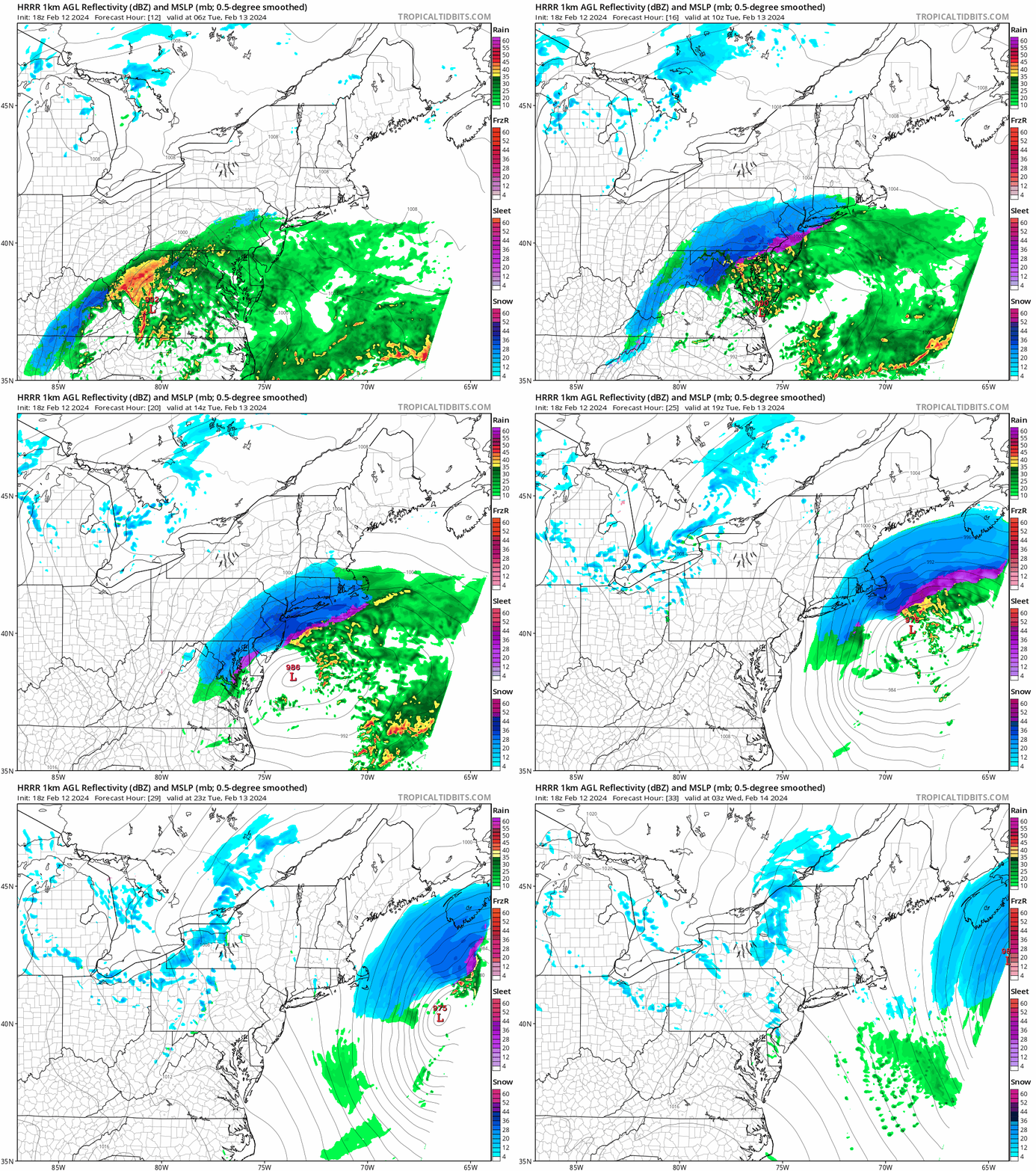
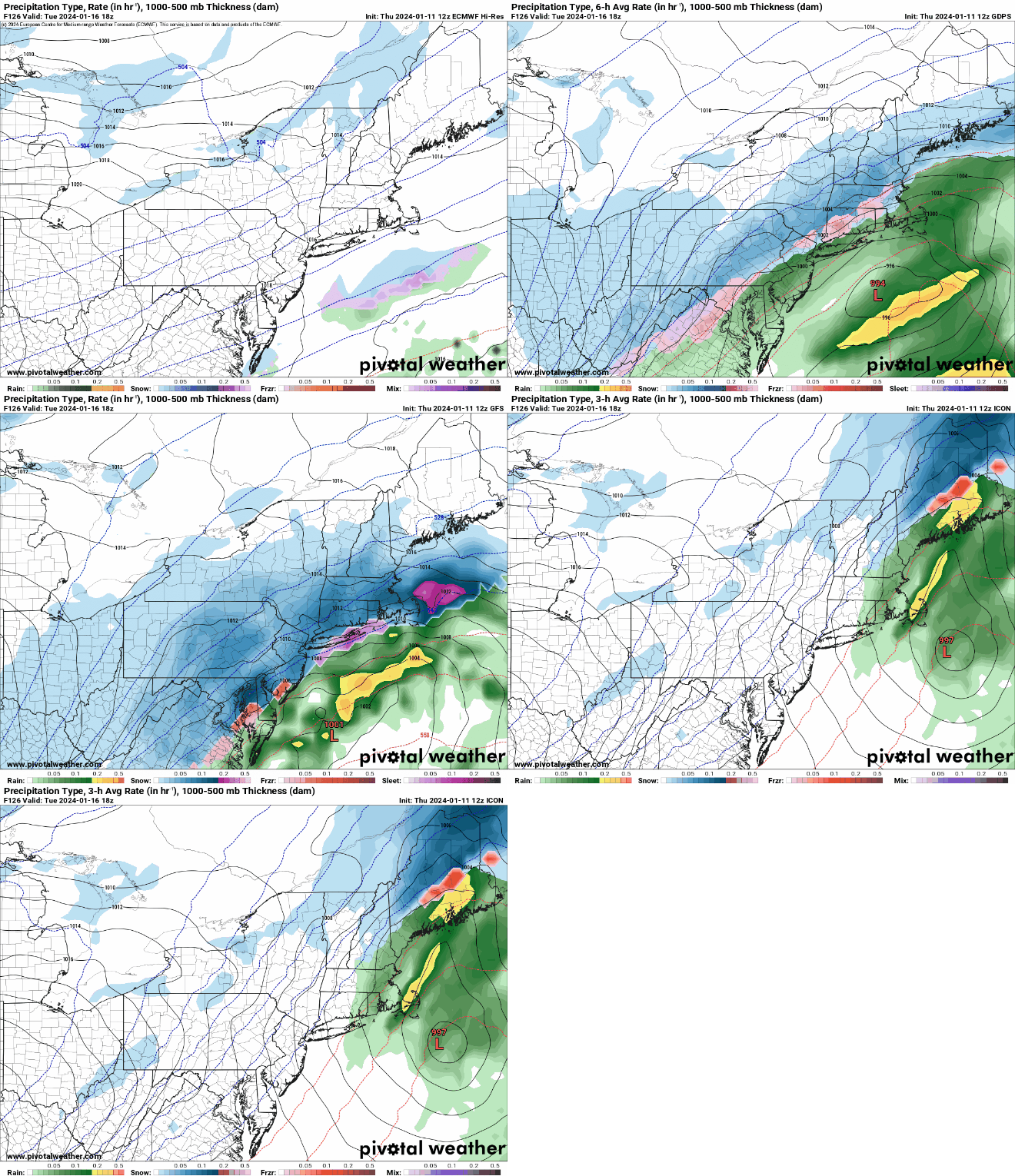
Today will be the literal calm before the storm with high pressure sliding off to the east, but still keep us dry despite plenty of cloudcover. After that, we turn our eyes to a developing low pressure system moving up the East Coast. This will likely be a potent storm when it gets up here, producing strong winds and quite a bit of precipitation. It’s also expected to stall out and perhaps make a bit of a loop, which means we’re looking at a long-duration storm, starting this evening, and likely not ending until Wednesday morning. That’s what we’re fairly certain about. What we’re not certain about is the actually track the storm takes, and where it stalls/makes a loop, and that is the most critical part of the forecast. Temperatures will be marginal to begin with, so a degree or two will make a huge difference. We’re not worried about any warm air aloft, so sleet and freezing rain aren’t a concern – just a good old-fashioned rain/snow line. With marginal temperatures, intensity will also help determine what falls, as lighter precipitation will be more rain than snow, while heavier precipitation will bring some colder air down from aloft, resulting in more snow than rain.

Whether it’s rain or melted snow, this will be a rather juicy storm. Image provided by WeatherBell.

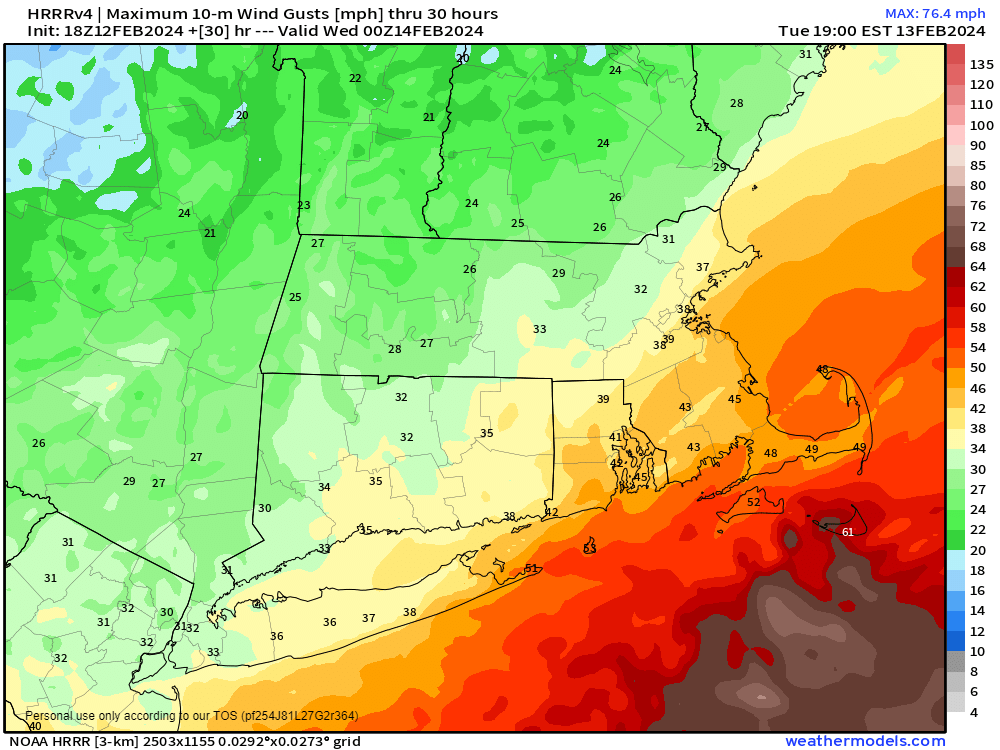
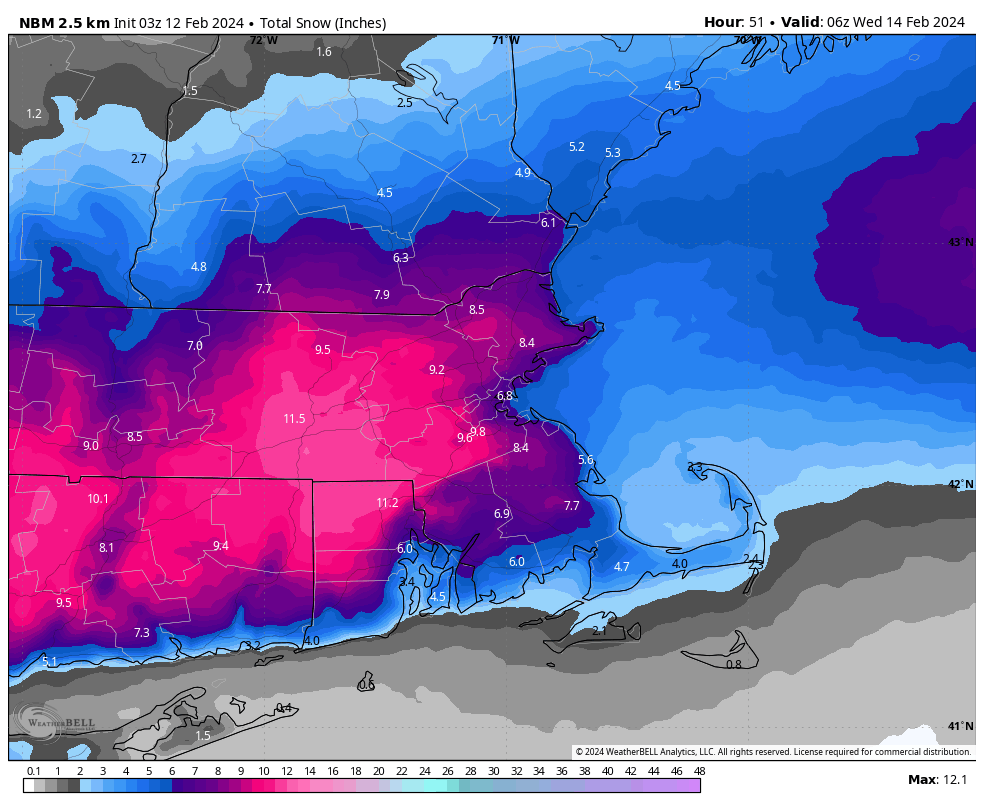
OK, having said all that, he’s our best estimate as to what we expect – low pressure moves up the East Coast, passing just south and east of Cape Cod. Meanwhile, a much weaker secondary low will move across Long Island and southern Connecticut, before it weakens and dissipates. This will help keep temperatures a little warmer, especially near the South Coast, with east to southeast winds. The original rather potent system will then do a loop in the waters just east of New England, before finally moving away on Wednesday. In terms of sensible weather we’re probably looking at nearly all snow north of the Mass Pike and outside of I-495, especially in the hills. South and east of there, precipitation likely starts as rain this evening, gradually changing to snow from northwest to southeast during the day on Tuesday as the system moves off to the east, and strong north to northwest winds bring cooler air in. Those winds will gust to 40-50 mph at times, but luckily tides are astronomically low, so coastal flooding isn’t a widespread concern.

We think the forecast track on the NAM is close to what might happen. Loop provided by Tropical Tidbits.

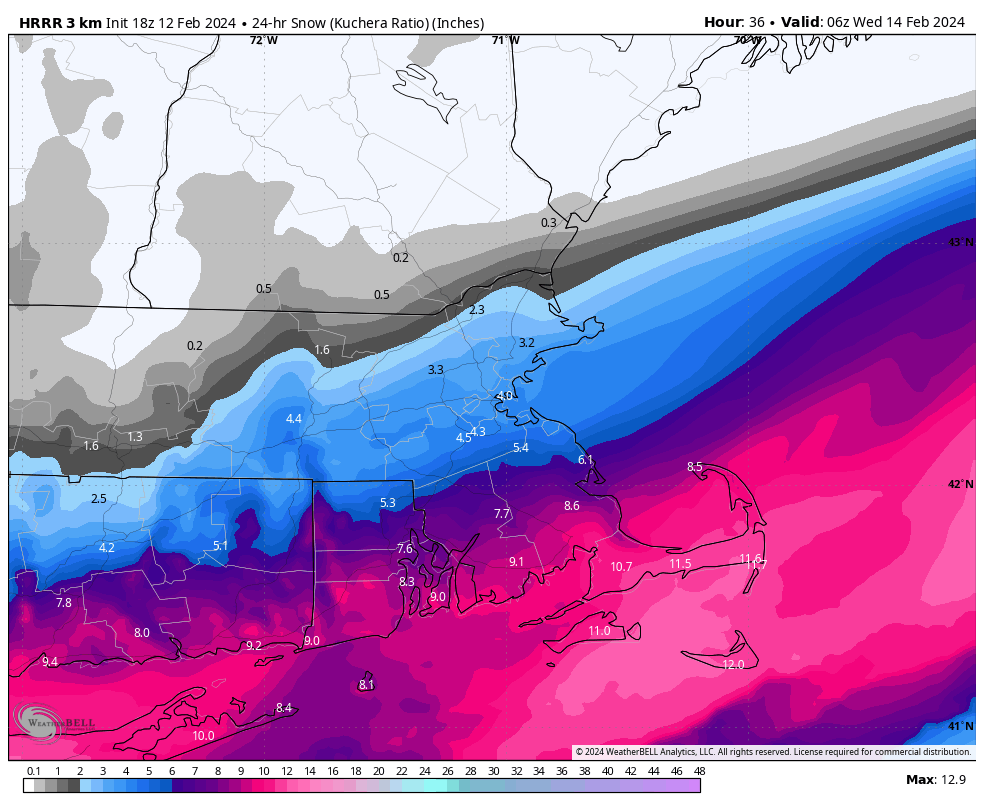
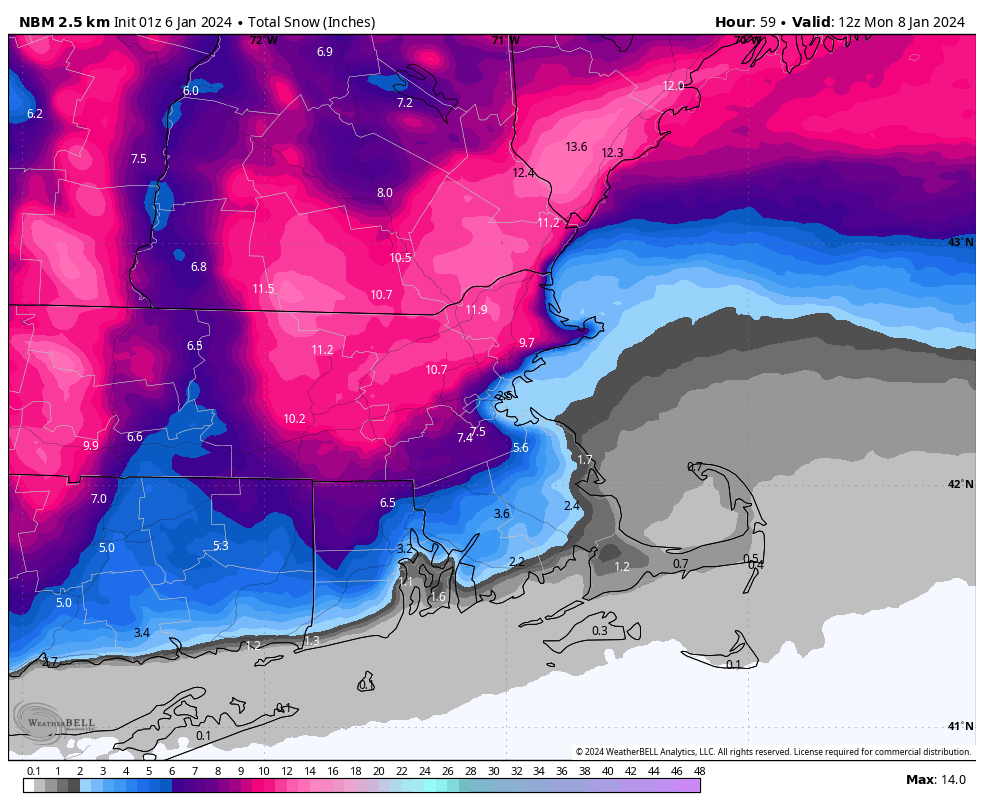
As for snowfall, we need to make a distinction here between snowfall and snow accumulation. With the increasing sun angle, and the warmer ground, snow will have a hard time accumulating during the daylight hours, especially on paved surfaces, when precipitation is falling lightly. So, it could snow for quite some time, but there won’t be much on the ground. The model forecast maps that people love to share on Facebook and Twitter show snowfall, and as we’ve just said, those maps will not be reflective of what you may see on the ground when this storm winds down. What are we expecting for accumulation?

0-2″ – Outer Cape/Islands
2-4″ – South Coast/Upper Cape/Coastal Plymouth County
4-7″ – I-95 corridor (Providence/Boston), southeastern Massachusetts/North Shore
5-9″ – Metro West/Essex County/NH Seacoast
6-12″ – Merrimack Valley/Southern New Hampshire
8-16″ – Hilly terrain from northwest Rhode Island into central Massachusetts and southwest New Hampshire with isolated heavier amounts possible.

We will note that there are some models that do bring heavier (in some cases MUCH heavier) snow into eastern and especially southeastern Massachusetts. We’re not putting much stock in those. However, if they do end up correct, our snowfall forecast will be off by several orders of magnitude.

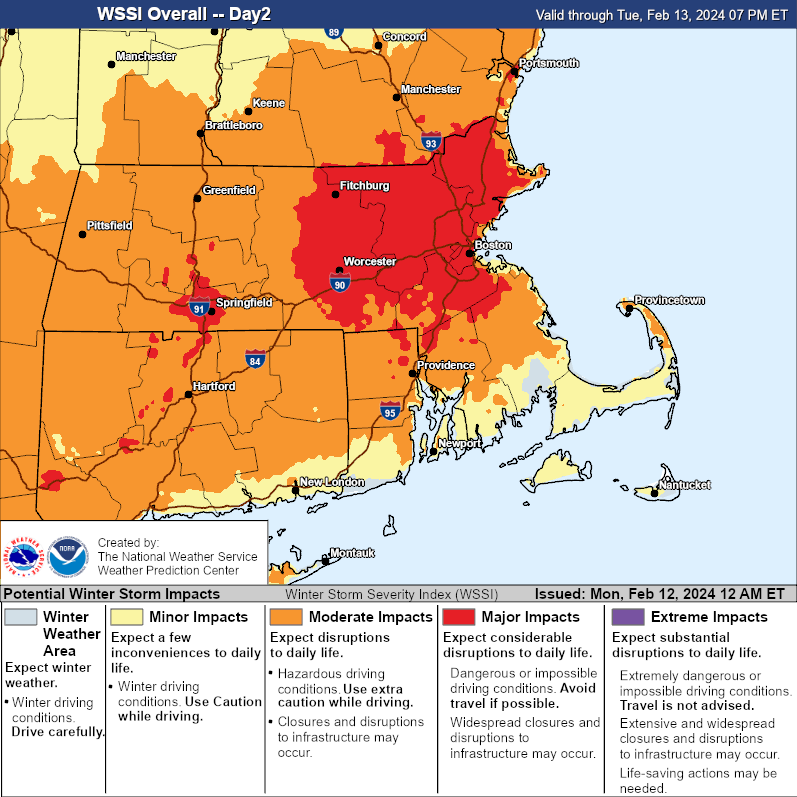
Our forecast isn’t that different from what the National Weather Service is forecasting. Image provided by Weathermodels.com

Once this storm pulls away, high pressure builds in with drier and more seasonable conditions for Wednesday night and Thursday. Another system may move in later Friday into Saturday, but this looks like mainly rain, with drier weather again behind that storm on Sunday.

Monday: Mostly cloudy, breezy, showers developing late in the day. High 40-47.

Monday night: Windy with rain likely, changing to snow across southern New Hampshire and central Massachusetts toward daybreak, rain may be heavy at times. Low 32-39.

Tuesday: Windy with rain changing to snow from northwest to southeast during the day. Snow and rain could be heavy at times. High 33-40 early, temperatures hold steady or drop during the day.

Tuesday night: Windy with snow gradually tapering off. Low 27-34.

Wednesday: Mostly cloudy and windy, snow showers ending. High 33-40.

Thursday: A mix of sun and clouds, breezy. High 42-49.

Friday: Becoming mostly cloudy, breezy, showers develop at night. High 45-52.

Saturday: Mostly cloudy, breezy, showers likely, possibly changing to snow before ending at night. High 45-52.

Sunday: Partly sunny, windy. High 37-44.

Weekly Outlook: January 23-29, 2023

A fairly active weather pattern is on deck for this week, with several bouts of unsettled weather expected.

We’re starting the week off on a stormy note with low pressure passing south of the region. Colder air will work its way in behind the storm today, allowing the rain/snow line to move southward as the day progresses. So, even places that are still raining this morning will likely see some snow before the day is out and the storm pulls away. Areas south of the Mass Pike will likely see an inch or less of accumulation, with another 1-3 inches north of the Pike, and possibly a little more than that across southern New Hampshire. Everything ends this evening, then high pressure briefly builds in tomorrow with drier conditions.

Much of the region will only pickup another inch or two of snow today. Image provided by WeatherBell.

However, another storm will quickly follow for Wednesday. With some cold air in place, this one will likely start as snow across the region Wednesday afternoon, making for a rather messy afternoon commute. However, with the low passing west of us, and a secondary low pressure system developing right overhead, warmer air will move in, resulting in a change to rain Wednesday evening and night, ending Thursday morning. As that system pulls away, breezy and cooler conditions settle in late Thursday into Friday, but a cold front will approach the region on Saturday. That front may produce some snow showers Saturday afternoon and evening before it pushes offshore. Wel clear out behind it and turn colder, but yet another system quickly follows late Sunday, with some rain or snow showers possible late in the day ahead of a warm front.

Most of the models show snow falling for the Wednesday afternoon commute. Images provided by Pivotal Weather.

Monday: Breezy with snow likely north of the Mass Pike, rain changing to snow south of the Pike. High 34-41 early, temperatures drop during the afternoon.

Monday night: Snow ending in the evening, followed by clearing, windy. Low 22-29.

Tuesday: Morning clouds, some afternoon sun, breezy. High 35-42.

Tuesday night: Clear through the evening, clouds return after midnight. Low 17-24.

Wednesday: Cloudy with snow developing in the afternoon, changing to rain from south to north during the evening. High 32-39.

Thursday: Windy with periods of rain, ending in the afternoon. High 39-46 north and west of I-495, 47-54 south and east.

Friday: Partly to mostly sunny, breezy, and colder. High 32-39.

Saturday: Mostly cloudy and breezy with a few snow showers possible, clearing late in the day. High 37-44.

Sunday: Becoming mostly cloudy and breezy, snow or rain showers possible late in the day. High 35-42.

Weekend Outlook: December 23-26, 2022

There used to be a waterpark in Orlando named Wet n’ Wild. That could also describe our forecast for the next 24 hours.

A rather potent storm system is moving toward the Great Lakes, producing blizzard conditions across the Plains and Upper Midwest. Behind the storm, arctic air is plunging southward from Canada. How cold is this airmass? When the front goes through, some places have dropped 30-40 degrees in an hour. In Denver, the temperature dropped to -24 this morning, just 1 degree off of their all-time record low for December. Up in the Northwest Territories of Canada, RabbitKettle Lake dropped to -64 this morning. That’s actual temperature, not wind chill. The airmass will moderate significantly before reaching us, but some colder air is definitely on the way.

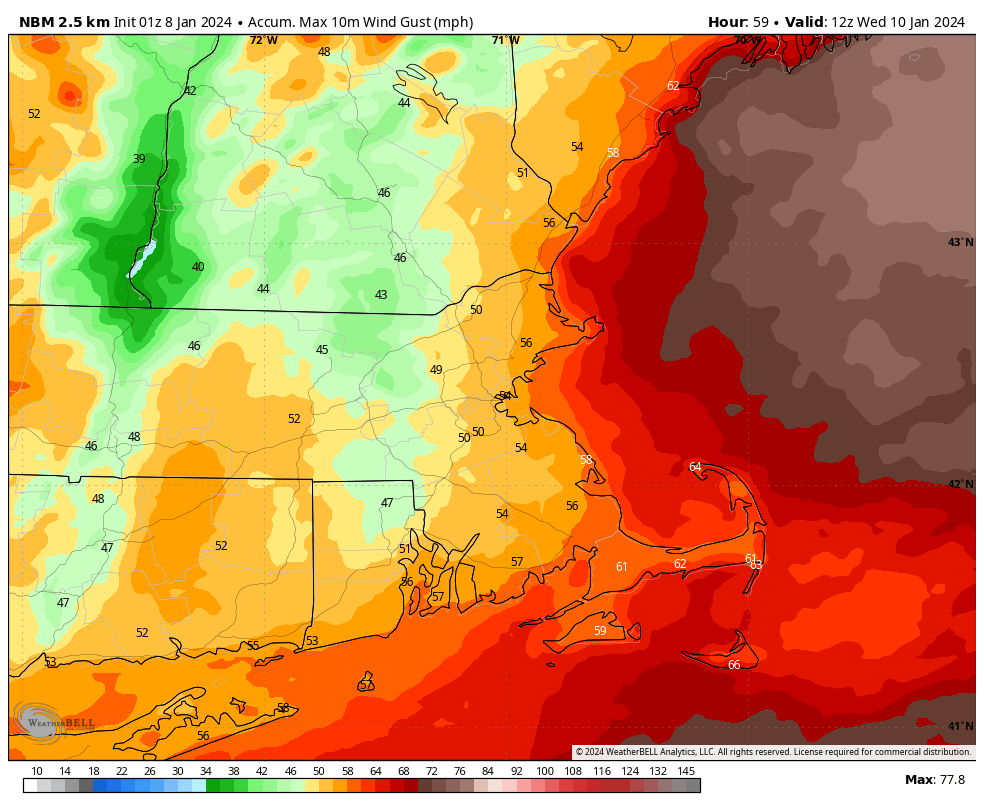
Rain will move in this evening, and could be heavy at times overnight into Friday morning. Winds will start to pick up tonight, and should really be cranking Friday morning and into the afternoon. Sustained winds of 15-30 mph are likely, with gusts in excess of 50 mph possible, especially along the coast and in the hills. With strong winds and astronomical high tides, some coastal flooding is expected, mainly with the morning high tide on Friday. The rain may taper off for a while around midday Friday, but the cold front moves in from the afternoon. Unlike most cold fronts, this one will be moving from southwest to northeast, and the colder air will come in on southwest winds, which normally brings in milder air to our area. Temperatures will rapidly drop once the front moves through, and while they won’t drop 30-40 degrees in an hour, a drop of 20-30 degrees over a couple of hours is certainly possible. A line of showers will accompany the front, and as the colder air moves in, these showers could change to snow before ending in the evening. As temperatures plunge, any surfaces that are still wet will rapidly freeze up during the evening, so keep this in mind if you’re heading out.

Winds could gust to 50 mph or higher on Friday, especially along the coast. Image provided by WeatherBell.

As the storm pulls away on Christmas Eve, an upper-level low pressure system will move into the Northeast, keeping plenty of clouds around. Winds will remain gusty as the storm system meanders around in Quebec. With much colder air in place, and gusty southwest winds moving across the relatively mild ocean, some ocean-effect snow showers are possible across the South Coast, Cape Cod, and possibly Cape Ann as well. Some accumulations are possible across Cape Cod. High pressure builds in for Christmas Day and Monday with drier and chilly conditions, with winds gradually dying down during the day on Christmas.

Some minor accumulations of snow are possible across Cape Cod and the South Coast this weekend. Image provided by Weathermodels.com.

Thursday night: Rain developing, becoming heavy at times overnight, becoming windy. Temperatures slowly rise overnight.

Friday: Rain tapers off to showers, more rain possible late in the day, possibly changing to snow toward evening, very windy. High 50-57 in the morning, temperatures drop sharply in the afternoon.

Friday night: Partly to mostly cloudy, snow showers end in the evening for most, but may continue near the South Coast and Cape Cod, still windy and turning much colder. Low 9-16.

Christmas Eve: Intervals of clouds and sun, breezy, more snow showers possible near the South Coast and Cape Cod. High 18-25.

Saturday night: Becoming partly cloudy, some lingering snow showers possible across Cape Cod, still breezy. Low 9-16.

Christmas Day: Becoming partly to mostly sunny, breezy again. High 21-28.

Sunday night: Clear skies. Low 14-21.

Monday: Sunshine and a few clouds. High 26-33.

Weekly Outlook: December 19-25, 2022

Christmas Week will start and end dry, but the latter half of the week looks rather stormy.

Whatever you celebrate, we hope you enjoy it! Image provided by Adobe.

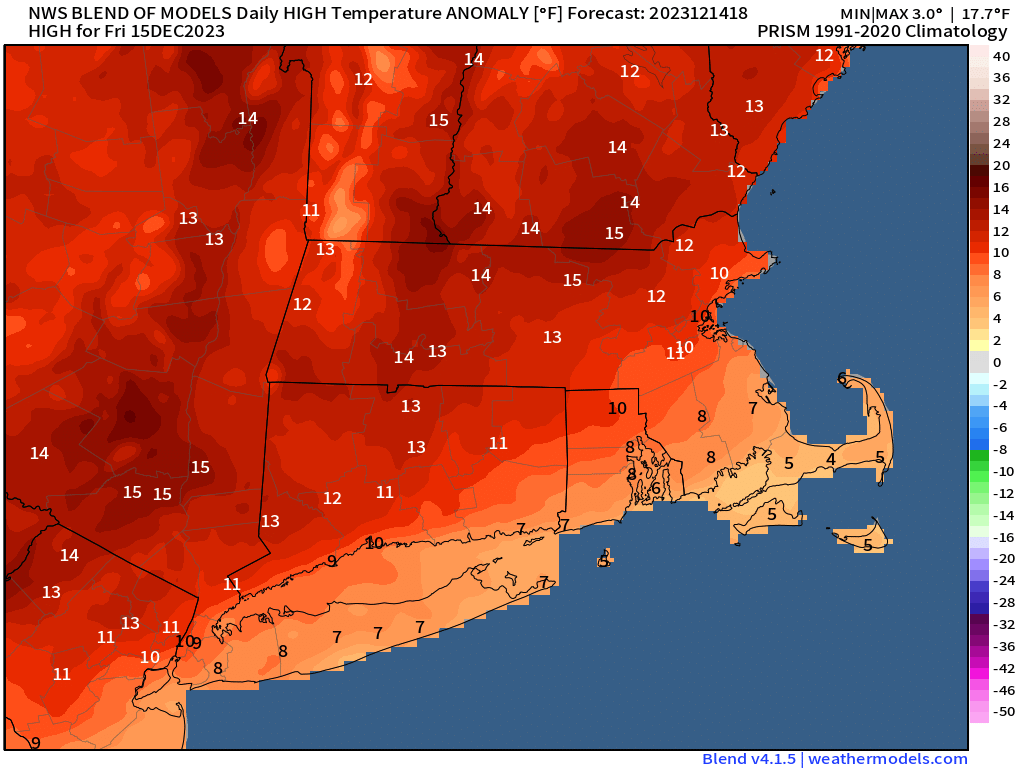
We start the week off with high pressure trying to build in while low pressure continues to meander around near Atlantic Canada. The result is dry weather through Wednesday as the high will be the dominant feature, but the gradient between the high and the offshore low will result in breezy conditions today and Tuesday. Temperatures will be fairly close to where they should be in the latter half of December.

Wind chills will be in the teens when many of you head out the door Tuesday morning. Image provided by Weathermodels.com

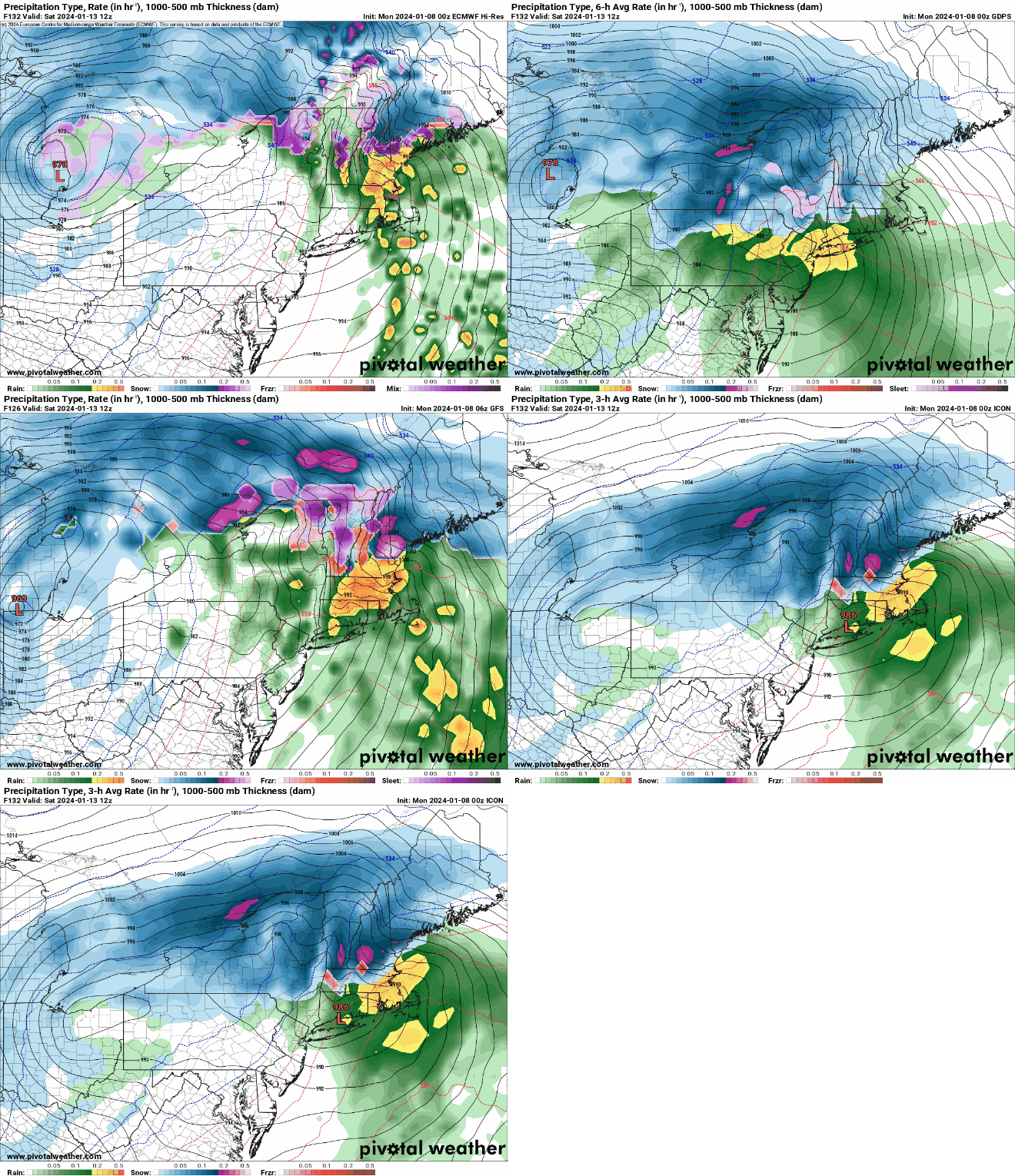
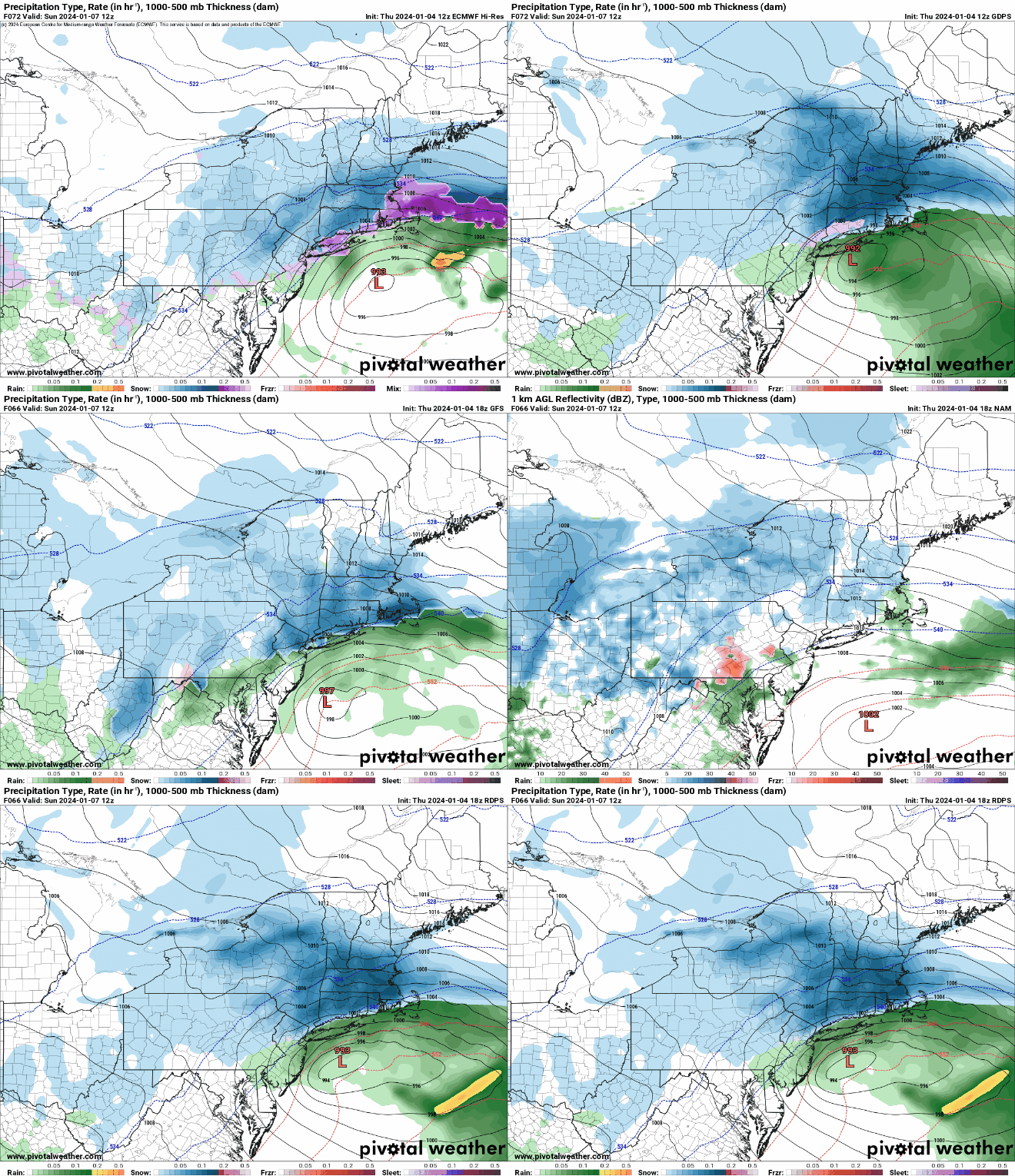
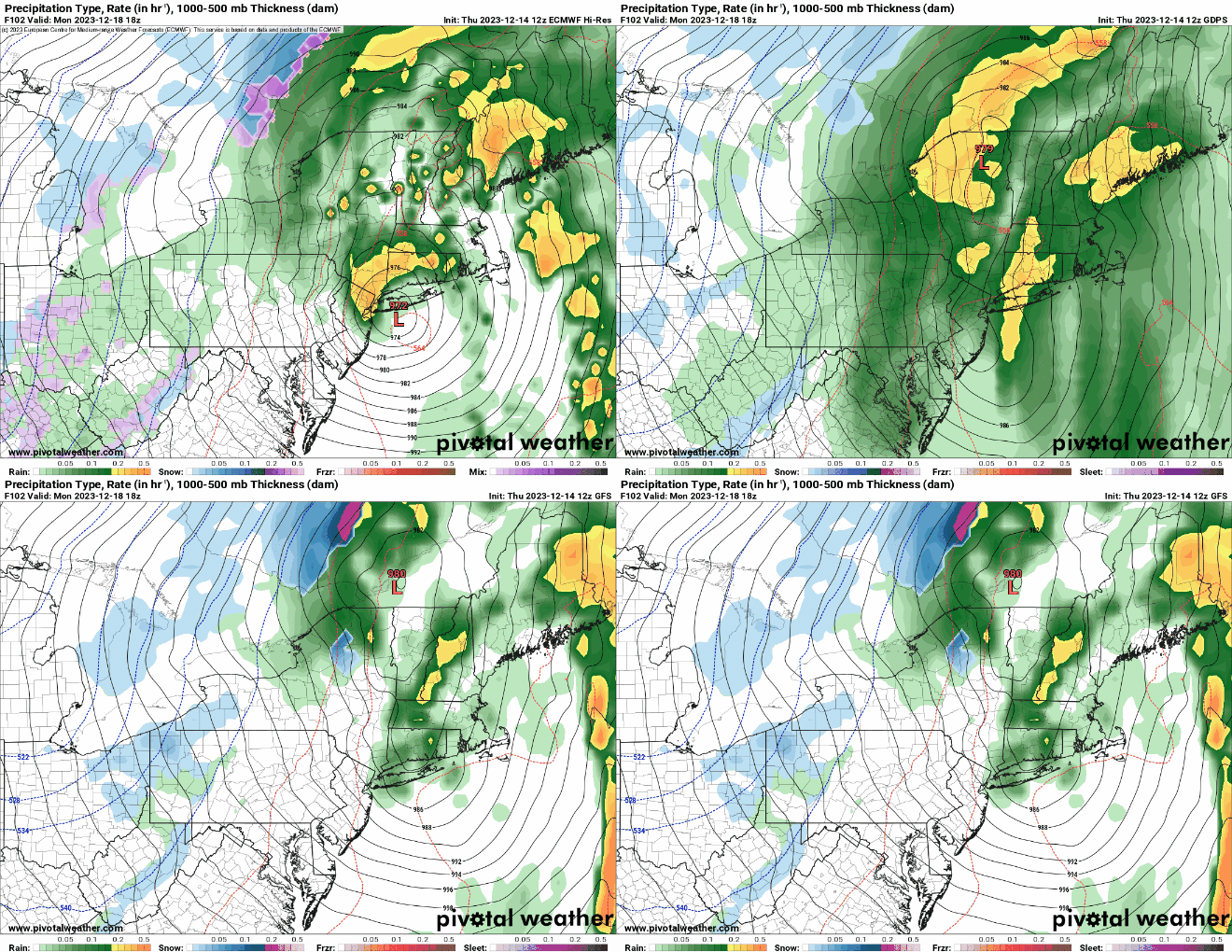
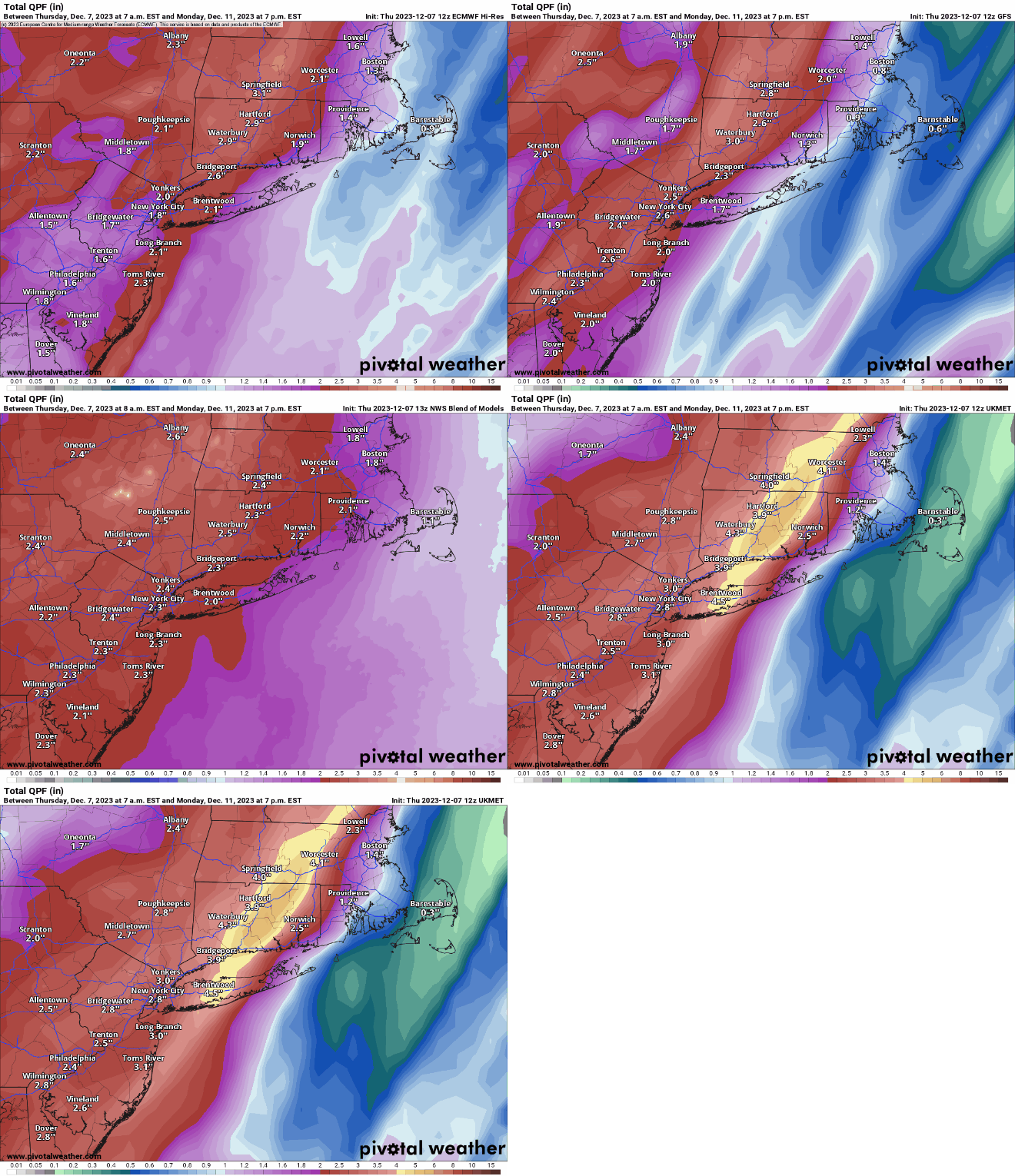
The end of the week is where things get rather complicated. Most of the models are trying to spin up a very strong storm and send it towards the Great Lakes. As a result, you’ve no doubt seen plenty of forecasts out there for a wind-swept mild rain on Friday. The people making these forecasts are taking the lazy way out, believing everything the models are saying, and not looking too deeply at the situation. That’s not how we do things here. Yes, the precipitation will be mostly likely be in the form of rain with this storm, and temperatures will probably be milder than normal. But a wind-swept mild rain? Far from a lock. In fact, we’re not sure that will materialize for a good chunk of the region. Allow us to explain:

First, the upper-level pieces of energy that will create the storm are still over water, in areas where there is little data, so the models are just guessing at this point. That will change in the next 24 hours or so as those upper-level disturbances move into Alaska and California respectively, so we’ll start to get a better idea of what will happen. Second, this storm may be in two parts, one late Thursday into early Friday and the second late Friday and Friday night, with a bit of a lull possible during the day on Friday. The first piece of energy, with the southern jet stream, likely stays weak and scoots along ahead of the main system. This may help to kick off a weak area of low pressure near the East Coast on Thursday, which could bring in some rain, but it may start a snow or a wintry mix across the interior before changing over to rain. As the northern stream energy moves into the Plains States, it will carve out a rather deep trough of low pressure at the upper-levels, which in turn will generate a rather potent storm system in the nation’s mid-section, which likely heads toward the Great Lakes. This is where our uncertainty starts to increase. Right now, the models keep those two streams separate. What happens if the southern stream storm is a little slower than the models forecast, and they do merge (or “phase”, as we usually call it)? Well, that could result in a stronger storm in the Midwest, possibly even a little farther west than the models show now. It also would lessen the likelihood of that rain and/or mix moving in here later Thursday. What about if that trough in the Plains States isn’t as sharp as the models predict? Well, then the storm ends up farther east, which has different implications here. When storms end up as far west the models currently show, it’s easy to look at the maps and say “it’ll be windy and warm east of the storm,” and assume that is the case all the way to the coast, but that’s the lazy way out.

The members of the GFS Ensemble all show a potent low near the Great Lakes on Saturday and a secondary low near or off the Mid-Atlantic coast. Image provided by WeatherBell.

In reality, when storms head up across the central and western Great Lakes, what usually happens is a weak wave of low pressure forms ahead of the main storm somewhere near the Mid-Atlantic states. What that does, is it pinches off the warm air at the surface. Yes, we’ll still have strong southerly winds pumping in lots of moisture and warmer air aloft, but at the surface, you end up with east or northeast winds, keeping the cooler air locked in under what we call an inversion. Normally, temperatures decrease with height as you head up into the atmosphere. When it’s warmer as you go higher, the temperature profile is “inverted”. This also prevents those strong winds aloft from mixing down to the surface. So, you may get windy and mild conditions near the South Coast, but places like the Merrimack Valley and southern New Hampshire could stay stuck in the upper 30s and lower 40s with little wind, but some rain, drizzle, and fog. We’ve seen this happen countless times, and wouldn’t be shocked if that’s what ends up happening around here on Friday. Eventually, as the storm moves into southeastern Canada, it will send a strong cold front in. Some rain, possibly heavy is likely ahead of that front, it the gusty winds associated with the front will eventually mix out that inversion, so temperatures could briefly spike well into the 50s or even lower 60s as the milder air moves in for a brief period ahead of, or even behind the front.

Friday’s high temperatures likely occur at night, then temperatures turn sharply colder on Saturday. Loop provided by Pivotal Weather.

For Christmas Eve and Christmas Day we’ll have high pressure trying to build in with clearing, breezy, and colder conditions.

Monday: Sunshine and some afternoon clouds, breezy. High 34-41.

Monday night: Clear skies. Low 22-29.

Tuesday: Plenty of sunshine. High 33-40.

Tuesday night: Clear to partly cloudy. Low 18-25.

Wednesday: A mix of sun and clouds. High 33-40.

Thursday: Mostly cloudy, rain developing late in the day, possibly starting as some snow or freezing rain across the interior. Rain may be heavy at night. High 39-46.

Friday: Cloudy, breezy along the coast, rain likely, possibly heavy at times, especially early and again late in the day. Rain may mix with or change to wet snow before ending at night. High 51-58 during the evening, but temperatures may stay in the upper 30s and 40s for much of the afternoon across the interior.

Christmas Eve: Becoming partly sunny and breezy with a few flurries possible, especially early. High 30-37 early, temperatures drop a little during the afternoon.

Christmas Day: Partly to mostly sunny, breezy, and chilly. High 25-32.

Weekend Outlook: December 16-19, 2022

A rather complex storm system is heading this way, but the forecast itself isn’t too complex for most of us.

The storm system that’s been producing blizzard conditions in the Plains and severe weather in the South over the last few days will head towards the Great Lakes tonight as a secondary area of low pressure takes shape over the Mid-Atlantic states. That system will pass close to or over southeastern Massachusetts Friday night. Ahead of it, we’ll have rain moving into the region tonight. The rain may start as some wet snow across the hills of Worcester County and southwestern New Hampshire, possibly even in parts of south-central New Hampshire and the Merrimack Valley, but gusty easterly winds will quickly bring milder air in off the still relatively mild Atlantic, quickly changing any snow over to rain at the lower elevations. Friday will be a windy, rainy, and cool day across the region. Wind may gust as high as 40-50 mph near the shoreline, but with tides astronomically low, coastal flooding is not a concern. As the storm passes by Friday night, winds will shift from the east to the northeast and eventually north and northwest, bringing cooler air back in. The precipitation will be moving out, but the rain will likely change over to snow before it ends around midday across southern New Hampshire and possibly the Merrimack Valley. As for accumulations, we’re looking at an inch or less across the Merrimack Valley and the New Hampshire Seacoast, an inch or possibly two across southern New Hampshire (including Nashua and Manchester), and 3-5 inches up towards Concord. Across the hills of northern Worcester County and the Monadnocks of southwestern New Hampshire totals of 6-12 inches or more are likely.

The heaviest snow will be confined to the hills north and west of the region. Image provided by WeatherBell.

Once the storm moves out, temperatures will slowly drop during the day on Saturday, then skies start to clear out at night. An upper-level low pressure system moves across the region on Sunday with some additional clouds and possibly a few flurries. High pressure then builds in for Monday with sunshine and seasonably cool conditions.

Sunday’s temperatures will be a little below normal for mid-December, Image provided by Weathermodels.com

Thursday night: Rain developing, possibly starting as a brief period of wet snow across southern New Hampshire, becoming breezy. Low 33-40 in the evening, then temperatures slowly rise overnight.

Friday: Windy with periods of rain, possibly heavy at times. High 39-46.

Friday night: Rain may change back to snow across southern New Hampshire, breezy. Low 30-37.

Saturday: Cloudy and breezy with rain or snow showers ending by midday. Some sunny breaks may develop late. High 37-44 in the morning, temperatures drop during the afternoon.

Saturday night: Becoming clear to partly cloudy. Low 23-30.

Sunday: Intervals of clouds and sun, chance for a few flurries, breezy. High 33-40.

Sunday night: Clear to partly cloudy. Low 21-28.

Monday: Plenty of sunshine. High 35-42.